
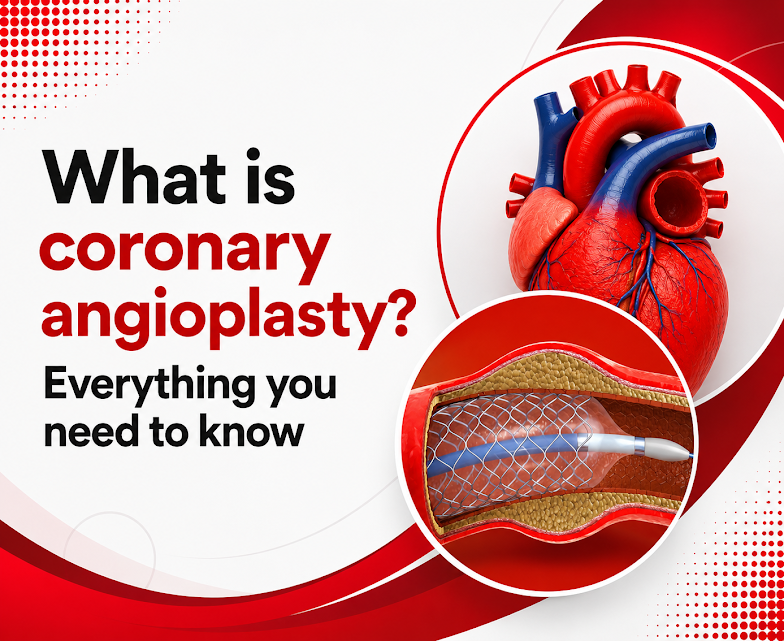
Coronary angioplasty: Your chest feels tight. You’ve been getting shortness of breath lately, especially when you climb stairs or walk briskly. You’re worried. Your doctor has mentioned something called coronary angioplasty, but you don’t understand what it is or whether you really need it.
You’re not alone. Many middle-aged people are facing coronary artery disease without fully understanding their treatment options. The term “angioplasty” sounds intimidating. The word “stent” makes you nervous. But here’s the truth: understanding what these procedures are and how they can help you is empowering. It gives you control over your health decisions.
Understanding Coronary angioplasty Artery Disease
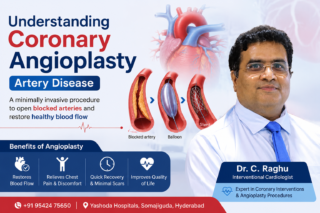
Before we discuss angioplasty, you need to understand the problem it solves.
Your heart is a muscle that needs oxygen to work. Coronary arteries deliver oxygen-rich blood to your heart. These are the highways of your cardiovascular system. Over time, for various reasons—high cholesterol, high blood pressure, smoking, diabetes, and stress—fatty deposits build up inside these arteries. This buildup is called plaque.
Coronary artery disease happens when these arteries narrow. Blood flow decreases. Your heart struggles to get enough oxygen, especially during activity or stress. You feel chest pain. You feel exhausted. You feel vulnerable.
This is serious. Completely blocked arteries lead to heart attacks.
What Exactly is Coronary Angioplasty?
Let’s demystify this. Coronary angioplasty is a minimally invasive procedure that opens blocked or narrowed coronary arteries. It’s not surgery in the traditional sense—no large incisions, no general anesthesia, no weeks of recovery.
Here’s how it works:
Step One: Angiogram Your coronary artery disease doctor first performs an angiogram. A thin catheter (tube) is inserted through an artery in your groin or arm. This catheter is guided to your heart. A special dye is injected through the catheter, and X-rays are taken. These images show exactly where your arteries are blocked or narrowed. You’re awake during this procedure, though mildly sedated.
Step Two: Balloon Inflation Once the blocked area is identified, a balloon catheter is advanced to that location. When the catheter is in position, the balloon is inflated. This balloon pushes the plaque against the artery wall, widening the artery and restoring blood flow. You might feel slight chest discomfort—this is normal and temporary.
Step Three: Stent Placement In most modern angioplasty procedures, a stent is placed. Think of a stent as a tiny mesh tube. It keeps the artery open after the balloon is removed, preventing the artery from narrowing again. Most stents today are drug-eluting, meaning they release medication that prevents scar tissue buildup.
The entire procedure typically takes 30 minutes to an hour.
Why Your Doctor Recommends Angioplasty
Your coronary artery disease specialist recommends angioplasty for specific reasons:
- You have significant blockages causing symptoms
- You have blockages that could cause a heart attack
- Medical management (medications) isn’t sufficient
- You’ve had a recent heart attack
- You’re having a heart attack right now
Not all coronary artery disease requires angioplasty. Some people do well with medications. But when angioplasty is appropriate, it can be life-changing.
Also read: Pulmonary Embolism in India: Emergency & Finding Specialist
The Difference Between Angioplasty and Angiogram
Many people confuse these terms. Let me clarify:
An angiogram is a diagnostic test. It shows what’s happening in your arteries.
Angioplasty is a treatment. It opens blocked arteries. It often includes stent coronary placement.
You might have an angiogram and learn that you don’t need angioplasty. Or you might have an angiogram and immediately proceed to angioplasty during the same procedure.
Recovery and Aftercare coronary angioplasty
Here’s what’s wonderful about angioplasty: recovery is relatively quick.
After the procedure:
- You’ll stay in the hospital overnight or possibly go home the same day
- You’ll have a bandage over the catheter insertion site
- You can resume light activities within a few days
- You return to normal activities within 1-2 weeks
- You’ll take medications to prevent clotting and manage your condition
Compared to open-heart surgery, this is minimal disruption to your life.
Types of Angioplasty
Standard Angioplasty (PTCA): Percutaneous Transluminal Coronary Angioplasty is the traditional form, often with stent placement (PTCA Stent). It works well for most blockages.
Specialized Procedures: For particularly challenging blockages, chip angioplasty (rotational atherectomy) might be used. This technique actually rotates a burr that smooths hardened plaque. It’s more specialized and requires experienced operators.
For chronic total occlusions arteries completely blocked specialized techniques might be employed.
Finding Your Specialist in Hyderabad
You need an experienced coronary artery disease doctor who performs angioplasty regularly. You need someone who has handled complications and knows how to navigate the most challenging cases.
The best angioplasty expert in India will have extensive training, excellent outcomes, and a compassionate approach to patient care. They’ll explain everything clearly, answer your questions, and work with you to determine whether angioplasty is truly the right choice for your situation.
In Hyderabad, you have access to heart specialists in Hyderabad who bring world-class expertise to this procedure.
Life After Angioplasty
You need to understand: angioplasty treats the blockage, but it doesn’t cure the underlying coronary artery disease. You’ll still need to:
- Take medications as prescribed (usually including blood thinners, blood pressure medications, cholesterol medications)
- Make lifestyle changes—diet, exercise, stress management
- Stop smoking, if applicable
- Control diabetes and blood pressure
- Attend regular follow-ups
The good news? Most people do extremely well after angioplasty. Blood flow is restored. Symptoms improve dramatically. Quality of life increases significantly.
Possible Complications (Rare, But Real)
While generally safe, angioplasty does carry small risks:
- Bleeding at the catheter site
- Artery perforation
- Allergic reaction to dye
- Stent restenosis (renarrowing)
- Blood clots
This is why you need an experienced operator and proper aftercare.
Also read: CHIP Angioplasty: Advanced Coronary Artery Disease Treatment Explained
Prevention is still best.
Remember: the best treatment is prevention. If you don’t have coronary artery disease yet but are at risk, focus on:
- Not smoking
- Managing stress
- Exercising regularly
- Eating healthy
- Maintaining healthy weight
- Controlling blood pressure and cholesterol
- Managing diabetes
Moving Forward coronary angioplasty Doctor
If you’re dealing with coronary artery disease, you’re not facing a death sentence. Modern interventions like angioplasty have revolutionized how we treat this condition. Many people go on to live full, active lives after successful angioplasty.
The key is working with experienced specialists who understand both the procedure and your individual circumstances.
Take the first step toward better heart health. Consult with Dr. C. Raghu, an experienced interventional cardiologist in Hyderabad specializing in coronary interventions. Schedule your appointment.
Call Us +91 95424 75650