menu trigger
menu trigger


Monday - Sunday 08:00 AM - 08:00 PM+91 95424 75650 | Emergency Service 24/7Book an AppointmentDigital Visiting Card
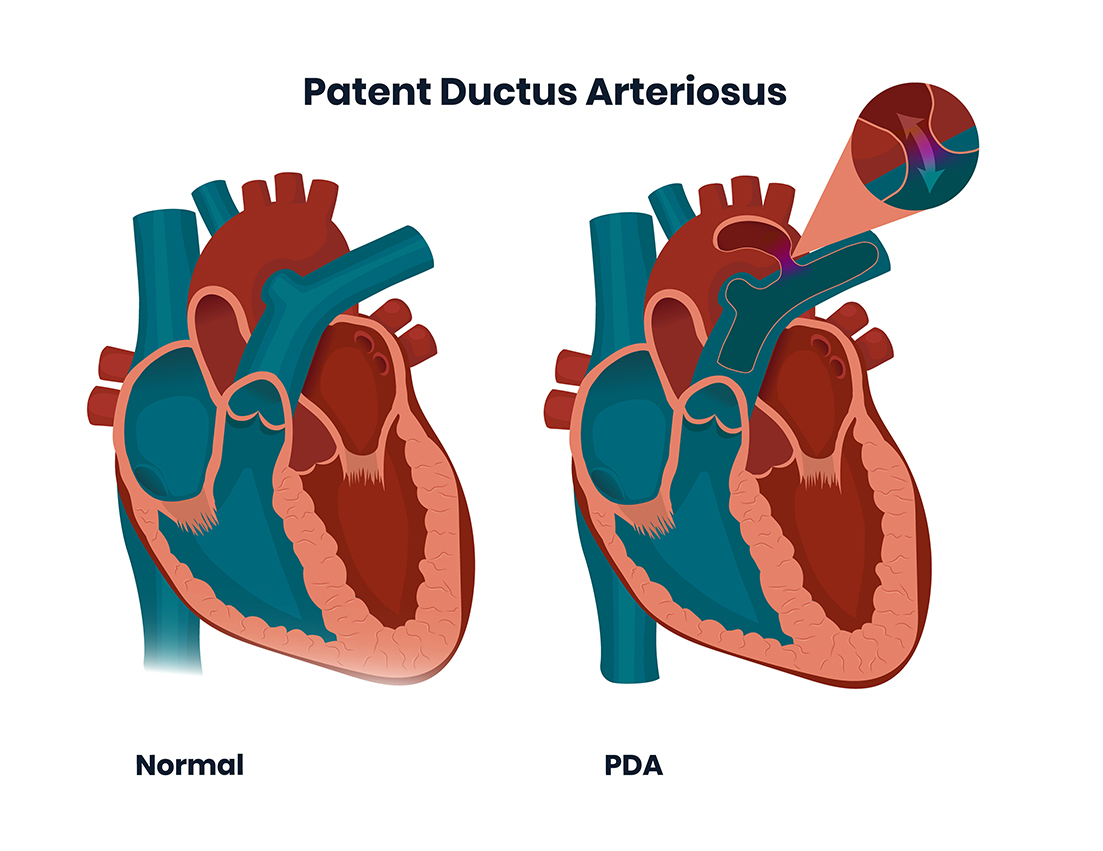
What is patent ductus arteriosus?
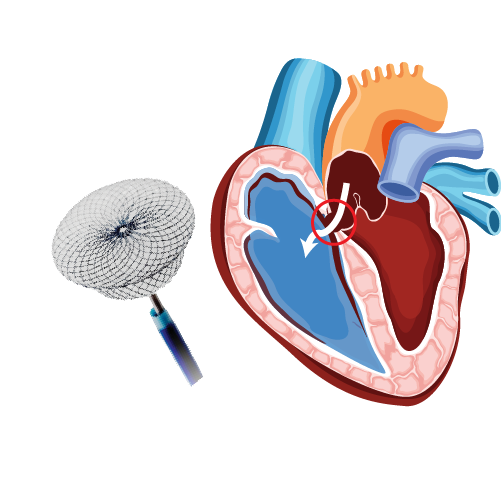
- Before the baby is born, the fetus blood does not require passing to lungs to get oxygenated. The ductus arteriosus is a hole that allows skipping the circulation through the lungs.
- If this hole persists even after the birth, it is called patent ductus arteriosus.
- A small patent ductus arteriosus does not cause any serious problems and specific treatment is not required. Whereas, for large ones are to be closed because of further complications.
- This condition is common congenital heart defect 1 in 2500 to 5000 live births.
What are the symptoms of patent ductus arteriosus?
If the ductus arteriosus small, symptoms may not appear until adulthood. For larger defects, the following symptoms can be present.
- Rapid breathing or breathless
- Decreased appetite – poor growth
- Frequent tiredness
- Murmuring
- Rapid or irregular heartbeat
- Sweating while crying and eating
What are the risk factors of patent ductus arteriosus?
- Premature birth
- Rubella infection during pregnancy
- Born at a high altitude
- Girl baby
- Family history
- Genetic conditions such as Down’s syndrome
What are the complications of patent ductus arteriosus?
- Pulmonary hypertension: Greater blood circulation through ductus arteriosus leads to pulmonary hypertension, which can further lead to the irreversible type of pulmonary hypertension known as Eisenmenger syndrome.
- Heart failure: Patent ductus arteriosus can eventually lead to enlargement of the heart and further heart failure.
- Endocarditis: Inflammation of the heart’s inner lining known as infective endocarditis.
How is PDA diagnosed?
- Electrocardiogram
- Echocardiogram
- Chest X-ray
- Physical examination
What are the indications of PDA devise closure?
- Volume overloading of the left atrium and left ventricle
- Risks of endocarditis
- Aneurysm of PDA
- Pulmonary vascular disease
Why device closure preferred over surgical PDA ligation?
- Device closure is simple
- Less morbidity
- Short hospital stay
- PDA is the first congenital heart disease to undergo trans catheter closure
What are the complications of surgery for PDA?
- Bleeding
- Blood pressure fluctuations
- Respiratory compromise
- Inadvertent left pulmonary artery ligation
- Recurrent laryngeal nerve damage
- Residual shunting
How does PDA treat?
- Conservative management:
- Cyclooxygenase inhibitors (Idiomethacin, ibuprofen) or acetaminophen are used therapeutically to close PDA
- Surgical ligation:
- Surgical ligation is required in case if the patient is not suitable for pharmacological treatment due to risks/adverse effects associated with it.
- Transcatheter closure:
- This is a minimally invasive procedure
- This procedure is performed in patients who weigh <1000g
- Fluid intake between 120-130 ml/kg to limit pulmonary edema with significant PDA
What is the uniqueness of PDA closure by Dr. Raghu?
Dr. Raghu team has performed date 100 PDA device closure procedure. His work on the closure of large PDAs has been presented at the Cardiological Society of India.
Our Specialities
- Conditions
Conditions
- Acute limb ischemia
- Chronic limb ischemia
- Aortic stenosis
- Mitral valve stenosis
- Mitral valve regurgitation
- Atrial fibrillation
- Tachycardia
- Bradycardia
- Palpitations
- High blood pressure
- Atrial septal defect
- Ventricular septal defect
- Patent ductus arteriosus
- Cardiac amyloidosis
- Hypertrophic cardiomyopathy
- Varicose veins
- Deep vein thrombosis (DVT)
- Myocarditis
- Endocarditis
- Pericarditis
- Peripheral arterial disease
- Pulmonary artery hypertension
- Pulmonary embolism
- Cath lab procedures:
Cath lab procedures:
- Coronary Angiogram
- Primary Angioplasty
- Coronary Angioplasty
- CHIP Angioplasty
- Aortic valve replacement surgery
- Mitral valve replacement surgery
- Device closure for Atrial septal defect
- Device closure for Ventricular septal defect
- Device closure for Patent Ductus Arteriosus
- Transcatheter aortic valve replacement (TAVR)
- Inferior vena cava (IVC) filter
- LA appendage closure
- Fistuloplasty
- Balloon mitral valvotomy
- 24 hours emergency services
24 hours emergency services
- Clinics- weekly basis/monthly basis/ Yearly basis
Clinics- weekly basis/monthly basis/ Yearly basis
- Prevention of cardiovascular diseases
Prevention of cardiovascular diseases
- Diagnosis
Diagnosis
BOOK AN APPOINTMENT

Dr. RAGHU
MD, DM, FESC, FACC, FSCAI
Cardiology Coronary, Vascular and
Structural Interventions
Cardiology Coronary, Vascular and
Structural Interventions
Conditions & Diseases
Angioplasty
Aortic Stenosis
Atrial Fibrillation
Atrial Septal Defect

+91 95424 75650
For Appointment with Dr Raghu:
+91 80085 36699
Dr Raghu’s Patient Coordinator:
+91 72860 10203
Dr Raghu’s Office Experience:
+91 90001 65962
Dr Raghu’s Social Media Communication Channel:
+91 97046 51708

© 2024, Dr. Raghu. All rights reserved. Design & Developed by AMSDigital.in