
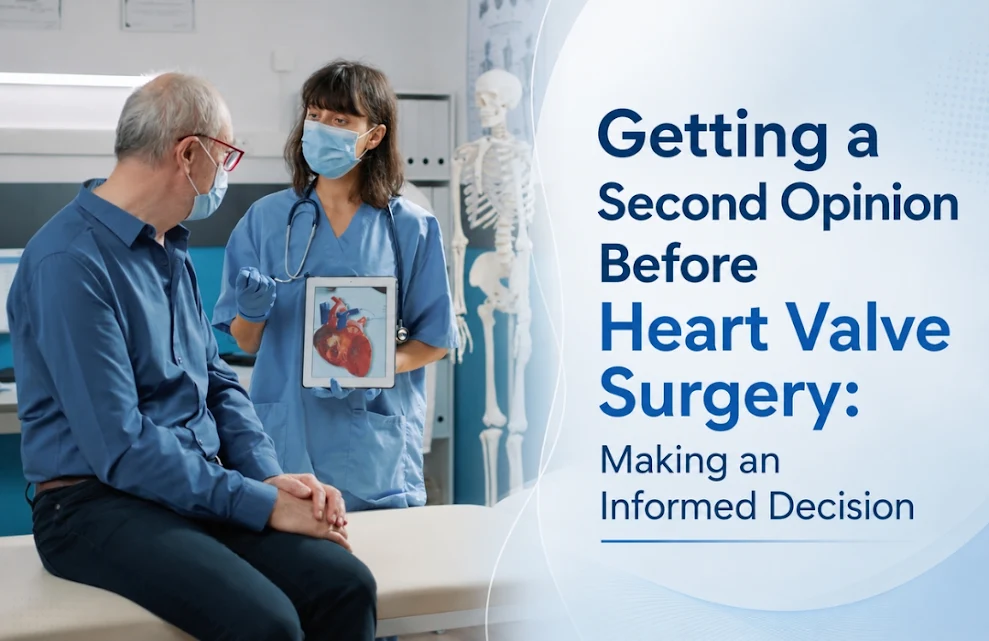
A heart valve diagnosis can create uncertainty for patients and their families. When heart valve surgery is recommended, patients may have questions about the diagnosis, available procedures, surgical risks, recovery, and whether another treatment option may be appropriate. Seeking a second medical opinion can provide additional clarity and help patients make an informed decision based on their individual condition.
A second opinion does not necessarily mean that the first recommendation is incorrect. It offers an opportunity to review the diagnosis, understand the severity of the valve problem, and discuss whether surgical or catheter-based treatment is suitable.
Why Consider a Second Opinion Before Heart Valve Surgery?

Heart valve disorders can vary considerably from one patient to another. The appropriate treatment depends on factors such as the affected valve, severity of disease, symptoms, age, heart function, other medical conditions, and previous cardiac procedures.
Before proceeding with heart valve surgery, a second opinion may help clarify:
- Whether the diagnosis is accurate and complete
- How severe the valve disease is
- Whether treatment is required immediately or can be monitored
- Whether open heart surgery is necessary
- Whether a minimally invasive or catheter-based procedure may be suitable
- What recovery may involve
- What the expected benefits and potential risks of treatment are
This additional evaluation can be particularly relevant for patients who have been advised to undergo complex valve procedures.
Understanding Different Heart Valve Treatment Options
The term “heart valve treatment” includes several approaches. Traditional surgical valve repair or replacement may be appropriate for certain patients, while others may qualify for catheter-based interventions.
For patients with severe aortic stenosis, Transcatheter Aortic Valve Replacement (TAVR) may be considered in appropriate circumstances. TAVR involves replacing the diseased aortic valve through a catheter rather than conventional open-heart surgery.
Patients should not assume that TAVR or surgery is automatically better. A specialist assessment is necessary to determine the most appropriate treatment based on clinical findings and imaging results.
When Is TAVR Considered?
TAVR is primarily used for selected patients with significant aortic valve disease, particularly aortic stenosis. Factors such as age, surgical risk, anatomy, valve characteristics, associated diseases, and overall health can influence treatment selection.
A consultation with a TAVR expert in Hyderabad can help eligible patients understand whether transcatheter valve replacement may be an option. A TAVR expert may evaluate echocardiography, CT imaging, cardiac catheterization findings, and other clinical information before recommending a treatment pathway.
The decision should be individualized rather than based solely on age or a single test result.
Second Opinion for Mitral Valve Disease

Mitral valve disease may also require careful evaluation. Mitral stenosis, for example, can restrict blood flow through the heart and may produce symptoms such as breathlessness, fatigue, or reduced exercise tolerance.
Depending on the severity and anatomy of the valve, treatment options can include medication for symptom management, balloon procedures, valve repair, or surgery.
Patients seeking mitral valve stenosis treatment may benefit from discussing all appropriate options with a qualified specialist. In selected cases, balloon mitral valvotomy may be considered, while other patients may require mitral valve surgery.
The choice depends on detailed clinical and imaging assessment.
What Should Patients Take to a Second-Opinion Consultation?
A second-opinion consultation becomes more useful when the specialist has access to the patient’s complete medical information. Patients should ideally carry:
- Echocardiography reports and images
- CT or MRI reports, where applicable
- Coronary angiography or catheterization records
- Previous medical and surgical history
- Current medication list
- Blood test reports
- Previous hospital discharge summaries
- Details of symptoms and their progression
These records allow the specialist to review the case more comprehensively rather than relying only on a written diagnosis.
Choosing the Right Specialist
Patients should consider consulting a cardiologist or cardiac specialist with experience relevant to their specific valve condition. A cardiologist in Hyderabad can assess the cardiovascular aspects of the condition, while patients requiring procedural or surgical evaluation may need consultation with an appropriately trained cardiac intervention or surgical team.
For patients researching a heart surgeon in Hyderabad, it is important to consider the specialist’s experience with the specific valve disorder and the treatment options being considered. the best cardiologist
Patients may also search for the best cardiologist in Hyderabad or Best cardiologist in Somajiguda, but treatment decisions should be based on clinical expertise, appropriate evaluation, and the individual patient’s medical needs rather than rankings or promotional claims.
Questions to Ask During a Second Opinion
Patients can make the consultation more productive by asking direct questions, such as:
- What type and severity of valve disease is present?
- Is heart valve surgery currently necessary?
- Can the valve be repaired, or does it require replacement?
- Is catheter-based treatment an option?
- Would TAVR/TAVI be appropriate in this case?
- What are the potential benefits and risks of each treatment?
- What could happen if treatment is delayed?
- What type of follow-up and recovery will be required?
Understanding these points can help patients and families participate more confidently in treatment decisions.
Also read: Why Get a Second Opinion on Heart Problems? When & How
Making an Informed Heart Valve Treatment Decision
A second opinion is an important part of informed decision-making when major cardiac treatment is being considered. It can help patients understand their diagnosis, compare suitable treatment approaches, and clarify why a particular procedure has been recommended.
For conditions ranging from aortic stenosis to mitral valve disease, heart valve disease treatment should be individualized according to clinical findings, imaging, symptoms, overall health, and procedural suitability.
Patients considering heart valve surgery, TAVR, or other valve interventions can seek a detailed evaluation from Dr. C. Raghu, Clinical Director & Senior Interventional Cardiologist in Hyderabad, for an informed discussion about appropriate treatment options.
If you or a family member has been advised to undergo heart valve treatment, consult Dr. C. Raghu for a comprehensive cardiac evaluation and second opinion before making an important treatment decision.