
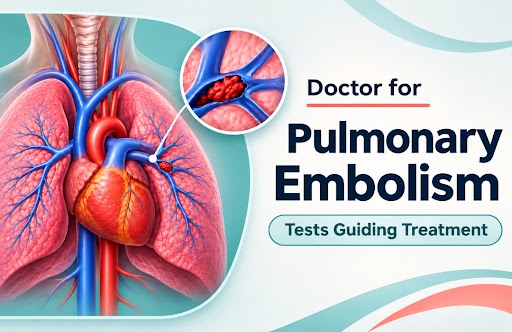
When a patient experiences sudden breathlessness, chest pain or an unexplained increase in heart rate, identifying the underlying cause becomes an important priority. Pulmonary embolism (PE), a condition in which a blood clot blocks an artery in the lungs, requires timely medical assessment and appropriate treatment planning. Choosing the best doctor for pulmonary embolism involves understanding the diagnostic tests, clinical expertise, and follow-up care needed to manage the condition.
For patients and families in Hyderabad, knowing what to expect during an evaluation can make consultations more productive. Understanding Dr. Raghu’s approach to pulmonary embolism care can also help patients explore relevant cardiology consultation options.
What Patients Should Know About Pulmonary Embolism Treatment
Pulmonary embolism often develops when a blood clot forms in a deep vein, commonly in the leg, and travels through the bloodstream to the lungs. This condition is frequently associated with deep vein thrombosis (DVT).
Symptoms may include:
- Sudden shortness of breath.
- Chest pain, particularly when breathing deeply.
- Rapid heartbeat.
- Coughing, sometimes with blood.
- Dizziness or fainting.
The severity of pulmonary embolism varies between patients. Treatment decisions depend on the patient’s symptoms, medical history, clot burden, blood pressure and the effect of the clot on heart function.
A pulmonary embolism specialist evaluates these factors before recommending an appropriate treatment strategy.
Tests That Shape Pulmonary Embolism Treatment
Diagnostic investigations help doctors confirm the presence of a clot, understand its effect on circulation and determine the appropriate level of care.
1. D-Dimer Blood Test
A D-dimer test measures fragments released when blood clots break down. It can help assess the possibility of pulmonary embolism in patients with a low or intermediate clinical probability.
An elevated result does not independently confirm PE because several other conditions can increase D-dimer levels. Doctors interpret the result alongside symptoms and clinical risk assessment.
2. CT Pulmonary Angiography (CTPA)
CTPA is a commonly preferred imaging investigation for diagnosing acute pulmonary embolism. It uses contrast-enhanced CT imaging to identify clots within the pulmonary arteries.
The findings help doctors understand the location of the blockage and assess features that may influence treatment decisions.
3. Echocardiography
An echocardiogram evaluates the structure and functioning of the heart. In patients with confirmed pulmonary embolism, it can help identify right ventricular strain or dysfunction caused by increased pressure in the pulmonary circulation.
It is important to understand that echocardiography does not independently confirm or exclude pulmonary embolism. Its role is mainly to assess the effect of the condition on the heart.
4. Venous Doppler Ultrasound
When doctors suspect an associated DVT, venous Doppler ultrasound may be recommended to identify blood clots in the deep veins of the legs.
These findings can support the overall assessment and help guide further management.
5. Additional Blood Investigations
Doctors may recommend kidney function tests, complete blood counts, cardiac biomarkers and other investigations depending on the patient’s condition.
These tests help assess treatment suitability, identify associated medical concerns and support monitoring during recovery.
How Doctors Decide the Right Treatment Approach
Pulmonary embolism treatment is not identical for every patient. The treatment plan depends on clinical stability, the risk of deterioration, bleeding risk and associated medical conditions.
Common treatment approaches include:
- Anticoagulant medicines: These help prevent existing clots from growing and reduce the risk of new clots forming.
- Thrombolytic therapy: Clot-dissolving medicines may be considered in selected patients with high-risk pulmonary embolism.
- Catheter-directed treatment: In selected cases, specialised catheter-based procedures may help remove or reduce the clot burden.
- Supportive care: Oxygen support, monitoring and other medical interventions may be required depending on the patient’s condition.
Patients seeking pulmonary embolism treatment in Hyderabad should discuss the benefits, limitations, and potential risks of each suitable option with their treating team.
For information about relevant cardiac and vascular procedures, patients can explore Dr. Raghu’s heart care services.
Choosing a Pulmonary Embolism Doctor: Questions to Ask
Finding a suitable pulmonary embolism doctor involves more than comparing professional titles. Patients should understand the clinician’s experience, the hospital’s diagnostic facilities and the availability of coordinated treatment.
During a consultation, families can ask:
- Which investigations are necessary to confirm the diagnosis?
- How severe is the pulmonary embolism?
- Is medication sufficient, or should an intervention be considered?
- What are the potential bleeding risks associated with treatment?
- How long might anticoagulant treatment continue?
- What follow-up investigations will be required?
Patients with associated DVT should also discuss whether a DVT specialist in Hyderabad or a multidisciplinary vascular care team is needed. Those searching for a DVT doctor in Hyderabad should consider experience in evaluating venous thrombosis and its possible complications.
Follow-Up Planning After Pulmonary Embolism
Recovery does not end when the immediate clot-related problem is addressed. Regular follow-up helps doctors review symptoms, medication use, bleeding concerns and the patient’s overall functional recovery.
Patients should maintain a record of their prescriptions, investigation reports and discharge summaries. Any changes in medication should be discussed with the treating clinician rather than made independently.
Persistent breathlessness or reduced exercise tolerance may require further evaluation. Follow-up planning should also address the risk of recurrent DVT or pulmonary embolism.
Read also: DVT to Pulmonary Embolism: The Risks and Prevention
Consult a Pulmonary Embolism Specialist in Hyderabad.
Patients evaluating a best doctor for pulmonary embolism should prioritize appropriate clinical assessment, relevant procedural expertise, and coordinated follow-up rather than relying on unsupported ranking claims.
Dr. C. Raghu is a clinical director and senior interventional cardiologist at Yashoda Hospitals, Somajiguda, Hyderabad. His areas of expertise include complex cardiac and vascular interventions, including catheter-based treatment for deep vein thrombosis and pulmonary embolism.
Patients seeking a pulmonary embolism specialist in India, or a pulmonary embolism doctor near me, can discuss their medical records and available treatment options during a consultation.
For an appointment, call +91 95424 75650 or email secretary@drraghu.com . Patients can also request a cardiology consultation