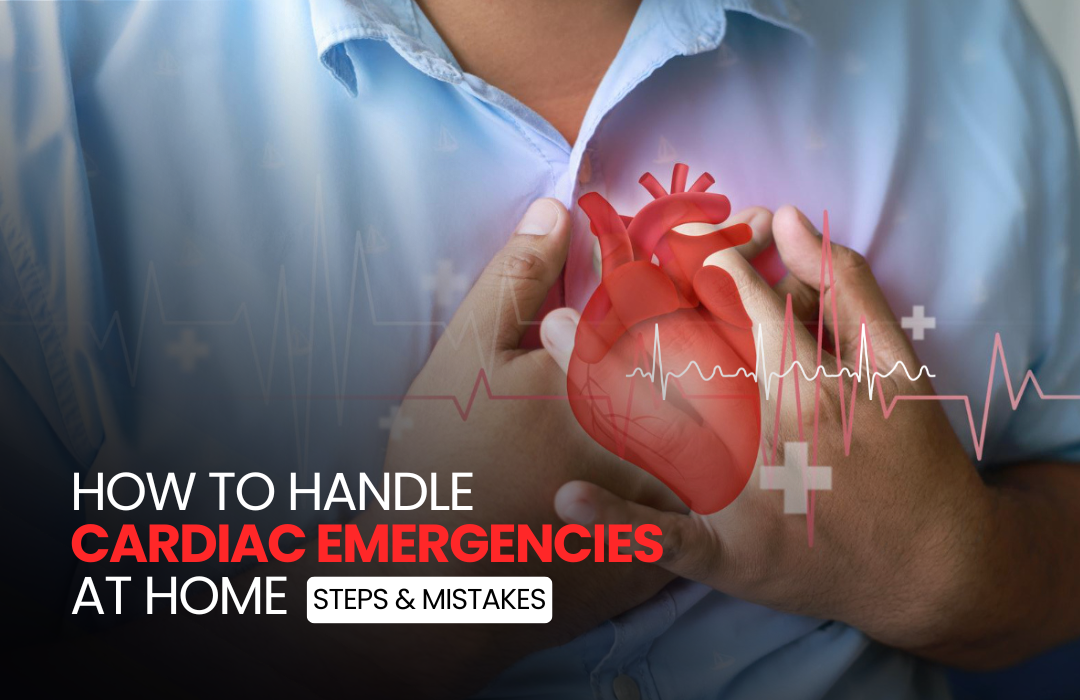
Handle Cardiac Emergencies Many people face sudden chest pain or breathlessness at home. Families often do not know what to do or who to call. A delay can cost precious minutes. Early CPR can double a person’s chance of survival after cardiac arrest. The guide explains how to recognize signs, perform CPR, and use an AED. It also names local options, such as Best Cardiology Hospital In Hyderabad, Cardiologist In Hyderabad, Heart Doctor, Best Cardiologist in Hyderabad, and Top Cardiologist in Hyderabad.
Key Takeaways
- Early CPR can double a person’s chance of survival after cardiac arrest. Start chest compressions straight away if someone is unresponsive and not breathing.
- Know the signs of a cardiac emergency, such as chest pain, shortness of breath, heavy sweating, or sudden collapse. Call emergency services immediately for help.
- Use an Automated External Defibrillator (AED) quickly if one is available. Follow voice prompts and continue CPR after delivering a shock unless told otherwise by professionals.
- Avoid common mistakes like delaying CPR, not calling for help soon enough or using an AED incorrectly. High-quality compressions are vital to keep blood moving until medics arrive.
- Cardiac events can affect people of all ages. Prepare your family by learning basic skills and making sure everyone knows what to do in case of a heart emergency at home.
Recognising the Signs of a Cardiac Emergency
After the introduction, attention must shift to spotting early warning signs. A patient may feel chest pain or tightness that does not go away. They might have shortness of breath, heavy sweating, nausea or light headedness.
Some people collapse suddenly or notice a very fast, irregular heartbeat.
Anyone with these signs needs immediate help. Call emergency services and get to a hospital fast. They should see a heart specialist in Hyderabad or one of the heart doctors in Hyderabad for follow up care.
Families often ask for the best heart doctor in Hyderabad or the best cardiologist doctor in Hyderabad, and they check lists such as Top 10 Cardiologists in Hyderabad.
You can also read this: What Is AFib? Causes, and Treatment for Atrial Fibrillation
Essential Steps to Take During a Cardiac Emergency
Act quickly to improve the chance of survival. Stay calm and follow clear steps to help the person in need.
Administering CPR
CPR can save a life. A bystander should call for help.
- A rescuer assesses responsiveness by tapping the shoulders and speaking loudly. If there is no response, the rescuer opens the airway and checks breathing for up to ten seconds.
- An observer contacts emergency services, states the location and reports suspected cardiac arrest. Provide clear information, such as the address, floor number and any nearby landmarks.
- A helper lays the casualty flat on a firm surface and exposes the chest. The helper positions the heel of one hand at the centre of the breastbone.
- A trained rescuer performs chest compressions at one hundred to one hundred and twenty per minute. Each compression should reach a depth of five to six centimetres, with full recoil between compressions.
- A giver follows a ratio of thirty compressions to two breaths if trained in rescue breathing. They seal the mouth with a barrier device and give each breath over one second while watching for chest rise.
- If the rescuer lacks training, they carry out hands only CPR with continuous compressions. They must avoid long pauses unless the AED is ready or professional help arrives.
- A second rescuer rotates every two minutes to reduce fatigue and preserve compression quality. Minimise interruptions during changes, and resume compressions immediately after checks.
- An automated external defibrillator is applied as soon as one is available and the prompts are followed. Rescuers must not touch the casualty while the device analyses or delivers a shock.
Using an Automated External Defibrillator (AED)
An Automated External Defibrillator (AED) can save lives during a cardiac emergency. Knowing how to use an AED is crucial for providing timely assistance.
- Locate the AED. Check for the nearest device if someone shows signs of a cardiac emergency.
- Turn on the AED. Press the power button to activate it and follow the audible instructions.
- Expose the chest. Remove clothing from the chest area to ensure proper pad placement.
- Attach pads correctly. Place one pad on the upper right chest and another on the lower left side, following visual prompts on the pads.
- Stand clear during analysis. Ensure everyone moves away from the patient while the AED assesses heart rhythm.
- Deliver shock if advised. If prompted by the AED, press the shock button promptly; this may restore normal heart function.
- Continue CPR after shock delivery if needed. Start chest compressions immediately after using an AED unless instructed otherwise by emergency services.
- Wait for help to arrive. Keep monitoring the person’s condition and be prepared to provide further assistance until professionals take over.
Taking these steps can make a significant difference in a cardiac emergency at home, increasing survival chances dramatically with quick action using an AED.
You can also read this: Dr. C. Raghu is one of the best doctors for TAVI/TAVR in Hyderabad
Common Mistakes to Avoid in Cardiac Emergencies
Cardiac emergencies can be overwhelming. Patients must know what mistakes to avoid during these critical moments.
- Failing to call for emergency assistance quickly can delay vital care. Prompt action is essential in saving a life.
- Ignoring the signs of a cardiac emergency leads to serious consequences. Recognising symptoms early increases the chances of survival.
- Avoid delaying CPR when someone is unresponsive and not breathing. Starting CPR immediately keeps blood flowing until help arrives.
- Using an Automated External Defibrillator (AED) incorrectly can hinder recovery efforts. Familiarity with AED operation saves valuable time.
- Overlooking the importance of chest compressions can reduce effectiveness during CPR. Focus on high-quality compressions to improve blood circulation.
- Hesitating to perform rescue breaths may occur due to fear or lack of experience. Performing hands-only CPR is still highly effective if necessary.
- Assuming that heart attacks only affect older individuals is a dangerous misconception. Cardiac events can strike anyone, regardless of age or health status.
- Neglecting the need for regular health checks may prevent early detection of heart issues. Monitoring health helps identify potential problems before they escalate.
- Disregarding personal stress levels and unhealthy habits worsens heart health over time. Managing stress through positive coping strategies promotes better well-being.
- Forgetting to inform family members about emergency plans creates confusion during crises. Open discussions about cardiac emergencies prepare everyone involved for quick action.
Conclusion
Understanding how to manage cardiac emergencies at home can save lives. Recognising the signs is crucial; chest pain and shortness of breath demand immediate attention. Quickly administering CPR can be vital before professional help arrives.
Using an Automated External Defibrillator (AED) increases survival chances significantly too. Avoid common mistakes, such as delaying action or panicking, to ensure effective response.
Readers should consider learning these steps and practising them regularly for readiness. Taking swift action makes a real difference in life-threatening situations and helps families feel more secure in times of crisis.
If you or your loved one is suffering from a heart problem, don’t delay treatment.
Consult Dr. C. Raghu, interventional cardiologist at Yashoda Hospitals, Secunderabad, today and take the first step towards a healthier heart.
FAQs
1. What are the essential steps to follow in a cardiac emergency at home?
Check if the person is awake and breathing. Call emergency services and say there is a cardiac emergency. Start CPR at once if they are not breathing normally. Send someone to fetch a defibrillator if one is nearby. Keep going until help arrives.
2. How do I give CPR at home during a cardiac emergency?
Lay the person on a firm surface. Push hard and fast in the centre of the chest, about 100 to 120 times a minute. Let the chest rise fully after each push. Give rescue breaths only if you are trained. Use an automated defibrillator when you can.
3. When should I call for an ambulance in a cardiac emergency at home?
Call straight away if the person is unconscious or not breathing. Tell the operator it is a cardiac emergency so they can act fast. Follow their instructions until the ambulance crew arrives.
4. What common mistakes should I avoid when handling cardiac emergencies at home?
Do not leave the person alone. Do not delay chest compressions to check small signs. Do not waste time looking for non essential items. Do not stop CPR until trained help takes over.