TAVR-vs-SAVR-1200x778.png

September 28, 2026 AbhijitHearty Life

Aortic valve disease can affect how efficiently the heart pumps blood throughout the body. One of the most common valve conditions is aortic stenosis, in which the aortic valve becomes narrowed and restricts blood flow from the heart. When the condition becomes severe, valve replacement may be recommended.

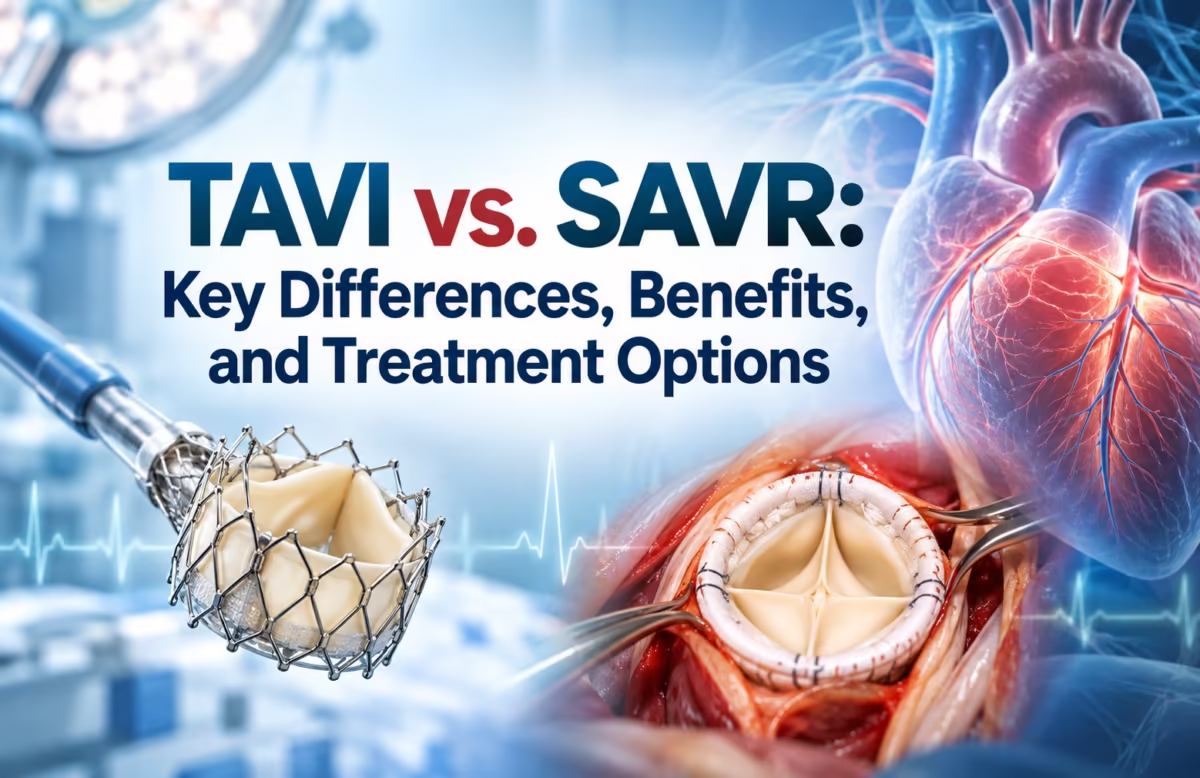
Two important treatment approaches are TAVI vs. SAVR. TAVI, also known as Transcatheter Aortic Valve Implantation, is a catheter-based procedure, while SAVR, or Surgical Aortic Valve Replacement, involves replacing the valve through open-heart surgery.

Understanding the differences between these procedures can help patients discuss appropriate treatment options with their cardiologist.

What Is Aortic Stenosis?

Aortic stenosis occurs when the aortic valve becomes narrowed, often because of calcium buildup, congenital abnormalities, or age-related valve degeneration. The narrowing makes it harder for the heart to push blood into the aorta.

Symptoms may include:

  • Breathlessness, particularly during physical activity
  • Chest discomfort or pain
  • Dizziness or fainting
  • Fatigue and reduced exercise capacity
  • Swelling in the legs or ankles
  • Palpitations in some patients

Severe or symptomatic aortic stenosis may require intervention. The appropriate aortic stenosis treatment depends on several factors, including valve anatomy, age, symptoms, overall health, surgical risk, and other medical conditions.

What Is TAVI?

TAVI stands for Transcatheter Aortic Valve Implantation. It is also commonly called TAVR, or Transcatheter Aortic Valve Replacement.

Instead of surgically opening the chest to remove the diseased valve, a replacement valve is delivered through a catheter. In many cases, the catheter is introduced through an artery in the groin and guided toward the heart.

The new valve is positioned inside the existing aortic valve and expanded into place. The replacement valve then takes over the function of the diseased valve.

Patients searching for a TAVR doctor in Hyderabad, TAVR expert in Hyderabad, or TAVI specialist in Hyderabad should discuss their valve anatomy and overall medical condition with an experienced structural heart team.

What Is SAVR?

SAVR means Surgical Aortic Valve Replacement. It is a conventional surgical procedure in which the damaged aortic valve is removed and replaced with a prosthetic valve.

The operation generally requires surgical access to the heart, and cardiopulmonary bypass is used during the procedure. Depending on the patient’s circumstances, either a mechanical or tissue valve may be selected.

Surgical aortic valve replacement remains an important treatment option for patients with severe aortic valve disease, particularly when surgery is considered more appropriate because of anatomical, clinical, or other factors.

TAVI vs. SAVR: Key Differences

The main difference between TAVI and SAVR is how the replacement valve is delivered and implanted.

Factor TAVI/TAVR SAVR
Procedure Catheter-based Surgical
Chest opening Usually no open-chest surgery Requires surgical access
Valve placement Replacement valve placed through a catheter Diseased valve surgically replaced
Recovery Often shorter Generally longer
Hospital stay Usually shorter, depending on recovery Usually longer
Anesthesia Depends on the individual procedure and centre Generally requires general anesthesia
Patient suitability Depends on anatomy, age, risk and clinical factors Depends on surgical risk, anatomy and other factors

These are general differences. The actual treatment plan should be based on an individual assessment rather than the procedure alone.

Benefits of TAVI

TAVI has changed the treatment approach for many patients with aortic stenosis. Some potential benefits include:

Less invasive treatment

TAVI does not usually require the same type of open-chest surgery associated with conventional valve replacement.

Shorter recovery for many patients

Because TAVI is less invasive, many patients can resume normal activities sooner than after major cardiac surgery, although recovery varies from person to person.

Option for patients with higher surgical risk

TAVI may be considered for certain patients for whom conventional surgery carries significant risk. However, suitability must be determined by a specialist heart team.

Catheter-based valve replacement

The procedure allows a replacement valve to be delivered directly to the heart through a catheter, avoiding surgical removal of the native valve in the traditional manner.

Benefits of SAVR

SAVR also has an established role in the treatment of aortic valve disease.

Established surgical approach

SAVR has been performed for many years and remains an important option for appropriate patients.

Treatment of complex anatomy

Certain anatomical conditions may make surgical valve replacement more suitable than a transcatheter procedure.

Opportunity to address other cardiac problems

If a patient requires another cardiac surgical procedure at the same time, surgery may provide an opportunity to address multiple problems during one operation.

Mechanical or tissue valve options

Depending on age, medical history, lifestyle and other factors, patients may be considered for mechanical or biological valve choices.

How Is the Right Treatment Chosen?

Choosing between TAVI and SAVR is not simply a matter of selecting the less invasive procedure. A detailed evaluation is necessary.

A heart team may consider:

  • Patient age and life expectancy
  • Severity of aortic stenosis
  • Symptoms and functional status
  • Aortic valve anatomy
  • Size and structure of the aortic root
  • Coronary artery anatomy
  • Surgical risk
  • Previous cardiac procedures
  • Kidney and lung function
  • Other medical conditions
  • Long-term valve considerations
  • Patient preferences

Imaging, particularly echocardiography and CT evaluation, can provide important information before the treatment decision is made.

What About Congenital Aortic Stenosis?

Congenital aortic stenosis can occur when a person is born with an abnormal aortic valve or related structural abnormality. The treatment approach depends on the patient’s age, valve anatomy, severity of obstruction and associated cardiac conditions.

Not every patient with congenital aortic stenosis requires valve replacement. Some may be managed with monitoring or other interventions, while severe disease may require a procedure.

This is why assessment by experienced aortic stenosis specialists is particularly important in patients with complex or congenital valve disease.

Recovery After TAVI and SAVR

Recovery varies considerably between patients.

After TAVI, patients are usually monitored for heart rhythm, valve function, vascular complications and other potential issues. Activity is gradually increased according to medical advice.

SAVR generally involves a longer recovery because it is major cardiac surgery. Patients may need more time for the surgical wound and chest to heal and may require a structured cardiac rehabilitation programme.

Regardless of the procedure, regular follow-up is important to monitor the function of the replacement valve and overall cardiovascular health.

Why Experience Matters in TAVI Treatment

TAVI requires detailed assessment of valve anatomy, vascular access, coronary anatomy and other structural features. Careful planning helps the heart team determine whether a transcatheter approach is appropriate.

Patients searching for a TAVR specialist in India, best TAVR doctors, or aortic stenosis specialists in Hyderabad should consider the doctor’s experience with structural heart procedures as well as the expertise of the multidisciplinary team and facilities available.

For patients seeking a best cardiologist in india, the treatment decision should be based on an individualized evaluation rather than a single procedure being considered suitable for everyone.

TAVI vs. SAVR: Which Treatment Is Suitable?

There is no single treatment that is appropriate for every patient with aortic stenosis.

TAVI vs. SAVR decisions require consideration of clinical history, valve anatomy, surgical risk, age, expected longevity, associated heart conditions and the patient’s treatment preferences.

A multidisciplinary heart team can assess these factors and explain the potential benefits and limitations of each approach. In some patients, TAVI may be appropriate, while in others, SAVR may provide the more suitable treatment strategy.

Early evaluation is important when symptoms such as breathlessness, chest discomfort, dizziness or reduced exercise tolerance develop. Timely assessment can help determine whether monitoring, medication or valve intervention is required.

Conclusion

Both TAVI and SAVR are established approaches for treating severe aortic valve disease. TAVI provides a catheter-based alternative to conventional surgery for appropriately selected patients, while SAVR continues to be an important option, particularly when surgical treatment is clinically appropriate.

The choice between TAVI vs. SAVR should be made after a detailed evaluation of the patient’s condition, valve anatomy, overall health and long-term treatment needs.

For evaluation and personalized guidance regarding TAVI, SAVR, and aortic stenosis treatment, consult Dr. C. Raghu, experienced interventional cardiologist in Hyderabad.



second-opinion-before-heart-valve-surgery.webp

August 26, 2026 AbhijitHearty Life

A heart valve diagnosis can create uncertainty for patients and their families. When heart valve surgery is recommended, patients may have questions about the diagnosis, available procedures, surgical risks, recovery, and whether another treatment option may be appropriate. Seeking a second medical opinion can provide additional clarity and help patients make an informed decision based on their individual condition.

A second opinion does not necessarily mean that the first recommendation is incorrect. It offers an opportunity to review the diagnosis, understand the severity of the valve problem, and discuss whether surgical or catheter-based treatment is suitable.

Why Consider a Second Opinion Before Heart Valve Surgery?
 heart valve surgery

Heart valve disorders can vary considerably from one patient to another. The appropriate treatment depends on factors such as the affected valve, severity of disease, symptoms, age, heart function, other medical conditions, and previous cardiac procedures.

Before proceeding with heart valve surgery, a second opinion may help clarify:

  • Whether the diagnosis is accurate and complete
  • How severe the valve disease is
  • Whether treatment is required immediately or can be monitored
  • Whether open heart surgery is necessary
  • Whether a minimally invasive or catheter-based procedure may be suitable
  • What recovery may involve
  • What the expected benefits and potential risks of treatment are

This additional evaluation can be particularly relevant for patients who have been advised to undergo complex valve procedures.

Understanding Different Heart Valve Treatment Options

The term “heart valve treatment” includes several approaches. Traditional surgical valve repair or replacement may be appropriate for certain patients, while others may qualify for catheter-based interventions.

For patients with severe aortic stenosis, Transcatheter Aortic Valve Replacement (TAVR) may be considered in appropriate circumstances. TAVR involves replacing the diseased aortic valve through a catheter rather than conventional open-heart surgery.

Patients should not assume that TAVR or surgery is automatically better. A specialist assessment is necessary to determine the most appropriate treatment based on clinical findings and imaging results.

When Is TAVR Considered?

TAVR is primarily used for selected patients with significant aortic valve disease, particularly aortic stenosis. Factors such as age, surgical risk, anatomy, valve characteristics, associated diseases, and overall health can influence treatment selection.

A consultation with a TAVR expert in Hyderabad can help eligible patients understand whether transcatheter valve replacement may be an option. A TAVR expert may evaluate echocardiography, CT imaging, cardiac catheterization findings, and other clinical information before recommending a treatment pathway.

The decision should be individualized rather than based solely on age or a single test result.

Second Opinion for Mitral Valve Disease
second opinion mitral valve disease

Mitral valve disease may also require careful evaluation. Mitral stenosis, for example, can restrict blood flow through the heart and may produce symptoms such as breathlessness, fatigue, or reduced exercise tolerance.

Depending on the severity and anatomy of the valve, treatment options can include medication for symptom management, balloon procedures, valve repair, or surgery.

Patients seeking mitral valve stenosis treatment may benefit from discussing all appropriate options with a qualified specialist. In selected cases, balloon mitral valvotomy may be considered, while other patients may require mitral valve surgery.

The choice depends on detailed clinical and imaging assessment.

What Should Patients Take to a Second-Opinion Consultation?

A second-opinion consultation becomes more useful when the specialist has access to the patient’s complete medical information. Patients should ideally carry:

  • Echocardiography reports and images
  • CT or MRI reports, where applicable
  • Coronary angiography or catheterization records
  • Previous medical and surgical history
  • Current medication list
  • Blood test reports
  • Previous hospital discharge summaries
  • Details of symptoms and their progression

These records allow the specialist to review the case more comprehensively rather than relying only on a written diagnosis.

Choosing the Right Specialist

Patients should consider consulting a cardiologist or cardiac specialist with experience relevant to their specific valve condition. A cardiologist in Hyderabad can assess the cardiovascular aspects of the condition, while patients requiring procedural or surgical evaluation may need consultation with an appropriately trained cardiac intervention or surgical team.

For patients researching a heart surgeon in Hyderabad, it is important to consider the specialist’s experience with the specific valve disorder and the treatment options being considered. the best cardiologist

Patients may also search for the best cardiologist in Hyderabad or Best cardiologist in Somajiguda, but treatment decisions should be based on clinical expertise, appropriate evaluation, and the individual patient’s medical needs rather than rankings or promotional claims.

Questions to Ask During a Second Opinion

Patients can make the consultation more productive by asking direct questions, such as:

  1. What type and severity of valve disease is present?
  2. Is heart valve surgery currently necessary?
  3. Can the valve be repaired, or does it require replacement?
  4. Is catheter-based treatment an option?
  5. Would TAVR/TAVI be appropriate in this case?
  6. What are the potential benefits and risks of each treatment?
  7. What could happen if treatment is delayed?
  8. What type of follow-up and recovery will be required?

Understanding these points can help patients and families participate more confidently in treatment decisions.

Also read: Why Get a Second Opinion on Heart Problems? When & How 

Making an Informed Heart Valve Treatment Decision

A second opinion is an important part of informed decision-making when major cardiac treatment is being considered. It can help patients understand their diagnosis, compare suitable treatment approaches, and clarify why a particular procedure has been recommended.

For conditions ranging from aortic stenosis to mitral valve disease, heart valve disease treatment should be individualized according to clinical findings, imaging, symptoms, overall health, and procedural suitability.

Patients considering heart valve surgery, TAVR, or other valve interventions can seek a detailed evaluation from Dr. C. Raghu, Clinical Director & Senior Interventional Cardiologist in Hyderabad, for an informed discussion about appropriate treatment options.

If you or a family member has been advised to undergo heart valve treatment, consult Dr. C. Raghu for a comprehensive cardiac evaluation and second opinion before making an important treatment decision.


August 12, 2026 AbhijitHearty Life

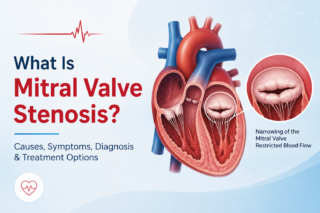
If breathlessness on stairs, fatigue that won’t lift, or a racing heartbeat has sent you searching for answers, and a doctor has mentioned  balloon mitral valvotomy and mitral valve stenosis in the same sentence, you’re likely trying to understand balloon mitral valvotomy for your daily life  not just your test report. This article breaks down what balloon mitral valvotomy is, who it helps, what the procedure and recovery look like, and the questions worth asking your cardiologist before deciding.

What Is Mitral Valve Stenosis?
Mitral valve stenosis

The mitral valve sits between the heart’s left atrium and left ventricle, controlling blood flow between the two chambers. In mitral valve stenosis, this valve narrows and stiffens, most often due to rheumatic heart disease from an earlier, sometimes unnoticed, episode of rheumatic fever. As the opening narrows, the heart has to work harder to push blood through, which can lead to breathlessness, fatigue, palpitations, and, in advanced cases, fluid buildup in the lungs or legs.

Because symptoms often develop gradually, many patients live with a narrowing valve for years before it’s picked up frequently during a routine check-up or an echocardiogram done for an unrelated reason.

What Is Balloon Mitral Valvotomy?

balloon mitral valvotomy

Balloon mitral valvotomy—also called percutaneous balloon mitral valvotomy or PBMV—is a catheter-based procedure used to widen a narrowed mitral valve without open-heart surgery. A thin catheter with a deflated balloon at its tip is guided through a vein, typically from the groin, up into the heart and across the mitral valve. Once positioned, the balloon is inflated to gently separate the fused valve leaflets, improving blood flow.

It’s performed under local anesthesia with the patient conscious, usually takes a couple of hours, and is done in a cardiac catheterization lab rather than an operating theater.

Also read: What is CTEPH? Rare Disease Explained Simply.

Why It’s Often Preferred Over Open-Heart Surgery

For eligible patients, percutaneous balloon mitral valvotomy offers a meaningfully different recovery experience compared to surgical valve repair or replacement:

  • No large chest incision or use of a heart-lung machine
  • Shorter hospital stay in most cases
  • Faster return to routine activities
  • Lower procedural risk profile for suitable candidates
  • The valve is preserved rather than replaced

This doesn’t mean balloon mitral valvotomy suits everyone — valve anatomy, calcium deposits, and the degree of regurgitation all factor into eligibility, which is exactly why a detailed pre-procedure evaluation matters.

Who Is a Good Candidate for Balloon Mitral Valvotomy?

Not every case of mitral valve stenosis calls for balloon mitral valvotomy. Cardiologists typically assess candidacy using echocardiographic scoring systems that look at leaflet mobility, thickness, calcification, and involvement of the valve’s supporting structures. Patients with pliable, minimally calcified valves and no significant mitral regurgitation tend to be the best candidates.

Balloon mitral valvotomy is commonly considered for:

  • Patients with moderate to severe mitral valve stenosis causing symptoms
  • Younger patients who want to avoid or delay valve replacement
  • Pregnant women with symptomatic stenosis, where surgery carries added risk
  • Patients who are poor candidates for open-heart surgery due to other health conditions

If the valve is heavily calcified, badly scarred, or accompanied by significant regurgitation, valve repair or replacement surgery may be the more durable option  something your cardiologist will weigh against percutaneous balloon mitral valvotomy during evaluation.

Also Read: What is chronic total occlusion? Under Chip CTO angioplasty

What to Expect: Procedure and Recovery

On the day of the procedure, patients are usually awake but sedated, with local anesthesia at the catheter insertion site. Real-time imaging, often a combination of fluoroscopy and echocardiography, helps guide the catheter and balloon precisely across the valve.

After the procedure, most patients are monitored for a short period and can typically go home within a day or two, depending on their overall condition and how the heart responds. Recovery is generally faster than after open-heart surgery, with many people resuming normal activity within a week, though your cardiologist will set the exact timeline based on your case.

Follow-up echocardiograms are important afterward to confirm the valve is functioning well and to monitor for restenosis, which can occur over time in some patients.

Living With Mitral Valve Stenosis: Beyond the Procedure

Whether or not balloon mitral valvotomy is the right path, ongoing care matters. Patients with a history of rheumatic fever may need long-term antibiotic prophylaxis to prevent recurrence. Regular monitoring, awareness of symptom changes, and coordination with a cardiologist familiar with structural heart disease all play a role in long-term outcomes.

This is also where continuity of care counts — working with an experienced cardiologist in Hyderabad who understands structural valve disease, alongside coronary artery disease specialists and congenital aortic stenosis specialists in Hyderabad, can make follow-up decisions clearer, especially if symptoms evolve or a second opinion is needed down the line. Patients across the country often look for a trusted best cardiologist in India who can offer this kind of integrated, long-term valve care rather than a one-time consultation.

Questions Worth Asking Your Cardiologist

Before deciding on balloon mitral valvotomy versus surgery, it helps to walk into that conversation prepared:

  • Is my valve anatomy suitable for balloon valvotomy, based on imaging?
  • What are the specific risks in my case?
  • How long is a typical recovery for someone in my situation?
  • What are the chances the valve narrows again later, and how would that be managed?
  • What symptoms should prompt me to call sooner rather than wait for my next appointment?

The Bottom Line

Balloon mitral valvotomy has given many patients with mitral valve stenosis a way to feel better and stay active without the recovery burden of open-heart surgery  but it’s not a one-size-fits-all answer. The right choice depends on your specific valve anatomy, symptoms, and overall health, which is why a thorough evaluation with an experienced cardiology team is the real starting point, not the procedure itself. Many patients researching the top 5 cardiologists in Hyderabad are simply trying to find someone they can trust with exactly this kind of decision.

If you’ve been told you have mitral valve stenosis, don’t wait on the breathlessness or fatigue to get worse  book a consultation with Dr. C. Raghu to get a detailed valve assessment and find out whether balloon mitral valveotomy is the right fit for you.


Dr raghu logo


Dr raghu logo


Call us now if you are in a medical emergency need, we will reply swiftly and provide you with a medical aid.


For Appointment with Dr Raghu: +91 80085 36699
Dr Raghu’s Patient Coordinator: +91 72860 10203
Dr Raghu’s Office Experience: +91 90001 65962
Dr Raghu’s Social Media Communication Channel: +91 97046 51708

Dr. Raghu | Heart Specialist in Hyderabad
Yashoda Hospitals, Raj Bhavan Road, Somajiguda, 1st floor, Room No. 115, Hyderabad -500082, Telangana

Best Cardiologists in Hyderabad


© 2024, Dr. Raghu. All rights reserved. Design & Developed by AMSDigital.in

[gtranslate]
+91-9542475650