
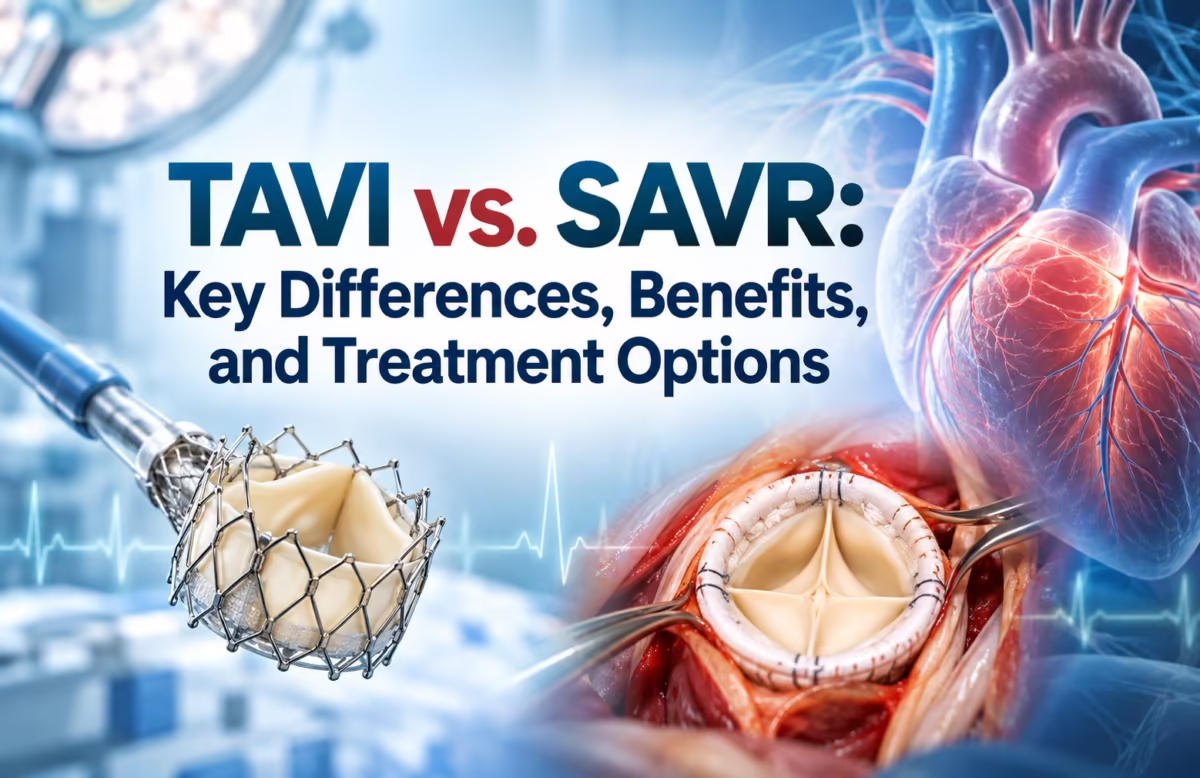
TAVR-vs-SAVR-1200x778.png

September 28, 2026 AbhijitHearty Life

Aortic valve disease can affect how efficiently the heart pumps blood throughout the body. One of the most common valve conditions is aortic stenosis, in which the aortic valve becomes narrowed and restricts blood flow from the heart. When the condition becomes severe, valve replacement may be recommended.

Two important treatment approaches are TAVI vs. SAVR. TAVI, also known as Transcatheter Aortic Valve Implantation, is a catheter-based procedure, while SAVR, or Surgical Aortic Valve Replacement, involves replacing the valve through open-heart surgery.

Understanding the differences between these procedures can help patients discuss appropriate treatment options with their cardiologist.

What Is Aortic Stenosis?

Aortic stenosis occurs when the aortic valve becomes narrowed, often because of calcium buildup, congenital abnormalities, or age-related valve degeneration. The narrowing makes it harder for the heart to push blood into the aorta.

Symptoms may include:

  • Breathlessness, particularly during physical activity
  • Chest discomfort or pain
  • Dizziness or fainting
  • Fatigue and reduced exercise capacity
  • Swelling in the legs or ankles
  • Palpitations in some patients

Severe or symptomatic aortic stenosis may require intervention. The appropriate aortic stenosis treatment depends on several factors, including valve anatomy, age, symptoms, overall health, surgical risk, and other medical conditions.

What Is TAVI?

TAVI stands for Transcatheter Aortic Valve Implantation. It is also commonly called TAVR, or Transcatheter Aortic Valve Replacement.

Instead of surgically opening the chest to remove the diseased valve, a replacement valve is delivered through a catheter. In many cases, the catheter is introduced through an artery in the groin and guided toward the heart.

The new valve is positioned inside the existing aortic valve and expanded into place. The replacement valve then takes over the function of the diseased valve.

Patients searching for a TAVR doctor in Hyderabad, TAVR expert in Hyderabad, or TAVI specialist in Hyderabad should discuss their valve anatomy and overall medical condition with an experienced structural heart team.

What Is SAVR?

SAVR means Surgical Aortic Valve Replacement. It is a conventional surgical procedure in which the damaged aortic valve is removed and replaced with a prosthetic valve.

The operation generally requires surgical access to the heart, and cardiopulmonary bypass is used during the procedure. Depending on the patient’s circumstances, either a mechanical or tissue valve may be selected.

Surgical aortic valve replacement remains an important treatment option for patients with severe aortic valve disease, particularly when surgery is considered more appropriate because of anatomical, clinical, or other factors.

TAVI vs. SAVR: Key Differences

The main difference between TAVI and SAVR is how the replacement valve is delivered and implanted.

Factor TAVI/TAVR SAVR
Procedure Catheter-based Surgical
Chest opening Usually no open-chest surgery Requires surgical access
Valve placement Replacement valve placed through a catheter Diseased valve surgically replaced
Recovery Often shorter Generally longer
Hospital stay Usually shorter, depending on recovery Usually longer
Anesthesia Depends on the individual procedure and centre Generally requires general anesthesia
Patient suitability Depends on anatomy, age, risk and clinical factors Depends on surgical risk, anatomy and other factors

These are general differences. The actual treatment plan should be based on an individual assessment rather than the procedure alone.

Benefits of TAVI

TAVI has changed the treatment approach for many patients with aortic stenosis. Some potential benefits include:

Less invasive treatment

TAVI does not usually require the same type of open-chest surgery associated with conventional valve replacement.

Shorter recovery for many patients

Because TAVI is less invasive, many patients can resume normal activities sooner than after major cardiac surgery, although recovery varies from person to person.

Option for patients with higher surgical risk

TAVI may be considered for certain patients for whom conventional surgery carries significant risk. However, suitability must be determined by a specialist heart team.

Catheter-based valve replacement

The procedure allows a replacement valve to be delivered directly to the heart through a catheter, avoiding surgical removal of the native valve in the traditional manner.

Benefits of SAVR

SAVR also has an established role in the treatment of aortic valve disease.

Established surgical approach

SAVR has been performed for many years and remains an important option for appropriate patients.

Treatment of complex anatomy

Certain anatomical conditions may make surgical valve replacement more suitable than a transcatheter procedure.

Opportunity to address other cardiac problems

If a patient requires another cardiac surgical procedure at the same time, surgery may provide an opportunity to address multiple problems during one operation.

Mechanical or tissue valve options

Depending on age, medical history, lifestyle and other factors, patients may be considered for mechanical or biological valve choices.

How Is the Right Treatment Chosen?

Choosing between TAVI and SAVR is not simply a matter of selecting the less invasive procedure. A detailed evaluation is necessary.

A heart team may consider:

  • Patient age and life expectancy
  • Severity of aortic stenosis
  • Symptoms and functional status
  • Aortic valve anatomy
  • Size and structure of the aortic root
  • Coronary artery anatomy
  • Surgical risk
  • Previous cardiac procedures
  • Kidney and lung function
  • Other medical conditions
  • Long-term valve considerations
  • Patient preferences

Imaging, particularly echocardiography and CT evaluation, can provide important information before the treatment decision is made.

What About Congenital Aortic Stenosis?

Congenital aortic stenosis can occur when a person is born with an abnormal aortic valve or related structural abnormality. The treatment approach depends on the patient’s age, valve anatomy, severity of obstruction and associated cardiac conditions.

Not every patient with congenital aortic stenosis requires valve replacement. Some may be managed with monitoring or other interventions, while severe disease may require a procedure.

This is why assessment by experienced aortic stenosis specialists is particularly important in patients with complex or congenital valve disease.

Recovery After TAVI and SAVR

Recovery varies considerably between patients.

After TAVI, patients are usually monitored for heart rhythm, valve function, vascular complications and other potential issues. Activity is gradually increased according to medical advice.

SAVR generally involves a longer recovery because it is major cardiac surgery. Patients may need more time for the surgical wound and chest to heal and may require a structured cardiac rehabilitation programme.

Regardless of the procedure, regular follow-up is important to monitor the function of the replacement valve and overall cardiovascular health.

Why Experience Matters in TAVI Treatment

TAVI requires detailed assessment of valve anatomy, vascular access, coronary anatomy and other structural features. Careful planning helps the heart team determine whether a transcatheter approach is appropriate.

Patients searching for a TAVR specialist in India, best TAVR doctors, or aortic stenosis specialists in Hyderabad should consider the doctor’s experience with structural heart procedures as well as the expertise of the multidisciplinary team and facilities available.

For patients seeking a best cardiologist in india, the treatment decision should be based on an individualized evaluation rather than a single procedure being considered suitable for everyone.

TAVI vs. SAVR: Which Treatment Is Suitable?

There is no single treatment that is appropriate for every patient with aortic stenosis.

TAVI vs. SAVR decisions require consideration of clinical history, valve anatomy, surgical risk, age, expected longevity, associated heart conditions and the patient’s treatment preferences.

A multidisciplinary heart team can assess these factors and explain the potential benefits and limitations of each approach. In some patients, TAVI may be appropriate, while in others, SAVR may provide the more suitable treatment strategy.

Early evaluation is important when symptoms such as breathlessness, chest discomfort, dizziness or reduced exercise tolerance develop. Timely assessment can help determine whether monitoring, medication or valve intervention is required.

Conclusion

Both TAVI and SAVR are established approaches for treating severe aortic valve disease. TAVI provides a catheter-based alternative to conventional surgery for appropriately selected patients, while SAVR continues to be an important option, particularly when surgical treatment is clinically appropriate.

The choice between TAVI vs. SAVR should be made after a detailed evaluation of the patient’s condition, valve anatomy, overall health and long-term treatment needs.

For evaluation and personalized guidance regarding TAVI, SAVR, and aortic stenosis treatment, consult Dr. C. Raghu, experienced interventional cardiologist in Hyderabad.


tavr-specialist-in-india.webp

April 28, 2026 AbhijitHearty Life

The Heart Valve Condition That Affects Millions — and the Procedure Changing Its Outcome

Severe aortic stenosis is one of the most serious cardiac valve conditions affecting adults in India today, often requiring consultation with a TAVR expert in Hyderabad for advanced and minimally invasive treatment options. The aortic valve — which regulates blood flow from the heart to the rest of the body — progressively narrows over time, forcing the heart to work harder with every beat. Without timely treatment, the condition carries a steep prognosis: within two years of the onset of severe symptoms, more than half of untreated patients do not survive. 

For decades, the only proven treatment was open-heart surgery. For patients who were elderly, frail, or burdened by multiple co-existing illnesses, that surgery was too risky to offer. Families were told there was nothing to be done.

Transcatheter Aortic Valve Replacement—known as TAVR, or equivalently as TAVI (Transcatheter Aortic Valve Implantation)—has fundamentally rewritten that story. Understanding what TAVR is, how it works, and who it helps is now essential knowledge for every patient with aortic stenosis and every family navigating this diagnosis.

What TAVR Actually Involves

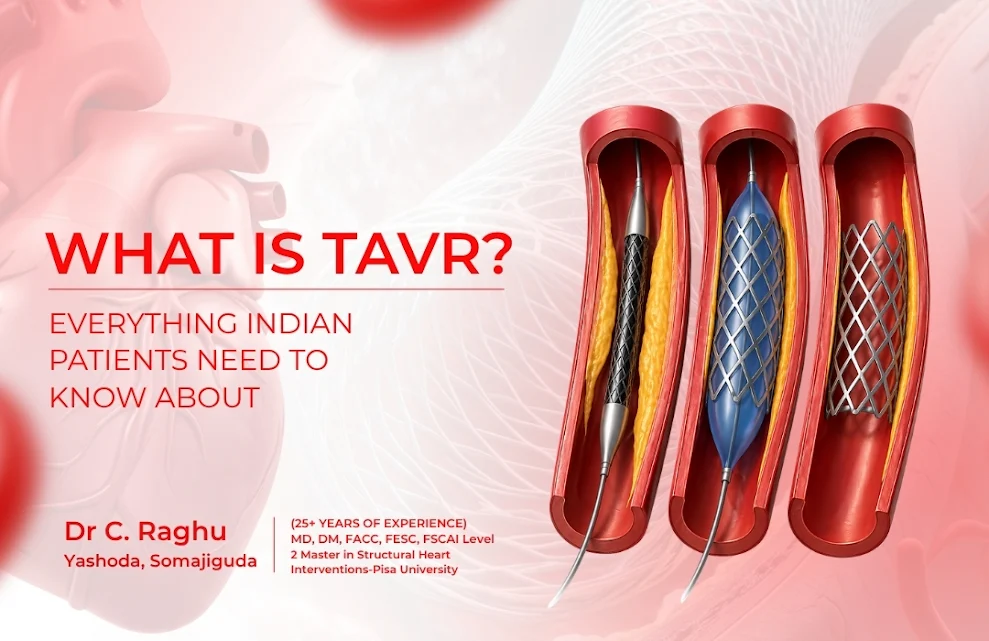
In TAVR—a cornerstone of modern TAVR cardiology—a new prosthetic aortic valve is delivered to the heart not through a chest incision, but through a thin, flexible catheter navigated from outside the body. The most common route is through the femoral artery in the groin, a blood vessel large enough to carry the crimped prosthetic valve to the heart under X-ray and ultrasound guidance.

Once the new valve reaches the diseased native valve, it is expanded — either by a small balloon or by a self-expanding mechanism — and takes over the valve’s function immediately. The diseased native valve leaflets are pushed aside; the new valve sits within them and opens and closes with each heartbeat.

No incision is made in the chest. The heart continues beating throughout. Most patients receive sedation rather than full general anesthesia. They are sitting up and taking fluids the same day. Most are discharged within two to four days.

Recovery is measured in weeks, not months. Patients who undergo TAVR at a high-quality center—performed by an experienced TAVR/TAVI specialist in Hyderabad like Dr. Raghu—typically return to normal daily activities within one to three weeks of the procedure.

TAVI and TAVR refer to the same procedure. TAVR (replacement) is the terminology used in North America; TAVI (implantation) is used widely in Europe and Asia. Clinically, there is no difference.

Also read: Top 10 Cardiologists in Hyderabad: How to Choose Best One  

Why TAVR Is Particularly Significant for Indian Patients

India carries one of the world’s largest burdens of valvular heart disease. Rheumatic heart disease — historically underdiagnosed — has left a significant proportion of the older population with damaged valves. The rising prevalence of degenerative age-related aortic stenosis compounds this burden further.

Until TAVR, many of these patients were turned away. Open-heart surgery was unavailable in their region, too expensive, or too risky given their age and health. TAVR changes all three of those barriers simultaneously. It extends the eligible patient population dramatically—elderly patients, frail patients, those with prior cardiac surgery, and those with severe lung or kidney disease—all of whom previously had no safe treatment option.

A qualified TAVR/TAVI doctor in India can now evaluate these patients, most of whom can be treated safely and return to a quality of life that aortic stenosis had progressively stripped away.

The economic dimension matters too. TAVR experts in India is available at costs that are a fraction of equivalent care in the United States, the United Kingdom, or Australia—without any compromise in clinical quality at top Indian centers. This has made India an increasingly significant destination for TAVR medical tourism among overseas Indian patients and international patients seeking expert, affordable structural heart care.

Also read: Myocardial Infarction: Heart Attack Causes, Symptoms & Treatment 

The Heart Team: Why TAVR Outcomes Depend on More Than the Operator

TAVR is not a procedure performed by a single physician in a standard catheterisation laboratory. Best practice TAVR requires what is known as a Heart Team — a multidisciplinary group that evaluates every candidate collectively before any procedure is planned.

The Heart Team includes an interventional cardiologist with specific structural heart disease training, a cardiac surgeon capable of open valve replacement, a cardiac imaging specialist for echocardiography and CT planning, a cardiac anaesthesiologist, and a specialist nursing team. The team reviews each patient’s clinical and anatomical information, discusses treatment options, and arrives at a consensus recommendation.

This multi-specialist framework exists because TAVR decisions are genuinely complex. Anatomy varies between patients in ways that significantly affect both device selection and implantation strategy. Surgical risk scores must be calculated and interpreted carefully. The alternative of open surgery must be honestly assessed for each individual patient. No single clinician can make these judgments optimally in isolation.

Centres that perform TAVR without a functioning Heart Team structure are not meeting the standard established by international guidelines — and patients are entitled to ask whether the centre they are considering operates within a genuine Heart Team model.

Who Benefits Most from TAVR?

As TAVR technology and evidence have evolved, the patient population it serves has expanded. Originally introduced for patients at prohibitive or high surgical risk, the evidence base now supports TAVR in intermediate-risk and even selected low-risk patients.

Elderly patients — particularly those above 75 — are the core TAVR population. Age-related frailty and comorbidities increase surgical risk substantially, and TAVR’s minimally invasive nature is especially well-suited to this group.

High surgical risk patients—those with severe lung disease, prior cardiac surgery, renal impairment, or STS PROM surgical risk scores above 8%—are prime TAVR candidates regardless of age.

Patients who have been told they are “inoperable”—this is an important category. As TAVR technology has matured and operator experience has grown, anatomical configurations that were once considered unsuitable for TAVR are increasingly treatable. A second opinion from an experienced TAVI expert in India may reveal options that a previous evaluation missed.

Intermediate-risk patients — based on PARTNER 2 and SURTAVI trial data, TAVR produces outcomes comparable to surgery in intermediate-risk patients, expanding its appropriate use further into the mainstream valvular population.

The Evidence Behind TAVR

TAVR is one of the most rigorously evaluated interventions in modern cardiology. The PARTNER trial series, the SURTAVI trial, the EVOLUT trials, and a large body of real-world registry data have collectively established a strong evidence base for TAVR across risk strata. Five-year and early ten-year durability data confirm that TAVR valve function is maintained well in the medium term.

This evidence base is what has driven the transformation of TAVR from a last-resort procedure for the truly inoperable to a mainstream treatment option discussed for the majority of patients presenting with severe symptomatic aortic stenosis.

The First Step for Indian Patients and Families

For anyone navigating an aortic stenosis diagnosis—whether for themselves or for an older family member—the most important action is to seek evaluation at a center with a genuine TAVR program. Not every cardiologist is trained in structural heart disease. Not every hospital advertising cardiac services has the infrastructure, team, and case volume to deliver TAVR safely.

Dr. Raghu is a recognized TAVR/TAVI specialist in India, practicing in Hyderabad, with extensive structural heart disease experience and a Heart Team program that meets current international standards. Patients from across India and internationally consult his practice for TAVR evaluation, second opinions, and complex structural heart care.

The first step is a comprehensive evaluation — clinical assessment, echocardiography, and cardiac CT — that answers the question of whether TAVR, surgical valve replacement, or another approach is the right path for this specific patient. That evaluation, done well, changes outcomes.

Contact Dr. Raghu’s team in Hyderabad through to schedule a TAVR evaluation or structural heart consultation.


TAVR-expert-in-India-2.jpg

May 29, 2025 AbhijitHearty Life

Aortic valve stenosis is a progressive heart disorder wherein the aortic valve constricts, preventing the orderly outflow of blood from the heart to the entire body. It causes some resistance to heart function, and as this resistance builds up, patients begin developing symptoms such as angina, dyspnea, syncope, and sometimes even heart failure.


Dr raghu logo


Dr raghu logo


Call us now if you are in a medical emergency need, we will reply swiftly and provide you with a medical aid.


For Appointment with Dr Raghu: +91 80085 36699
Dr Raghu’s Patient Coordinator: +91 72860 10203
Dr Raghu’s Office Experience: +91 90001 65962
Dr Raghu’s Social Media Communication Channel: +91 97046 51708

Dr. Raghu | Heart Specialist in Hyderabad
Yashoda Hospitals, Raj Bhavan Road, Somajiguda, 1st floor, Room No. 115, Hyderabad -500082, Telangana

Best Cardiologists in Hyderabad


© 2024, Dr. Raghu. All rights reserved. Design & Developed by AMSDigital.in

[gtranslate]
+91-9542475650