
Your Heart on a Digital Dashboard: AI in Cardiac Care
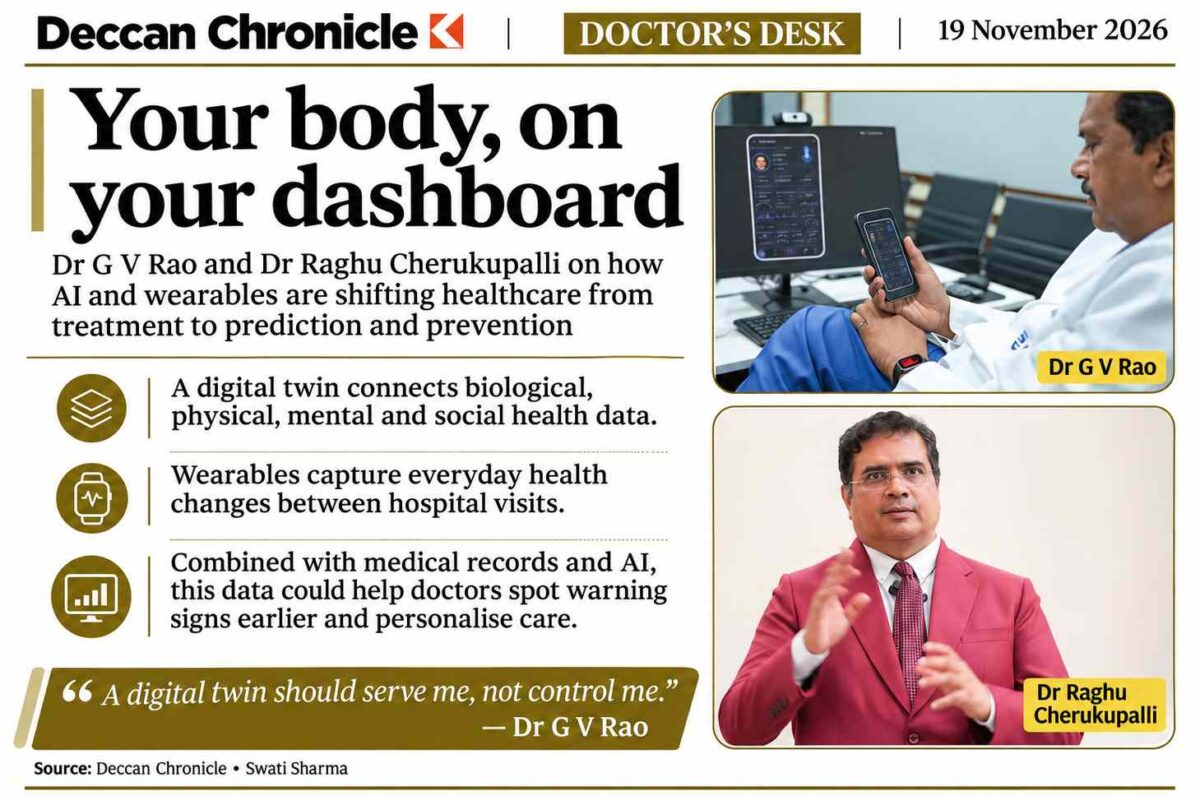
Healthcare is gradually moving beyond traditional diagnosis and treatment towards early detection, continuous monitoring, and preventive care. With the development of artificial intelligence (AI), wearable devices, and digital health records, doctors now have new ways to understand a patient’s health beyond hospital visits.
Technology is making it possible to collect valuable health information throughout the day, helping healthcare professionals identify potential warning signs and make more informed treatment decisions. In cardiology, these developments could play an important role in improving how heart conditions are monitored and managed.
Understanding the Concept of Digital Health Monitoring
Digital health monitoring involves using connected devices and digital platforms to collect and analyze information about an individual’s health. Smartwatches, fitness bands, portable ECG monitors, and blood pressure monitoring devices are some commonly used technologies.
These devices can record different health parameters, including:
- Heart rate and heart rate variability
- Blood pressure readings
- Blood oxygen saturation levels
- Physical activity and daily movement
- Sleep duration and patterns
- Irregular heart rhythm notifications
When collected consistently, this information can help individuals and healthcare professionals understand changes in health patterns over time.
However, wearable devices are not substitutes for medical examinations. Their readings should be interpreted carefully, particularly when symptoms or abnormal measurements are present.
 How Wearable Devices Can Support Cardiac Care
Heart conditions do not always produce noticeable symptoms. Some abnormalities may occur occasionally, making them difficult to identify during a routine hospital consultation.
Wearable technology can help address this challenge by collecting health information outside clinical settings.
For example, certain smartwatches and wearable ECG devices can identify possible irregular heart rhythms, including patterns associated with atrial fibrillation. This information may encourage individuals to seek medical evaluation earlier.
Continuous monitoring can also provide useful information about heart rate trends, physical activity, and changes in daily health patterns. For patients living with certain cardiovascular conditions, these observations may support discussions with their treating doctors.
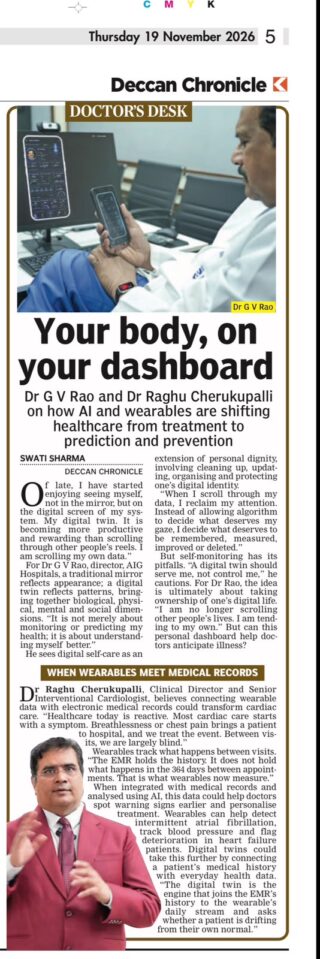
Dr. C. Raghu, Clinical Director and Senior Interventional Cardiologist in Hyderabad, highlights the potential of integrating wearable technology with conventional medical records to develop a more comprehensive understanding of cardiac health.
The objective is not simply to collect more information but to make relevant health data useful for clinical decision-making.
Artificial Intelligence: Turning Health Data into Meaningful Insights
Modern healthcare generates large amounts of information through diagnostic tests, medical records, imaging studies, and wearable devices. Analyzing all this information manually can be challenging.
Artificial intelligence can help process these datasets, identify patterns, and highlight changes that may require medical attention.
In cardiac care, AI-based systems may support:
- Identification of unusual heart rhythm patterns.
- Analysis of long-term heart rate variations.
- Monitoring trends in blood pressure readings.
- Recognition of potential signs of worsening heart failure.
- Personalization of health monitoring based on individual medical history.
For example, a patient’s heart rate, activity levels, and previous medical records may provide useful information when considered together. AI tools can help identify changes from an individual’s usual health patterns, allowing doctors to investigate possible concerns.
Nevertheless, AI-generated alerts are not medical diagnoses. Clinical expertise, patient evaluation, and appropriate diagnostic investigations remain essential.
Digital Twins: A More Complete Picture of Individual Health
One emerging concept in digital healthcare is the development of a digital twin. In simple terms, a digital twin is a digital representation of an individual that brings together different types of health information.
It may combine medical history, laboratory reports, diagnostic results, lifestyle information and data collected through wearable devices.
Unlike a single health report, this approach aims to provide a broader view of how a person’s health changes over time.
In cardiology, a digital twin could potentially help doctors understand changes in heart-related parameters by comparing current information with previous records.
For instance, if a patient with an existing heart condition shows changes in activity levels, heart rate patterns or other monitored parameters, an integrated digital platform may help highlight these developments.
Such information could support more informed follow-ups and encourage timely clinical assessment.
However, digital twins are still an evolving area of healthcare technology. Their accuracy and usefulness depend on the quality of data, clinical validation and appropriate interpretation.
Connecting Wearables with Electronic Medical Records
Electronic Medical Records (EMRs) contain important details about a patient’s medical history, previous diagnoses, medications, investigations and treatment.
However, these records may not capture everything that happens in a patient’s daily life between hospital appointments.
Wearable devices can help fill some of these information gaps by providing regular updates about selected health parameters.
When wearable data is appropriately integrated with EMRs, doctors may be able to review a patient’s health information more comprehensively.
This integration could be particularly valuable for people with:
- Atrial fibrillation and other rhythm disorders.
- High blood pressure.
- Heart failure.
- Previous cardiac events.
- Other long-term cardiovascular conditions.
For example, monitoring changes in heart rate and activity levels over time may provide additional context during follow-up consultations. It can help doctors decide whether further evaluation or adjustments to an existing care plan are necessary.
Moving from Reactive Treatment Towards Preventive Healthcare
Traditionally, many patients seek medical attention after experiencing symptoms such as chest discomfort, breathlessness, palpitations or dizziness.
Although timely treatment is essential, identifying potential health concerns before they become serious is also an important part of modern healthcare.
Digital monitoring and AI-assisted analysis may support this shift towards preventive care by helping identify unusual patterns earlier.
For individuals at increased cardiovascular risk, regular medical check-ups, appropriate investigations and lifestyle management remain fundamental. Technology can complement these measures by providing additional information between consultations.
Dr. C. Raghu believes that combining clinical expertise with relevant digital health information can contribute to a more informed and personalised approach to cardiovascular care.
The focus should remain on understanding each patient’s condition rather than relying entirely on automated readings or technology-generated predictions.
Challenges and Responsibilities in Digital Healthcare
Despite its potential, digital healthcare also presents several challenges. Data privacy, cybersecurity, device accuracy and compatibility between different healthcare platforms require careful attention.
Not every wearable device provides medically reliable information. Similarly, frequent notifications may create unnecessary anxiety if users interpret every variation as a sign of disease.
Patients should avoid changing medications or starting treatment based only on smartwatch readings or AI-generated alerts.
Healthcare professionals must evaluate digital information alongside symptoms, physical examinations and appropriate diagnostic tests.
Conclusion
Artificial intelligence, wearable technology and digital health records are creating new possibilities for understanding and monitoring cardiovascular health. By connecting information collected during everyday activities with clinical records, healthcare professionals may gain a more complete picture of individual health patterns.
Although these technologies cannot replace experienced doctors or established diagnostic methods, they can become valuable tools in supporting early assessment, ongoing monitoring and personalised cardiac care.
The future of cardiology will depend on bringing together medical expertise, reliable technology and patient participation to make healthcare more informed, accessible and preventive.