August 12, 2026

If breathlessness on stairs, fatigue that won’t lift, or a racing heartbeat has sent you searching for answers, and a doctor has mentioned  balloon mitral valvotomy and mitral valve stenosis in the same sentence, you’re likely trying to understand balloon mitral valvotomy for your daily life  not just your test report. This article breaks down what balloon mitral valvotomy is, who it helps, what the procedure and recovery look like, and the questions worth asking your cardiologist before deciding.

What Is Mitral Valve Stenosis?
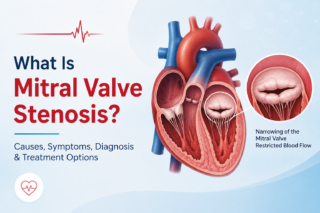
Mitral valve stenosis

The mitral valve sits between the heart’s left atrium and left ventricle, controlling blood flow between the two chambers. In mitral valve stenosis, this valve narrows and stiffens, most often due to rheumatic heart disease from an earlier, sometimes unnoticed, episode of rheumatic fever. As the opening narrows, the heart has to work harder to push blood through, which can lead to breathlessness, fatigue, palpitations, and, in advanced cases, fluid buildup in the lungs or legs.

Because symptoms often develop gradually, many patients live with a narrowing valve for years before it’s picked up frequently during a routine check-up or an echocardiogram done for an unrelated reason.

What Is Balloon Mitral Valvotomy?
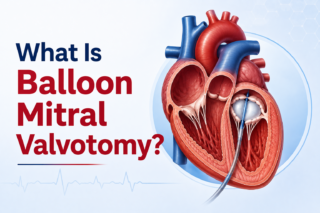
balloon mitral valvotomy

Balloon mitral valvotomy—also called percutaneous balloon mitral valvotomy or PBMV—is a catheter-based procedure used to widen a narrowed mitral valve without open-heart surgery. A thin catheter with a deflated balloon at its tip is guided through a vein, typically from the groin, up into the heart and across the mitral valve. Once positioned, the balloon is inflated to gently separate the fused valve leaflets, improving blood flow.

It’s performed under local anesthesia with the patient conscious, usually takes a couple of hours, and is done in a cardiac catheterization lab rather than an operating theater.

Also read: What is CTEPH? Rare Disease Explained Simply.

Why It’s Often Preferred Over Open-Heart Surgery

For eligible patients, percutaneous balloon mitral valvotomy offers a meaningfully different recovery experience compared to surgical valve repair or replacement:

  • No large chest incision or use of a heart-lung machine
  • Shorter hospital stay in most cases
  • Faster return to routine activities
  • Lower procedural risk profile for suitable candidates
  • The valve is preserved rather than replaced

This doesn’t mean balloon mitral valvotomy suits everyone — valve anatomy, calcium deposits, and the degree of regurgitation all factor into eligibility, which is exactly why a detailed pre-procedure evaluation matters.

Who Is a Good Candidate for Balloon Mitral Valvotomy?

Not every case of mitral valve stenosis calls for balloon mitral valvotomy. Cardiologists typically assess candidacy using echocardiographic scoring systems that look at leaflet mobility, thickness, calcification, and involvement of the valve’s supporting structures. Patients with pliable, minimally calcified valves and no significant mitral regurgitation tend to be the best candidates.

Balloon mitral valvotomy is commonly considered for:

  • Patients with moderate to severe mitral valve stenosis causing symptoms
  • Younger patients who want to avoid or delay valve replacement
  • Pregnant women with symptomatic stenosis, where surgery carries added risk
  • Patients who are poor candidates for open-heart surgery due to other health conditions

If the valve is heavily calcified, badly scarred, or accompanied by significant regurgitation, valve repair or replacement surgery may be the more durable option  something your cardiologist will weigh against percutaneous balloon mitral valvotomy during evaluation.

Also Read: What is chronic total occlusion? Under Chip CTO angioplasty

What to Expect: Procedure and Recovery

On the day of the procedure, patients are usually awake but sedated, with local anesthesia at the catheter insertion site. Real-time imaging, often a combination of fluoroscopy and echocardiography, helps guide the catheter and balloon precisely across the valve.

After the procedure, most patients are monitored for a short period and can typically go home within a day or two, depending on their overall condition and how the heart responds. Recovery is generally faster than after open-heart surgery, with many people resuming normal activity within a week, though your cardiologist will set the exact timeline based on your case.

Follow-up echocardiograms are important afterward to confirm the valve is functioning well and to monitor for restenosis, which can occur over time in some patients.

Living With Mitral Valve Stenosis: Beyond the Procedure

Whether or not balloon mitral valvotomy is the right path, ongoing care matters. Patients with a history of rheumatic fever may need long-term antibiotic prophylaxis to prevent recurrence. Regular monitoring, awareness of symptom changes, and coordination with a cardiologist familiar with structural heart disease all play a role in long-term outcomes.

This is also where continuity of care counts — working with an experienced cardiologist in Hyderabad who understands structural valve disease, alongside coronary artery disease specialists and congenital aortic stenosis specialists in Hyderabad, can make follow-up decisions clearer, especially if symptoms evolve or a second opinion is needed down the line. Patients across the country often look for a trusted best cardiologist in India who can offer this kind of integrated, long-term valve care rather than a one-time consultation.

Questions Worth Asking Your Cardiologist

Before deciding on balloon mitral valvotomy versus surgery, it helps to walk into that conversation prepared:

  • Is my valve anatomy suitable for balloon valvotomy, based on imaging?
  • What are the specific risks in my case?
  • How long is a typical recovery for someone in my situation?
  • What are the chances the valve narrows again later, and how would that be managed?
  • What symptoms should prompt me to call sooner rather than wait for my next appointment?

The Bottom Line

Balloon mitral valvotomy has given many patients with mitral valve stenosis a way to feel better and stay active without the recovery burden of open-heart surgery  but it’s not a one-size-fits-all answer. The right choice depends on your specific valve anatomy, symptoms, and overall health, which is why a thorough evaluation with an experienced cardiology team is the real starting point, not the procedure itself. Many patients researching the top 5 cardiologists in Hyderabad are simply trying to find someone they can trust with exactly this kind of decision.

If you’ve been told you have mitral valve stenosis, don’t wait on the breathlessness or fatigue to get worse  book a consultation with Dr. C. Raghu to get a detailed valve assessment and find out whether balloon mitral valveotomy is the right fit for you.

Abhijit

Occlusion-Myocardial-Infarction-Symptoms-Treatment-1-1200x778.jpeg

August 3, 2026

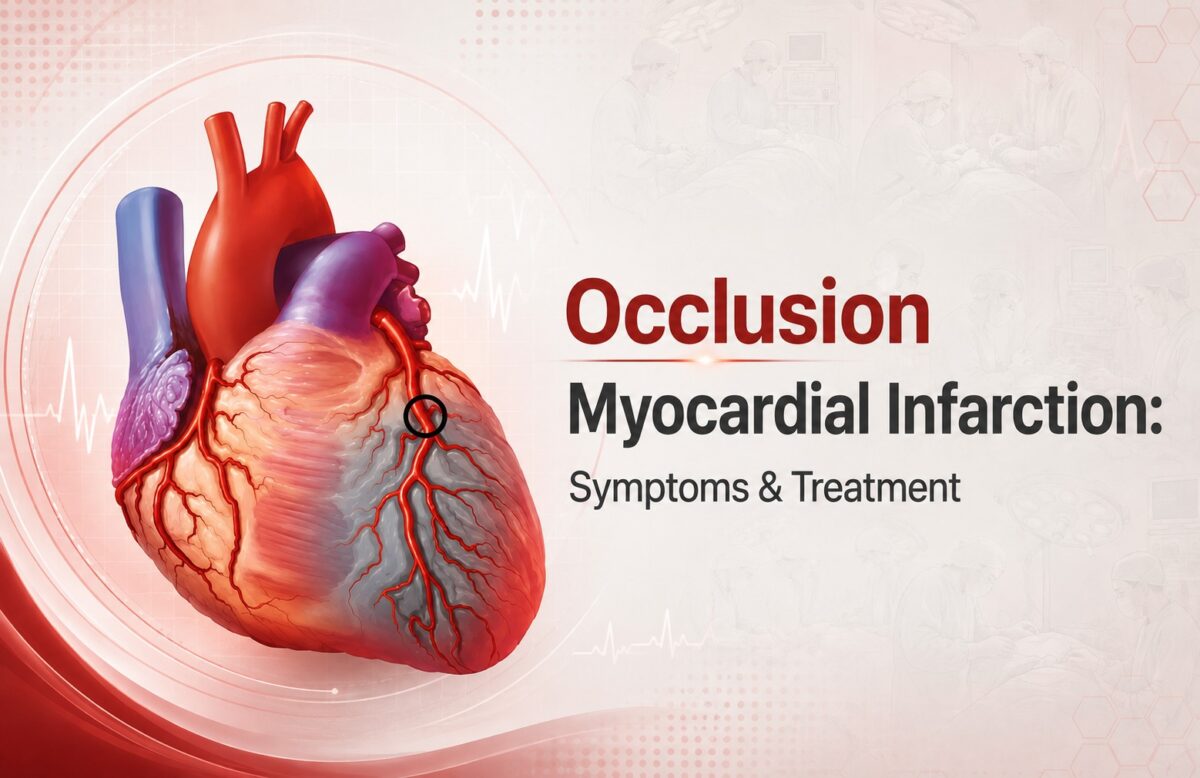
Occlusion myocardial infarction is a serious heart condition that occurs when a coronary artery becomes completely or significantly blocked, reducing or stopping blood flow to part of the heart muscle. Because prolonged loss of blood supply can cause permanent heart muscle damage, recognizing warning signs and getting emergency medical care quickly is extremely important.

For patients in Hyderabad, understanding the symptoms and treatment options can help them respond appropriately when a heart attack is suspected.

What Is Occlusion Myocardial Infarction?

A myocardial infarction, commonly called a heart attack, occurs when blood flow to the heart muscle is interrupted. In an occlusion myocardial infarction, a coronary artery may become completely blocked, often because a blood clot forms over a ruptured or damaged cholesterol plaque.

When oxygen-rich blood cannot reach the heart muscle, the affected tissue begins to become injured. The longer the artery remains blocked, the greater the potential for permanent heart damage.

This is why suspected heart attack symptoms should never be ignored or treated as simple indigestion, acidity, fatigue, or anxiety.

Common Symptoms of Occlusion Myocardial Infarction

Symptoms can vary between individuals, but common warning signs include:

  • Pressure, tightness, heaviness, or pain in the chest
  • Pain spreading to the arm, shoulder, back, neck, or jaw
  • Shortness of breath
  • Cold sweating
  • Nausea or vomiting
  • Unusual weakness or extreme tiredness
  • Dizziness or light-headedness
  • Rapid or irregular heartbeat
  • A feeling of anxiety or impending danger

Some people, particularly older adults and those with diabetes, may experience less typical symptoms. Chest discomfort may also be mild rather than severe.

If symptoms suggest a heart attack, seeking emergency medical attention immediately is more important than trying to identify the exact cause at home.

What Causes a Coronary Artery Occlusion?

Several factors can contribute to coronary artery blockage. One of the most common causes is coronary artery disease, where fatty deposits gradually accumulate inside the arteries.

Risk factors include:

  • High cholesterol
  • High blood pressure
  • Diabetes
  • Smoking or tobacco use
  • Obesity
  • Physical inactivity
  • Unhealthy diet
  • Family history of heart disease
  • Increasing age
  • Chronic stress
  • Previous cardiovascular disease

A plaque inside a coronary artery can sometimes rupture suddenly. The body may respond by forming a blood clot, which can rapidly restrict or completely stop blood flow.

How Is Occlusion Myocardial Infarction Diagnosed?

Doctors use several tests to determine whether a patient is experiencing a heart attack and to understand the severity of the blockage.

Electrocardiogram (ECG)

An ECG records the heart’s electrical activity and can identify patterns associated with acute coronary artery blockage.

Blood Tests

Cardiac biomarkers, particularly troponin, can help determine whether heart muscle injury has occurred.

Echocardiogram

An echocardiogram uses ultrasound to evaluate heart structure and function. It can help doctors identify areas of the heart that are not contracting normally.

Coronary Angiography

Coronary angiography allows doctors to examine the coronary arteries and identify significant narrowing or blockage. It can also help guide treatment decisions.

Treatment for Occlusion Myocardial Infarction

Treatment depends on the patient’s condition, the location and severity of the blockage, and how quickly medical care is provided.

Emergency Medical Treatment

Doctors may use medications to reduce clot formation, improve blood flow, control pain, and stabilize the patient’s condition.

Coronary Angioplasty and Stenting

For an acutely blocked coronary artery, percutaneous coronary intervention (PCI) may be performed. During the procedure, a catheter is guided into the affected artery. A balloon can be used to open the narrowed area, and a stent may be placed to help maintain blood flow.

Rapid restoration of blood flow is an important goal in appropriate patients with an acute coronary artery occlusion.

Additional Treatment

Depending on the patient’s cardiovascular risk and overall health, treatment may also include medicines for cholesterol, blood pressure, blood clot prevention, and other underlying conditions.

After the acute event, lifestyle changes and cardiac rehabilitation may play an important role in reducing future cardiovascular risk.

Also read:  What is chronic total occlusion? Under Chip CTO angioplasty  

Why Time Matters During a Heart Attack

Heart muscle requires a continuous supply of oxygen-rich blood. When a coronary artery becomes blocked, the affected muscle can progressively become damaged.

For this reason, people experiencing possible heart attack symptoms should not wait for symptoms to disappear on their own. Delaying medical evaluation can reduce the opportunity for timely treatment.

If someone develops severe or persistent chest discomfort, breathlessness, sweating, fainting, or pain spreading to the arm, jaw, back, or shoulder, emergency medical care should be sought immediately.

Choosing a Heart Specialist in Hyderabad

Patients dealing with suspected or diagnosed coronary artery disease may need evaluation by an experienced cardiologist in Hyderabad. A heart specialist in Hyderabad can assess cardiovascular risk factors, interpret diagnostic tests, and recommend an appropriate treatment strategy.

For patients with complex coronary conditions, specialist evaluation can help determine whether medication, coronary angioplasty, stenting, or another intervention is appropriate.

Searching for a myocardial cardiologist in Hyderabad may also lead patients to specialists who manage heart attacks and other coronary artery conditions.

Can Occlusion Myocardial Infarction Be Prevented?

Not every heart attack can be prevented, but many cardiovascular risk factors can be managed.

Helpful measures include:

  • Controlling blood pressure and cholesterol
  • Managing diabetes effectively
  • Avoiding smoking and tobacco
  • Maintaining a healthy body weight
  • Following a heart-healthy diet
  • Exercising according to medical advice
  • Taking prescribed medicines regularly
  • Attending recommended cardiovascular check-ups
  • Recognizing and acting on warning symptoms promptly

People with known heart disease or multiple cardiovascular risk factors should discuss an appropriate prevention plan with their doctor.

Read more: What Is Atrial Fibrillation? Understanding AFib Simply 

When Should You Seek Emergency Care?

Chest pain or discomfort should never be ignored when it is sudden, severe, persistent, or accompanied by symptoms such as breathlessness, sweating, nausea, dizziness, or pain radiating to the arm or jaw.

Do not wait for symptoms to become severe before seeking emergency medical attention.

Occlusion myocardial infarction can become life-threatening when blood flow to the heart is significantly interrupted. Early recognition, rapid diagnosis, and timely treatment can make a critical difference.

Consult Dr. C. Raghu

If you are concerned about coronary artery disease, heart attack symptoms, or other cardiovascular problems, consultation with an experienced cardiology specialist can help with appropriate evaluation and treatment planning.

Dr. C. Raghu is a senior interventional cardiologist associated with advanced cardiac care in Hyderabad and Secunderabad.

Watch the video to review the discussion on occlusive myocardial infarction and acute coronary syndrome: https://youtu.be/jWvP0BG2bsY

For more information about cardiac care and interventional cardiology services,

Important: This article is intended for general educational purposes and does not replace professional medical advice. If you or someone around you has symptoms suggestive of a heart attack, seek emergency medical care immediately.

Abhijit

what-is-atrial-fibrillation.jpg

July 27, 2026

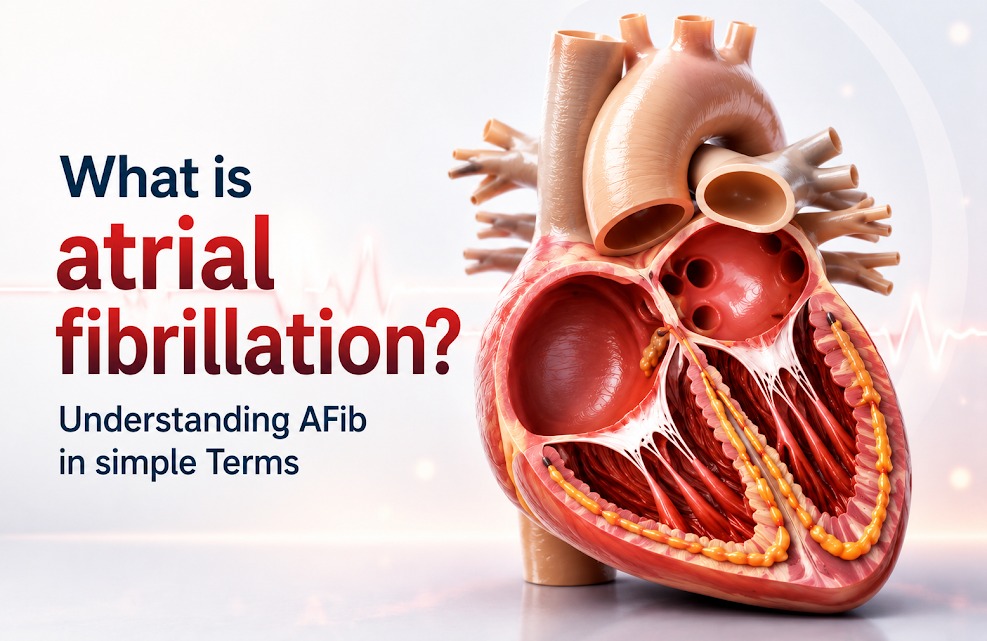
Atrial fibrillation, commonly called AFib, is becoming increasingly common among middle-aged individuals. But here’s the thing—most people don’t understand what’s actually happening inside their hearts when this occurs. You might hear the term “AFib” from your doctor, but you’re left wondering what it really means for your life, your health, and your future.

What Exactly Happens During Atrial Fibrillation?

atrial fibrillation treatment

Let me explain this simply. Your heart works like a coordinated team. It has four chambers, and they’re supposed to contract in a specific rhythm, pumping blood efficiently throughout your body. When everything works correctly, your heart beats between 60 and 100 times per minute, and each beat is regular like a drum in an orchestra.

But with atrial fibrillation, something goes wrong. The two upper chambers of your heart, called the atria, start beating chaotically. Instead of contracting in a coordinated way, they’re essentially quivering. This irregular electrical activity causes your heart to beat irregularly and often rapidly. You might feel your heart skipping beats or racing without reason.

The problem is this: when your heart isn’t pumping efficiently, it doesn’t move blood through your body the way it should. This is serious.

Also read: What is coronary angioplasty? Everything you need to know  

Why Should You Care About This?

You might think, “Okay, so my heart beats irregularly. What’s the worst that can happen?” Here’s where you need to pay attention:

Blood clots form. When blood sits in your heart chambers instead of being pumped out efficiently, it can pool and clot. These clots can travel to your brain and cause a stroke—a brain stroke that could leave you paralyzed, unable to speak, or worse.

Your heart weakens. Over time, the constant irregular beating strains your heart muscle. It’s like running a machine non-stop without proper maintenance. Eventually, it breaks down, leading to heart failure.

You feel terrible. Shortness of breath, fatigue, dizziness—these aren’t just inconveniences. They affect your quality of life, your work, and your ability to enjoy time with your family.

Other complications arise. Your risk of heart disease increases. Your blood pressure becomes difficult to control. Your overall health deteriorates.

Who Gets Atrial Fibrillation?

You might be at higher risk if you:

  • Have high blood pressure
  • Are over 65 years old (though it can happen when younger)
  • Have heart disease or a previous heart attack
  • Have thyroid problems
  • Are obese or overweight
  • Drink excessive alcohol
  • Have sleep apnea
  • Experience chronic stress
  • Have family history of AFib

If any of these apply to you, you should be paying attention to any unusual heart sensations.

Atrial Fibrillation Treatment: What Are Your Options?

The good news? Atrial fibrillation is treatable. You’re not helpless here. You have options, and finding the right approach matters tremendously.

First, there’s medication. Your doctor might prescribe medications that help regulate your heart rate or convert your heart back to a normal rhythm. Some people do very well with medication alone.

Second, there are lifestyle changes. You need to reduce stress, exercise regularly (as approved by your doctor), limit alcohol, maintain a healthy weight, and manage any underlying conditions like high blood pressure.

Third, there are medical procedures. If medication doesn’t work, procedures like ablation can be performed. An interventional cardiologist specialist trained in heart procedures can access your heart and remove the tissue causing the irregular signals. It’s minimally invasive, meaning small incisions, less pain, and faster recovery.

Finding the Right Atrial Fibrillation Doctor in Hyderabad

If you’re in Hyderabad, you’re fortunate. The city has some of India’s finest cardiac specialists. When looking for an atrial fibrillation doctor in Hyderabad, you want someone experienced, compassionate, and thorough. You want a doctor who explains things clearly, who listens to your concerns, and who works with you to create a treatment plan that fits your life.

The best atrial fibrillation doctors in India understand that AFib isn’t just a medical condition—it’s something that affects how you live. They know that you want to return to your normal activities, spend time with your loved ones, and not feel like your health is controlling your life.

Taking Action Today

Don’t wait until you have a major event to address AFib. If you experience irregular heartbeats, shortness of breath, or persistent fatigue, schedule an appointment with a cardiologist. Get evaluated. Get answers.

Your heart is the most important muscle in your body. It’s literally keeping you alive. Treating atrial fibrillation early, with the guidance of a skilled cardiologist for atrial fibrillation, can prevent serious complications like brain stroke and significantly improve your quality of life.

Also read: TAVR/TAVI Procedure in Hyderabad Minimally Invasive Care  

Moving Forward

You don’t have to live with the fear and uncertainty of AFib. Modern medicine has given us excellent tools to manage this condition. The first step is getting a proper diagnosis and treatment from qualified specialists. The second step is taking responsibility for your health—making lifestyle changes, taking medications as prescribed, and maintaining regular follow-ups with your doctor.

Ready to take control of your heart health? Dr. C. Raghu, an experienced interventional cardiologist at Yashoda Hospital, Somajiguda, Hyderabad. Your heart deserves expert care.

Abhijit

Coronary-angioplasty-2.webp

July 1, 2026

Coronary angioplasty: Your chest feels tight. You’ve been getting shortness of breath lately, especially when you climb stairs or walk briskly. You’re worried. Your doctor has mentioned something called coronary angioplasty, but you don’t understand what it is or whether you really need it.

You’re not alone. Many middle-aged people are facing coronary artery disease without fully understanding their treatment options. The term “angioplasty” sounds intimidating. The word “stent” makes you nervous. But here’s the truth: understanding what these procedures are and how they can help you is empowering. It gives you control over your health decisions.

Understanding Coronary angioplasty Artery Disease
Coronary angioplasty

Before we discuss angioplasty, you need to understand the problem it solves.

Your heart is a muscle that needs oxygen to work. Coronary arteries deliver oxygen-rich blood to your heart. These are the highways of your cardiovascular system. Over time, for various reasons—high cholesterol, high blood pressure, smoking, diabetes, and stress—fatty deposits build up inside these arteries. This buildup is called plaque.

Coronary artery disease happens when these arteries narrow. Blood flow decreases. Your heart struggles to get enough oxygen, especially during activity or stress. You feel chest pain. You feel exhausted. You feel vulnerable.

This is serious. Completely blocked arteries lead to heart attacks.

What Exactly is Coronary Angioplasty?

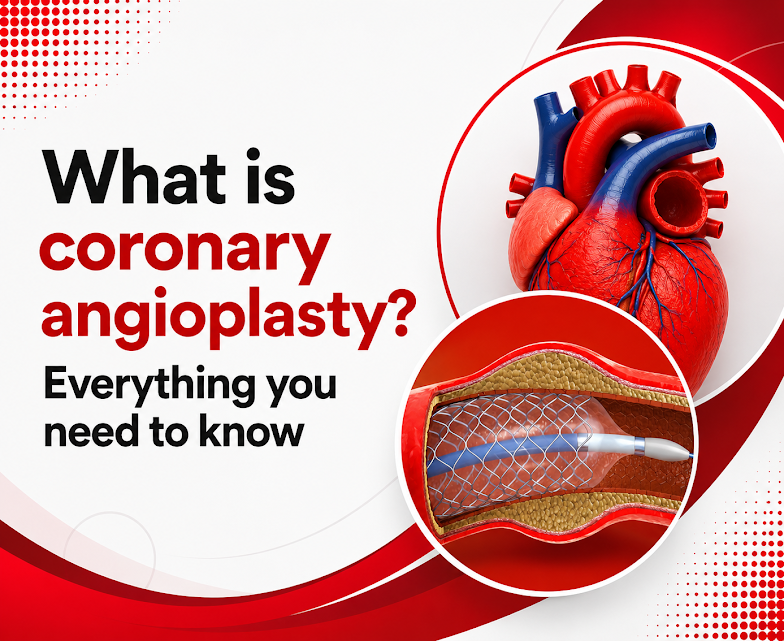
Let’s demystify this. Coronary angioplasty is a minimally invasive procedure that opens blocked or narrowed coronary arteries. It’s not surgery in the traditional sense—no large incisions, no general anesthesia, no weeks of recovery.

Here’s how it works:

Step One: Angiogram Your coronary artery disease doctor first performs an angiogram. A thin catheter (tube) is inserted through an artery in your groin or arm. This catheter is guided to your heart. A special dye is injected through the catheter, and X-rays are taken. These images show exactly where your arteries are blocked or narrowed. You’re awake during this procedure, though mildly sedated.

Step Two: Balloon Inflation Once the blocked area is identified, a balloon catheter is advanced to that location. When the catheter is in position, the balloon is inflated. This balloon pushes the plaque against the artery wall, widening the artery and restoring blood flow. You might feel slight chest discomfort—this is normal and temporary.

Step Three: Stent Placement In most modern angioplasty procedures, a stent is placed. Think of a stent as a tiny mesh tube. It keeps the artery open after the balloon is removed, preventing the artery from narrowing again. Most stents today are drug-eluting, meaning they release medication that prevents scar tissue buildup.

The entire procedure typically takes 30 minutes to an hour.

Why Your Doctor Recommends Angioplasty

Your coronary artery disease specialist recommends angioplasty for specific reasons:

  • You have significant blockages causing symptoms
  • You have blockages that could cause a heart attack
  • Medical management (medications) isn’t sufficient
  • You’ve had a recent heart attack
  • You’re having a heart attack right now

Not all coronary artery disease requires angioplasty. Some people do well with medications. But when angioplasty is appropriate, it can be life-changing.

Also read: Pulmonary Embolism in India: Emergency & Finding Specialist  

The Difference Between Angioplasty and Angiogram

Many people confuse these terms. Let me clarify:

An angiogram is a diagnostic test. It shows what’s happening in your arteries.

Angioplasty is a treatment. It opens blocked arteries. It often includes stent coronary placement.

You might have an angiogram and learn that you don’t need angioplasty. Or you might have an angiogram and immediately proceed to angioplasty during the same procedure.

Recovery and Aftercare coronary angioplasty

Here’s what’s wonderful about angioplasty: recovery is relatively quick.

After the procedure:

  • You’ll stay in the hospital overnight or possibly go home the same day
  • You’ll have a bandage over the catheter insertion site
  • You can resume light activities within a few days
  • You return to normal activities within 1-2 weeks
  • You’ll take medications to prevent clotting and manage your condition

Compared to open-heart surgery, this is minimal disruption to your life.

Types of Angioplasty

Standard Angioplasty (PTCA): Percutaneous Transluminal Coronary Angioplasty is the traditional form, often with stent placement (PTCA Stent). It works well for most blockages.

Specialized Procedures: For particularly challenging blockages, chip angioplasty (rotational atherectomy) might be used. This technique actually rotates a burr that smooths hardened plaque. It’s more specialized and requires experienced operators.

For chronic total occlusions arteries completely blocked specialized techniques might be employed.

Finding Your Specialist in Hyderabad

You need an experienced coronary artery disease doctor who performs angioplasty regularly. You need someone who has handled complications and knows how to navigate the most challenging cases.

The best angioplasty expert in India will have extensive training, excellent outcomes, and a compassionate approach to patient care. They’ll explain everything clearly, answer your questions, and work with you to determine whether angioplasty is truly the right choice for your situation.

In Hyderabad, you have access to heart specialists in Hyderabad who bring world-class expertise to this procedure.

Life After Angioplasty

You need to understand: angioplasty treats the blockage, but it doesn’t cure the underlying coronary artery disease. You’ll still need to:

  • Take medications as prescribed (usually including blood thinners, blood pressure medications, cholesterol medications)
  • Make lifestyle changes—diet, exercise, stress management
  • Stop smoking, if applicable
  • Control diabetes and blood pressure
  • Attend regular follow-ups

The good news? Most people do extremely well after angioplasty. Blood flow is restored. Symptoms improve dramatically. Quality of life increases significantly.

Possible Complications (Rare, But Real)

While generally safe, angioplasty does carry small risks:

  • Bleeding at the catheter site
  • Artery perforation
  • Allergic reaction to dye
  • Stent restenosis (renarrowing)
  • Blood clots

This is why you need an experienced operator and proper aftercare.

Also read: CHIP Angioplasty: Advanced Coronary Artery Disease Treatment Explained  

Prevention is still best.

Remember: the best treatment is prevention. If you don’t have coronary artery disease yet but are at risk, focus on:

  • Not smoking
  • Managing stress
  • Exercising regularly
  • Eating healthy
  • Maintaining healthy weight
  • Controlling blood pressure and cholesterol
  • Managing diabetes

Moving Forward coronary angioplasty Doctor

If you’re dealing with coronary artery disease, you’re not facing a death sentence. Modern interventions like angioplasty have revolutionized how we treat this condition. Many people go on to live full, active lives after successful angioplasty.

The key is working with experienced specialists who understand both the procedure and your individual circumstances.

Take the first step toward better heart health. Consult with Dr. C. Raghu, an experienced interventional cardiologist in Hyderabad specializing in coronary interventions. Schedule your appointment.
Call Us +91 95424 75650 

Abhijit

heart-specialist-in-hyderabad.jpg

June 16, 2026

The Moment Your World Shifts

Heart You’re sitting in your doctor’s clinic, discussing concerns with a heart specialist in Hyderabad. The words come fast—”irregular heartbeat,” “blockage,” and “surgery might be needed.” Your hands go cold. Your mind starts racing. You nod, but you’re not sure if you’ve heard everything correctly. You drive home. You lie awake that night. Questions keep popping up in your head like unwanted guests at a party.

This is the moment when most of us freeze. We have just received news that shakes our foundation. Your heart—that fist-sized organ that keeps you alive—needs attention. And suddenly, everything feels urgent and scary at the same time.

You’re not alone in feeling this way. Thousands of people across urban cities face similar situations every single day. The difference? Some of them take one more step. They decide to get a second opinion.

Why Your First Instinct Should Be to Look Again
heart doctor in hyderabad

Here’s something that nobody tells you clearly: getting a second opinion on heart problems is not about doubting your doctor. It’s about protecting yourself. It’s about making sure you understand what’s happening inside your chest.

Think about it this way. When you buy a house, you get an inspection. When you buy a car, you check the engine. So why would you trust the biggest investment—your health—to just one perspective?

Also read: Best Heart Doctor in Hyderabad Why Dr. C Raghu 

Your heart deserves more than one look.

Heart diseases are tricky. They hide. They disguise themselves. Two different doctors might see the same test results and interpret them differently. This isn’t about one being right and one being wrong. It’s about getting clarity.

When you’re dealing with conditions like

  • Aortic stenosis (narrowing of the aortic valve)
  • Heart valve problems requiring screening
  • Blockages in your arteries
  • Abnormal rhythms that concern you
  • Symptoms that worry you about a potential heart attack

…you deserve to understand all your options. A second opinion from another cardiologist gives you exactly that.

What Happens When You Don’t Get That Second Look?

Let’s talk about the real consequences. Not to scare you, but to wake you up.

The Wrong Path

Sometimes, you might be recommended a treatment that isn’t actually necessary for your specific situation. Surgery is powerful medicine. It works. But it also carries risks. What if there was a simpler, gentler option that your first doctor didn’t mention? What if a procedure like TAVI (transcatheter aortic valve implantation) could work for you, but nobody told you about it?

You might end up on a surgical table when you don’t need to be.

The Missed Opportunity

On the flip side, sometimes people delay getting proper treatment because they’re not convinced their condition is serious. They think they’ll wait it out. They think it’ll get better on its own. A second opinion might have shown them they needed to act faster. And with heart problems, timing is everything. Heart attack symptoms can escalate quickly. Waiting becomes dangerous.

The Money Problem

Let’s be real. Heart treatments are expensive. You want to make sure you’re spending your money on what you actually need. A second opinion helps you avoid unnecessary procedures. It also helps you understand if there are less expensive options available that work just as well for your condition.

The Stress Weight

There’s a burden you carry when you’re unsure. You lie awake. You worry. You second-guess. Getting a second opinion doesn’t just benefit your body. It gives your mind relief. It transforms “I hope this is right” into “I’m confident about this decision.”

Also read: TAVR/TAVI Procedure in Hyderabad Minimally Invasive Care 

When Exactly Should You Seek That Second Opinion?

You’re probably wondering: Should I do this every time a doctor mentions my heart? No. But here are the moments when you absolutely should:

You should get a second opinion when:

  • Your doctor recommends surgery or an invasive procedure
  • You’re being told you need a major lifestyle change but it doesn’t feel right to you
  • You have a serious diagnosis that affects your future (like needing a valve replacement)
  • You feel uncomfortable with your current doctor’s explanation
  • Your condition isn’t improving despite treatment
  • You want to know about advanced options like TAVR (transcatheter aortic valve replacement) or other newer interventions
  • You’re looking for the best possible treatment in your area

This isn’t about being difficult. This is about being smart.

How Do You Actually Get a Second Opinion?

Here’s the practical part. The part that doesn’t require courage—just action.

Step 1: Gather Your Records

You need your test results. Your ECG reports. Your echocardiogram images. Your CT scans. Your blood work. Collect everything. Call your first doctor’s office and request copies. They have to give them to you. It’s your right.

Step 2: Find the Right Specialist

Don’t just pick any cardiologist. Look for someone who specializes in your specific condition. If you’re dealing with valve issues, you want someone who has extensive experience with heart valve screening and valve disorders. If you might need a newer procedure, find a specialist experienced in that area.

When you’re searching for the right expert in your city, keywords like “best cardiologist in Hyderabad” or simply “cardiologist in Hyderabad” can help you find experienced doctors nearby.

Step 3: Schedule and Prepare

Book an appointment. Write down your questions before you go. Don’t rely on memory. Bring your list. Bring someone with you—a family member or friend who can listen and help you remember important points.

Step 4: Listen and Compare

The second doctor will review your case. They might run additional tests. They might confirm what the first doctor said. Or they might offer a different perspective. Both outcomes are valuable. Now you have information from multiple sources.

The Real Benefits You Get

When you take this step, something shifts. You’re not a passive patient anymore. You become an active participant in your own health journey.

  • You understand your condition better. Two explanations are clearer than one.
  • You know your options. Treatment paths become visible. You choose, not just accept.
  • You feel in control. Your stress decreases. Your confidence increases.
  • You make better decisions. Decisions based on complete information are always better.
  • Your outcomes improve. Studies show that informed patients who actively participate in their treatment decisions have better health outcomes.

Your heart deserves your attention.

Your heart has been beating for you your entire life. It’s carried you through joy and pain, exercise and rest, stress and calm. When something goes wrong, it deserves your full attention. It deserves your careful, thoughtful decision-making. It deserves that second opinion.

Don’t rush. Don’t panic. But don’t ignore either one.

Get informed. Get that second opinion. Get clarity. Then move forward with confidence.

Your health is too important to leave to chance. The best cardiologist in your area—whether in Hyderabad or anywhere else—will welcome your questions and your second opinion. They know that informed, confident patients heal better.

Take Action Today

Don’t let uncertainty rule your life. If you’re dealing with heart concerns, if you’ve received a diagnosis that worries you, or if you want to explore all your options for conditions like aortic stenosis or valve problems—reach out to specialists who can help.

Connect with Dr. C. Raghu, an interventional cardiologist at Yashoda Hospital in Somajiguda, Hyderabad, who can provide expert guidance on your heart health journey.

About the Expert

Dr. C. Raghu is an interventional cardiologist practicing at Yashoda Hospital, Somajiguda, Hyderabad. With extensive experience in treating heart conditions, valve disorders, and advanced procedures like tavi/tavr doctor in Hyderabad specializes in providing comprehensive cardiac care and helping patients understand all their treatment options.

Abhijit

cardiologist-in-hyderabad.png

June 9, 2026

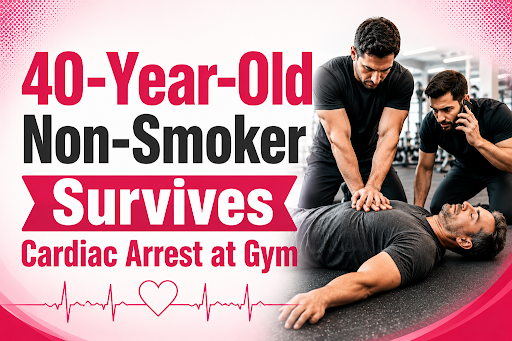
Cardiologist in Hyderabad are increasingly seeing cases like Rajesh’s. Rajesh, 40, a non-smoker and non-drinker, IT team lead in Hyderabad, and father of two, had been going to the gym for three years. He was proud of his consistency. On a Thursday evening in March, while finishing his chest press set, he felt a sudden, crushing pressure in the chest. His vision narrowed. He hit the floor. He was lucky. His gym had a defibrillator. One trainer knew CPR. The ambulance arrived in 8 minutes. Within an hour, he was receiving cardiac arrest treatment in Hyderabad; a stent was placed, the artery reopened, and the heart muscle was being saved. Rajesh survived. Many like him do not. 

Why Did This Happen to a Healthy, Non-Smoking Gym-Goer?

Non-smoker heart attack risk is a subject cardiologists are raising alarms about across India. The vast majority of Indian men in their 30s and 40s who suffer cardiac events are non-smokers. When Rajesh’s arteries were examined after his cardiac arrest, his right coronary artery was 90% blocked. He had no symptoms — none that he had noticed and acted on. What he did have was a combination of:

  • Coronary artery disease has been building silently for a decade
  • Undetected high LDL cholesterol is often genetic
  • Chronic work stress with years of poor sleep
  • High triglycerides from a diet heavy in refined carbs and fried food
  • Family history, which he was aware of, but never acted on

Warning Signs Before Cardiac Arrest That People Miss

  • Unusual fatigue in the weeks before the event, ‘I assumed it was work pressure.’
  • Shortness of breath doing things that previously felt effortless, ‘I thought I needed to train harder.’
  • Brief, passing chest discomfort — ‘It felt like gas. I took an antacid’
  • Jaw or neck tightness: I put it down to posture at my desk.’
  • Palpitations during exercise, ‘I thought it was just my heart rate going up.’

These warning signs before cardiac arrest are whispers. If you are experiencing any of these consistently, visiting the top heart specialist in Hyderabad is not an overreaction — it is what saves lives.

What Is Coronary Artery Disease?

Coronary artery disease (CAD) is the slow, progressive narrowing of the arteries that supply blood to the heart caused by the buildup of plaque on the inner walls. When a piece of plaque ruptures, a blood clot forms instantly. If that clot fully blocks the artery, the heart muscle begins to die within minutes. CAD is the single leading cause of death in India and affects non-smokers just as much as smokers.

What Is Angioplasty and How Did It Save Rajesh?

After Rajesh arrived at the emergency cardiac care facility, doctors performed a coronary angiogram, identified the blockage within minutes, and performed angioplasty treatment in Hyderabad, threading a catheter to the blocked artery, inflating a balloon to compress the plaque, and placing a stent to keep it open. The procedure took under 45 minutes. Blood flow to Rajesh’s heart was restored. This is why the best cardiologist in Hyderabad for emergencies matters so much in cardiac arrest; every minute counts.

CPR Treatment: Why Every Person at That Gym Matters

When Rajesh collapsed, it was not the doctor who saved him first — it was the gym trainer. CPR (Cardiopulmonary Resuscitation) kept blood flowing to Rajesh’s brain and heart during the critical minutes before the ambulance arrived. Without CPR, he would almost certainly have suffered irreversible brain damage or death. CPR involves pressing hard and fast on the center of the chest, 100 to 120 compressions per minute, to manually pump blood when the heart has stopped.

What You Should Do If You Are in a Similar Situation

  • Get a cardiac screening, especially if you are male, over 35, with a family history
  • Do not skip symptoms. Brief chest tightness or unusual fatigue during exercise should be evaluated immediately
  • Learn CPR; it takes 30 minutes and can save a life in your home, office, or gym
  • If you witness a cardiac arrest, call emergency services, begin chest compressions, and do not stop until help arrives

Conclusion

Cardiac arrest can happen to anyone — not just the smoker, the obese, or the sedentary. Rajesh’s survival was the presence of someone trained to act, access to excellent cardiac arrest treatment in Hyderabad, and the skill of the interventional cardiology team that treated him.

Dr C. Raghu—Interventional Cardiologist, Yashoda Hospital, Somajiguda, Hyderabad
Known for his expertise in emergency heart attack treatment in Hyderabad and complex angioplasty procedures. His team provides round-the-clock emergency cardiac care to patients across Hyderabad and beyond.

Abhijit


Dr raghu logo


Dr raghu logo


Call us now if you are in a medical emergency need, we will reply swiftly and provide you with a medical aid.


For Appointment with Dr Raghu: +91 80085 36699
Dr Raghu’s Patient Coordinator: +91 72860 10203
Dr Raghu’s Office Experience: +91 90001 65962
Dr Raghu’s Social Media Communication Channel: +91 97046 51708

Dr. Raghu | Heart Specialist in Hyderabad
Yashoda Hospitals, Raj Bhavan Road, Somajiguda, 1st floor, Room No. 115, Hyderabad -500082, Telangana

Best Cardiologists in Hyderabad


© 2024, Dr. Raghu. All rights reserved. Design & Developed by AMSDigital.in

[gtranslate]
+91-9542475650