
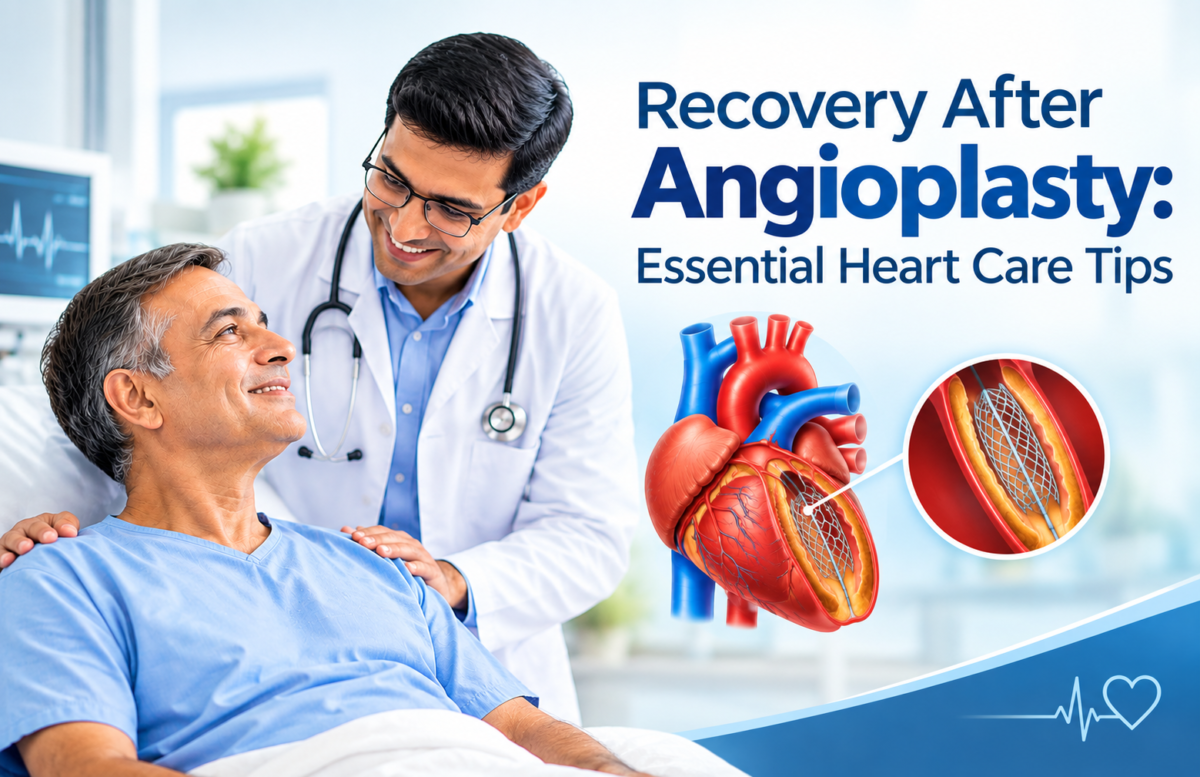
After a coronary angioplasty or PTCA stent procedure, the first concern for many patients is simple: What should be done now to protect the heart and avoid complications? Proper recovery after angioplasty involves more than allowing the catheter site to heal. Medicines, activity, diet, follow-up care, and management of coronary artery disease all influence long-term heart health.
This guide explains practical precautions after angioplasty, warning signs that need medical attention, and lifestyle measures patients and families can follow with guidance from the treating cardiologist.
Recovery After Angioplasty: What to Expect in the First Few Days
Coronary angioplasty, also called percutaneous coronary intervention or PCI, opens a narrowed or blocked coronary artery. A small balloon is used to widen the affected area, and a coronary stent is commonly placed to help keep the artery open.
Recovery varies depending on the reason for angioplasty, the patient’s overall health, the access site used, and whether the procedure was routine or complex. Some patients may return home the same day, while others require overnight observation.
Mild bruising or tenderness around the wrist or groin access site can occur. Patients should follow their discharge instructions closely instead of assuming that feeling better means the artery disease has been completely resolved.
PTCA Stent Medicines Must Be Taken as Prescribed
Medication adherence is one of the most important parts of recovery after a PTCA Stent procedure.
After stent placement, the cardiologist may prescribe antiplatelet medicines to reduce the likelihood of a clot forming inside the stent. The specific medicine and duration depend on the patient’s condition and treatment plan. Patients should never stop these medicines or change their dose without speaking with the treating cardiologist, even when they feel well.
Other prescribed medicines may help manage cholesterol, blood pressure, diabetes, angina, or other cardiovascular risk factors. Keeping an updated medication list can make follow-up appointments easier and reduce confusion for patients and family members.
Coronary Angioplasty Access-Site Care and Activity
The wrist or groin used for catheter insertion needs time to heal. Patients should keep the area clean and follow the hospital team’s instructions regarding dressing removal, bathing, and activity.
During early recovery:
- Avoid heavy lifting and strenuous exercise until medically cleared.
- Increase walking and routine activity gradually.
- Watch the catheter site for increasing swelling, persistent bleeding, redness, or worsening pain.
- Ask the cardiologist when driving, work, gym activity, and sexual activity can safely resume.
- Attend cardiac rehabilitation if it is recommended.
A person’s timetable may differ after a heart attack, routine angioplasty, or more complex procedures such as CHIP. Angioplasty or treatment of chronic total occlusions. Complex coronary interventions can require individualized monitoring and recovery planning.
Coronary Artery Disease Treatment Continues After Angioplasty
Angioplasty treats an important narrowing or blockage, but it does not remove the underlying tendency toward coronary artery disease. Long-term coronary artery disease treatment therefore remains an essential part of care after the procedure.
Patients are generally encouraged to follow a heart-supportive eating pattern, avoid tobacco, maintain an appropriate body weight, stay physically active as advised, and keep conditions such as diabetes, high blood pressure, and high cholesterol under medical control.
For example, a patient who feels significantly better after stent placement may be tempted to return immediately to previous eating or smoking habits. However, improved symptoms should instead become an opportunity to build sustainable routines that support cardiovascular health.
Angioplasty and Angiogram: Understanding the Difference
Patients sometimes use “angioplasty” and “angiogram“ interchangeably, but they have different purposes.
A coronary angiogram is primarily a diagnostic procedure that allows the medical team to examine blood flow and identify narrowed coronary arteries. Angioplasty is a treatment used to improve blood flow through an affected artery, often followed by stent placement.
Patients looking for additional guidance about access-site care and precautions can read Recovery After Angioplasty for related post-procedure information.
When Should a Coronary Artery Disease Doctor Be Contacted?
Patients should not ignore symptoms that are new, severe, or becoming worse after discharge.
Medical advice should be sought promptly for persistent or worsening chest discomfort, unusual breathlessness, fainting or significant dizziness, fever, increasing pain or swelling around the catheter site, or bleeding that does not settle with the instructions provided by the hospital. Severe chest pain, serious breathing difficulty, or symptoms suggestive of another heart attack require emergency medical attention.
Families should also keep emergency contact information readily available during the early recovery period.
Follow-Up With an Angiography Doctor in Hyderabad
Follow-up allows the cardiologist to review symptoms, examine the access site when required, check medicines, assess cardiovascular risk factors, and plan the patient’s return to normal activity.
Patients searching for an angiography doctor in Hyderabad, an angioplasty expert in India, or a coronary artery disease specialist should consider clinical experience, communication, appropriate follow-up, and experience with the type of coronary condition being treated. Rather than relying solely on promotional descriptions such as “Best Angioplasty Expert in India,” patients can discuss their diagnosis, treatment options, expected recovery, medicine plan, and long-term monitoring directly with the specialist.
Supporting Heart Health Beyond Stent Coronary Treatment
Successful stent coronary treatment is the beginning of ongoing cardiovascular care rather than the end of it. Regular reviews, appropriate medication use, gradual physical activity, tobacco avoidance, balanced nutrition, and control of major risk factors can all form part of the patient’s long-term plan.
Patients who need guidance about coronary angioplasty, CHIP angioplasty, coronary artery disease treatment, or post-PTCA stent care can consult Dr. C. Raghu, cardiologist in Hyderabad, for an individualized assessment and follow-up plan.