
DVT_Treatment_Hyderabad_1080x700_under_100KB.jpg

November 10, 2026 AbhijitHearty Life

A diagnosis of deep vein thrombosis (DVT) can raise several concerns, particularly when a doctor recommends a medical procedure. Patients and families often want to understand the available treatment options, possible risks, preparation requirements, and recovery expectations before making a decision.

Choosing the right specialist for DVT treatment in Hyderabad involves understanding the diagnosis, discussing the available approaches, and ensuring appropriate follow-up. This guide explains what patients should know before undergoing a DVT-related procedure and which questions to discuss during a consultation.

Patients Should Know About DVT Treatment in Hyderabad

Deep vein thrombosis occurs when a blood clot develops in a deep vein, commonly in the leg. It may cause swelling, pain, tenderness, warmth, or changes in skin color. However, some patients may have few noticeable symptoms.

One important concern is pulmonary embolism (PE), which occurs when part of a blood clot travels to the lungs and blocks a pulmonary artery. This can become life-threatening and requires immediate medical attention.

Treatment depends on factors such as

  • The location and extent of the clot.
  • The duration of symptoms.
  • The patient’s overall health and medical history.
  • The risk of bleeding.
  • Whether there are signs of pulmonary embolism.
  • The presence of other circulation-related conditions.

Not every patient requires a procedure. Many cases are managed with anticoagulant medicines, while selected patients may need catheter-based treatment following specialist assessment.

What to Know Before a DVT Procedure

When medication alone may not be sufficient, or when a patient has an extensive clot, a specialist may discuss an interventional approach. The suitability of a procedure depends on the patient’s clinical condition rather than the diagnosis alone.

Common treatment approaches

1. Anticoagulant medication

Anticoagulants, commonly called blood thinners, help prevent existing clots from growing and reduce the risk of new clots forming. They do not directly dissolve an existing clot. The duration and choice of medication depend on individual risk factors.

2. Catheter-directed thrombolysis

In selected patients, a thin catheter is guided into the affected vein to deliver clot-dissolving medication near the clot. This approach may be considered for certain patients with extensive iliofemoral DVT, particularly when symptoms are recent and bleeding risk is low.

3. Catheter-based mechanical thrombectomy

In selected cases, a specialist may consider using a catheter-based device to remove or reduce the clot burden. The potential benefits and risks must be evaluated individually.

4. Additional venous interventions

Some patients may have underlying venous narrowing or obstruction that requires further assessment. Additional treatment, including venous stenting, may be considered when clinically appropriate.

Not every patient needs these interventions. A discussion about the expected benefits, bleeding risks, alternatives and follow-up is important before consenting to a procedure.

How Doctors Evaluate DVT Before Treatment

An accurate diagnosis helps determine whether medication, an intervention or another management approach is appropriate.

The evaluation may include:

  • Medical history: Previous DVT, pulmonary embolism, recent surgery, prolonged immobility and other relevant health conditions.
  • Clinical examination: Assessment of leg swelling, tenderness, skin changes and circulation.
  • Venous Doppler ultrasound: Helps identify blood clots and assess blood flow in the affected veins.
  • D-dimer testing: A blood test that may help evaluate suspected clotting when interpreted alongside clinical findings.
  • Additional imaging: Selected patients may require CT or other imaging to understand the extent and location of venous obstruction.
  • Blood investigations: Kidney function, liver function and blood counts may be assessed before treatment.

The choice of investigations depends on the clinical presentation. NICE guidelines recommend combining clinical assessment with appropriate diagnostic testing rather than relying on an individual test alone.


For information about available interventional cardiology procedures, patients can review Dr. Raghu’s cardiology services.

Questions to Ask a DVT Specialist Before a Procedure

Patients should understand the purpose of a recommended procedure before providing consent. A consultation is an opportunity to discuss concerns and compare suitable treatment options.

Important questions include:

  1. Where exactly is the blood clot located?
  2. Is medication sufficient, or is a procedure being considered?
  3. What are the expected benefits of the recommended approach?
  4. What are the possible bleeding and procedure-related complications?
  5. How long will hospital observation or recovery take?
  6. Will anticoagulant medication be required after the procedure?
  7. What follow-up investigations will be necessary?
  8. What symptoms should prompt immediate medical attention?

Patients should also ask whether their other medical conditions or existing medications could influence the treatment plan.

DVT, Pulmonary Embolism, and Other Circulation Problems

DVT and pulmonary embolism are related conditions within venous thromboembolism (VTE). A patient with suspected PE may need a separate assessment to determine the severity of the condition and the appropriate treatment.

People searching online for a pulmonary embolism specialist in India, a pulmonary embolism doctor near me, or the best doctor for pulmonary embolism should check the clinician’s relevant experience, hospital facilities, and ability to coordinate appropriate cardiovascular care.

Pulmonary embolism treatment may involve anticoagulants, while selected patients with severe PE and hemodynamic instability may require urgent advanced treatment. The approach depends on the patient’s condition and clinical assessment.

Similarly, patients searching for a peripheral artery disease doctor should understand that peripheral artery disease (PAD) is different from DVT. PAD affects arteries, whereas DVT involves blood clots in deep veins. Both conditions require appropriate vascular evaluation, but their diagnostic and treatment approaches are different.

People searching for the top 10 cardiologists in Hyderabad can use practical criteria such as relevant qualifications, procedural experience, hospital infrastructure, communication and continuity of care rather than relying only on online rankings.

Preparing for Treatment and Planning Follow-Up

Preparation begins with sharing complete medical information. Patients should carry previous Doppler reports, imaging results, prescriptions, blood investigation reports and details of any previous clotting episodes.

Before the procedure, the treating team should explain:

  • Whether fasting is required.
  • Which medicines should be continued or adjusted.
  • Whether kidney function or contrast-related precautions need attention.
  • What type of anaesthesia or sedation may be used.
  • The expected hospital stay and recovery arrangements.

After treatment, follow-up remains important. Patients may need continued anticoagulation, medication reviews and repeat investigations depending on their condition. They should not stop prescribed blood thinners without medical advice.

Sudden breathlessness, chest pain, coughing up blood, fainting or severe dizziness may indicate a medical emergency. Immediate emergency assessment is necessary rather than waiting for a routine consultation.

Choosing the Right DVT Specialist in Hyderabad

Selecting a specialist involves more than finding someone who offers a particular procedure. Patients should consider experience in interventional cardiology, familiarity with catheter-based treatments, access to appropriate hospital facilities and a clear follow-up plan.

Dr. C. Raghu is a clinical director and senior interventional cardiologist. His clinical experience includes complex coronary interventions, peripheral vascular procedures, and catheter-based cardiovascular treatments.

Patients seeking an individual assessment can request a cardiology consultation to discuss their diagnosis, treatment options and suitability for an intervention.

Also read: Top Cardiologist in Hyderabad: A Local Patient’s Research Guide  

Final Takeaway

DVT treatment should be based on the location of the clot, individual health conditions, and the risk of complications. Before agreeing to a procedure, patients should understand the available alternatives, potential risks, medication requirements, and follow-up arrangements. An informed discussion with an appropriately qualified specialist can help patients make decisions about their care
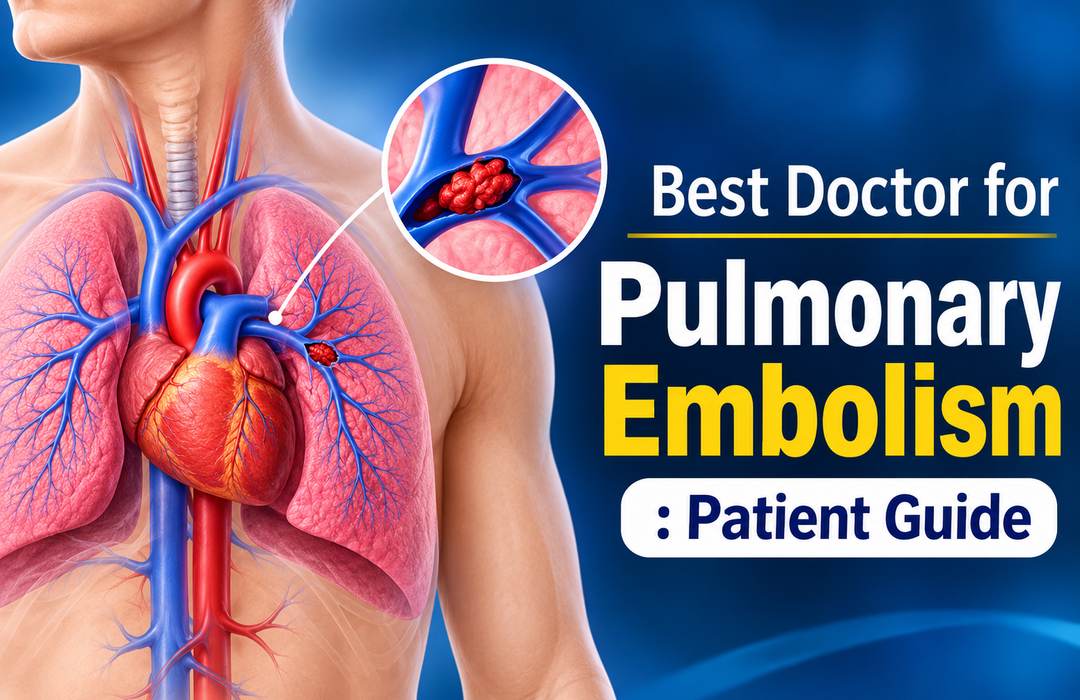
best_doctor_pulmonary_embolism_100kb.jpg

November 6, 2026 AbhijitHearty Life

Sudden breathlessness, chest pain or an unexpected diagnosis of a blood clot can leave patients and their families worried about the next step. Choosing the right specialist is important because pulmonary embolism treatment depends on the patient’s condition, the location and severity of the clot, medical history and overall health.

For patients in Hyderabad, understanding the available treatment approaches and knowing what to discuss during a consultation can make medical decisions more informed. This guide explains when to seek medical attention, how specialists assess pulmonary embolism, and what questions patients should ask before starting treatment.

Understanding Pulmonary Embolism and Its Warning Signs

Pulmonary embolism (PE) occurs when a blood clot blocks an artery in the lungs. In many cases, the clot travels from a deep vein in the leg or another part of the body. This is why deep vein thrombosis (DVT) and pulmonary embolism are closely connected.

Recognising the symptoms is important because pulmonary embolism can become life-threatening without timely medical assessment.

Common warning signs include:

  • Sudden or unexplained shortness of breath.
  • Chest pain that may become worse while breathing deeply.
  • Rapid heartbeat or an unusually fast pulse.
  • Coughing, sometimes accompanied by blood.
  • Light-headedness, dizziness or fainting.
  • Pain, swelling or tenderness in one leg, which may indicate DVT.

Not everyone experiences the same symptoms. Some patients develop symptoms suddenly, while others may have less obvious warning signs.

Important: Severe breathlessness, sudden chest pain, fainting or coughing up blood requires immediate emergency medical assessment. Patients should not wait for a routine appointment or attempt self-treatment.

When Is Pulmonary Embolism Treatment in Hyderabad Necessary?

Pulmonary embolism treatment in Hyderabad should begin with an appropriate medical evaluation rather than assumptions based on symptoms alone. A doctor assesses the patient’s clinical condition and determines whether urgent hospital treatment, medication, or a specialized intervention is required.

The treatment approach generally depends on:

  • The patient’s blood pressure and cardiovascular stability.
  • The size and location of the blood clot.
  • The effect of the clot on heart function.
  • Existing heart, lung or kidney conditions.
  • Previous episodes of blood clots.
  • The risk of bleeding and other complications.

Anticoagulants, commonly known as blood thinners, are frequently used to prevent existing clots from growing and reduce the risk of new clots. Selected patients with more serious pulmonary embolism may require additional treatments, such as clot-dissolving medication or catheter-based procedures.

The appropriate approach must be decided by the treating medical team after assessing individual risks and benefits.

How to Choose a Pulmonary Embolism Doctor

Selecting a pulmonary embolism doctor involves more than searching for a nearby hospital or specialist. Patients should consider the doctor’s relevant clinical experience, access to diagnostic facilities, understanding of cardiovascular complications, and ability to coordinate treatment when multiple specialists are required.

A suitable pulmonary embolism specialist should help patients understand their diagnosis, explain available treatment options and discuss the risks associated with each approach.

Before choosing a doctor, patients and caregivers should consider:

  • Relevant clinical experience: Ask about experience in evaluating blood clots and managing cardiovascular complications.
  • Diagnostic facilities: Confirm whether the hospital provides appropriate imaging, laboratory investigations, and cardiac assessment.
  • Treatment options: Understand whether medication, advanced clot-removal procedures, or specialist referral may be necessary.
  • Hospital support: Ask whether emergency care, intensive care and multidisciplinary consultations are available.
  • Follow-up arrangements: Understand how treatment progress, medication requirements and recurrence risks will be monitored.

Patients searching online for the best doctor for pulmonary embolism should avoid relying only on promotional rankings or unverified reviews. The decision should be based on medical qualifications, relevant experience, available facilities, and the patient’s individual requirements.

What to Expect During a Pulmonary Embolism Consultation

A consultation gives patients an opportunity to understand their diagnosis and discuss the next steps. Before the appointment, it is useful to organise previous medical records, investigation reports and a list of current medicines.

The doctor may ask about:

  • When the symptoms first appeared.
  • Whether breathlessness or chest discomfort has increased.
  • Previous DVT or pulmonary embolism episodes.
  • Recent surgery, hospitalization, or prolonged immobility.
  • Existing heart or lung conditions.
  • Family history of blood clots.
  • Current medications and previous bleeding problems.

Patients should also discuss any recent changes in their physical activity or general health.

Diagnostic Tests Used to Evaluate Pulmonary Embolism

A doctor may recommend different investigations depending on the patient’s symptoms and clinical risk assessment.

Common diagnostic investigations include:

1. CT Pulmonary Angiography (CTPA)

CTPA is an important imaging investigation used to identify blood clots in the pulmonary arteries. It helps confirm or exclude pulmonary embolism in appropriately selected patients.

2. D-dimer Blood Test

This blood test measures a substance released when blood clots break down. It can help exclude pulmonary embolism in patients with an appropriate clinical probability, but an elevated result does not confirm PE by itself.

3. Echocardiography

An echocardiogram evaluates heart structure and function. In confirmed pulmonary embolism, it can help assess whether the right side of the heart is affected.

4. Venous Doppler Ultrasound

If a doctor suspects a blood clot in the legs, an ultrasound may be recommended to identify DVT.

The choice of tests depends on clinical findings. Not every patient requires every investigation. The 2026 AHA/ACC clinical guideline provides recommendations for diagnostic imaging, risk assessment and treatment selection.


Questions to Ask About Pulmonary Embolism Treatment

Before starting treatment, patients should understand the purpose of the recommended approach. A discussion with the treating specialist can help clarify expectations and reduce uncertainty.

Consider asking these questions:

  1. What is the severity of the pulmonary embolism?
  2. Are there signs of strain on the right side of the heart?
  3. Is medication sufficient, or should an advanced intervention be considered?
  4. What are the possible side effects of anticoagulant medicines?
  5. How long might blood-thinning medication be required?
  6. What symptoms should prompt immediate medical attention?
  7. When should follow-up investigations be performed?
  8. What precautions are necessary during recovery?

These questions are particularly important for patients with kidney disease, previous bleeding episodes, heart conditions or other medical complications.

Understanding the Role of a Pulmonary Embolism Specialist in India

Patients looking for a Pulmonary Embolism Specialist in India may compare doctors across different hospitals and cities. However, the most appropriate specialist depends on the patient’s clinical needs.

Pulmonary embolism management can involve cardiologists, pulmonologists, vascular specialists, radiologists and critical care physicians. In complicated cases, a multidisciplinary team may be required to determine the safest treatment approach.

Patients should check the doctor’s qualifications, relevant experience, hospital facilities and access to appropriate emergency support.

A cardiologist may be involved when pulmonary embolism affects heart function or requires cardiovascular evaluation. However, patients should confirm which specialist is responsible for their complete treatment plan.

Finding a Pulmonary Embolism Doctor Near Me

Searching for a Pulmonary Embolism Doctor Near Me can help patients identify nearby hospitals and consultation options. However, proximity should not be the only deciding factor.

Patients in Hyderabad can consider hospitals with appropriate diagnostic facilities, emergency services and access to relevant medical specialists.

For cardiovascular consultation, Dr. C. Raghu is the Clinical Director and Senior Interventional Cardiologist at Yashoda Hospitals, Somajiguda, Hyderabad. His professional profile includes interventional cardiology and complex cardiac problems.

Patients can review Dr. C. Raghu’s cardiology profile and book a Dr. Raghu cardiology appointment to discuss their cardiovascular concerns. A consultation can help determine whether cardiology evaluation is appropriate or whether another specialist should lead the pulmonary embolism treatment plan.

Understanding the Connection Between DVT and Pulmonary Embolism

Deep vein thrombosis and pulmonary embolism are two related conditions within venous thromboembolism (VTE).

DVT usually develops when a blood clot forms in a deep vein, commonly in the leg. If part of the clot breaks away and travels through the bloodstream to the lungs, it can cause pulmonary embolism.

This connection makes early recognition and appropriate evaluation important.

When Should Patients Seek DVT Treatment in Hyderabad?

People experiencing unexplained swelling, pain, tenderness or warmth in one leg should seek prompt medical evaluation.

DVT Treatment in Hyderabad depends on the location of the clot, the patient’s health and the risk of complications. Doctors commonly use anticoagulant medication to prevent the clot from growing and reduce the risk of further clot formation.

Patients should not massage a suspected clot or start blood-thinning medicines without medical advice.

Choosing a DVT Doctor in Hyderabad

When selecting a DVT Doctor in Hyderabad, patients should ask whether the doctor can arrange appropriate investigations, interpret Doppler ultrasound findings and coordinate treatment when complications arise.

A suitable DVT specialist in Hyderabad should also explain medication precautions, follow-up requirements, and measures to reduce the risk of another blood clot.

Patients with suspected DVT symptoms should seek timely assessment. If sudden breathlessness, chest pain, or fainting develops, emergency medical attention is necessary because these may indicate pulmonary embolism.

Also read: Pulmonary Embolism in India: Emergency & Finding Specialist 

Preparing for Treatment and Follow-Up

Treatment does not end when the initial symptoms improve. Patients may require continued medical supervision to monitor recovery, assess medication safety and evaluate the risk of another clot.

Before leaving the hospital or completing a consultation, patients should understand:

  • The prescribed medicines and their correct dosage.
  • The expected duration of anticoagulant treatment.
  • Warning signs of bleeding or recurrent blood clots.
  • Whether additional imaging or blood tests are required.
  • When to return for a follow-up consultation.
  • Which physical activities are appropriate during recovery.

Patients should never stop prescribed anticoagulants without consulting their treating doctor. The duration of treatment depends on the cause of the clot, recurrence risk, and bleeding risk.

For patients who continue experiencing breathlessness or reduced exercise capacity after pulmonary embolism, further evaluation may be necessary to check for longer-term complications.

If you or a family member has been diagnosed with pulmonary embolism, seeking timely medical guidance is important. Consult Dr. C. Raghu, Clinical Director and Senior Interventional Cardiologist,  Hyderabad, for a cardiovascular evaluation and personalized guidance.

Book a Consultation with Dr. C. Raghu

For appointments, call +91 95424 75650


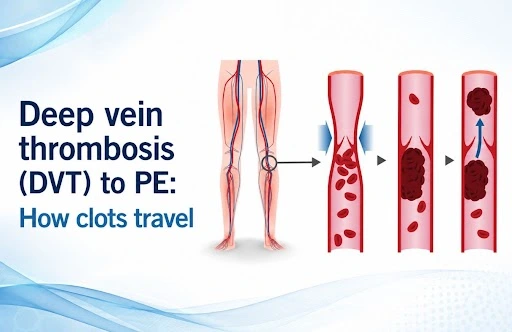
deep-vein-thrombosis.webp

September 4, 2026 AbhijitHearty Life

Deep vein thrombosis When someone develops sudden leg swelling, unexplained pain, or breathlessness that comes on quickly, the link between deep vein thrombosis (DVT) and pulmonary embolism (PE) becomes clinically significant. Knowing how a clot forms in the veins, breaks loose, and travels to the lungs gives doctors and medical students a clearer framework for diagnosis and treatment. This article walks through that pathway, the warning signs at each stage, how these conditions are diagnosed, and the core principles behind DVT treatment and pulmonary embolism treatment.

What Is Deep Vein Thrombosis?

DVT refers to a blood clot that forms inside a deep vein, most often in the leg  typically the calf, thigh, or pelvic veins. Depending on its size and location, the clot can partly or fully block normal blood flow through the vein.

Common signs include:

  • Swelling in one leg
  • Pain or tenderness in the affected limb
  • A feeling of warmth over the area
  • Redness or a change in skin color
  • Sometimes, no noticeable symptoms at all

That last point matters clinically  DVT doesn’t always announce itself. In some cases, a clot stays silent until it embolizes and causes problems elsewhere.

How Does a Clot Travel From the Leg to the Lungs?
Deep vein thrombosis

A Deep vein  thrombosis becomes a pulmonary embolism when a piece of the clot breaks free and travels through the bloodstream.

The general route looks like this:

Deep leg veins → inferior vena cava → right atrium → right ventricle → pulmonary arteries → lungs

Once a fragment of the clot detaches, it’s called an embolus. It moves through the venous system toward the right side of the heart and from there into the pulmonary circulation. If it becomes lodged in a pulmonary artery, that’s a pulmonary embolism.

How serious the resulting PE is depends largely on the embolus’s size, where it lodges, and how much cardiopulmonary reserve the patient has. A large clot can meaningfully disrupt blood flow through the lungs and put real strain on the right side of the heart.

Also read: Deep vein thrombosis treatment | Cardiologist in Hyderabad 

Why Early DVT Treatment Matters

Once DVT is diagnosed or strongly suspected, the treatment goal is to stop the clot from growing and to lower the risk that a piece of it breaks away.

Anticoagulant medication is the backbone of DVT treatment. These drugs don’t dissolve the existing clot directly, but by limiting further clot formation, they give the body time to break down the thrombus on its own.

The specific anticoagulation plan, which drug and for how long,, is tailored to the individual, taking into account:

  • Where the clot is and how extensive it is
  • The patient’s bleeding risk
  • Any history of prior DVT or PE
  • Whether cancer or another underlying condition is driving clot formation
  • Recent surgery, hospital stays, or long periods of immobility
  • Other relevant health conditions

In other words, treatment isn’t one-size-fits-all just because a clot is present; it has to match the patient’s broader clinical picture.

Recognizing When Deep vein thrombosis Has Become PE

Pulmonary embolism should be on the radar any time a patient with known or suspected DVT suddenly develops heart or lung symptoms.

Typical warning signs of PE include:

  • Sudden or unexplained shortness of breath
  • Chest pain that worsens with deep breaths
  • A racing or irregular heartbeat
  • Persistent cough
  • Coughing up blood
  • Dizziness or fainting

None of these symptoms is unique to PE on its own, which is exactly why proper clinical evaluation and testing are essential rather than guesswork.

A typical scenario: someone recovering from a long period of immobility first notices swelling in one calf. If they then develop sudden breathlessness and sharp chest pain that worsens with breathing, that combination should prompt urgent evaluation for DVT-related PE.

How Pulmonary Embolism Is Treated

The right approach to pulmonary embolism treatment depends on how sick the patient is, how much of the pulmonary circulation is blocked, and the risk that their condition could worsen.

Anticoagulation remains the mainstay for preventing further clotting. For patients who are hemodynamically unstable or have a more severe PE, more aggressive interventions may be warranted depending on the clinical picture and the resources available.

Diagnostic workup commonly includes:

  • D-dimer testing in the right clinical context
  • Compression ultrasound to check for DVT
  • CT pulmonary angiography to confirm PE
  • ECG and cardiac biomarkers to assess risk
  • Echocardiography in select cases, to check how the right side of the heart is coping

The goal isn’t just to find the clot  it’s to understand how dangerous it is and how urgently the patient needs treatment.

When to Involve a Pulmonary Embolism Specialist

A pulmonary embolism specialist becomes especially relevant in complex cases: an extensive PE, significant strain on the heart and lungs, or a situation where advanced procedures like catheter-based clot removal are being considered.

For patients or referring doctors searching for a top pulmonary embolism doctor, a pulmonary embolism specialist in India, or a pulmonary embolism doctor nearby, it’s worth prioritizing a clinician experienced specifically in venous thromboembolic disease, including catheter-based and multidisciplinary treatment options where they apply.

For clinicians, the key takeaway is that DVT and PE aren’t two unrelated diagnoses; they’re two stages of the same underlying disease process, venous thromboembolism, and should be assessed together rather than in isolation.

The DVT-to-PE Pathway, Step by Step

  1. A clot forms in a deep vein.
  2. Part of the clot breaks loose.
  3. The embolus travels through the venous system.
  4. It reaches the right side of the heart.
  5. It passes into the pulmonary arteries.
  6. It may block blood flow through the lungs.
  7. The result is a pulmonary embolism.

This chain of events is exactly why catching DVT early and treating it properly matters so much in preventing a potentially life-threatening complication.

Also read : Pulmonary Embolism in India: Emergency & Finding Specialist 

When to Seek Specialist Care Urgently

Sudden breathlessness, unexplained chest pain, coughing up blood, fainting, or a noticeably fast heart rate in someone with known or suspected DVT calls for immediate medical attention. PE can be life-threatening, and it’s not something to wait out or try to manage without professional evaluation.

For patients dealing with complex DVT or pulmonary embolism, Dr. C. Raghu offers specialized cardiovascular care, including catheter-based treatment for venous thrombosis and pulmonary vascular disease.

If you or someone you know has suspected or confirmed DVT or pulmonary embolism, consult Dr. C. Raghu for a specialist evaluation and a treatment plan suited to your specific condition.


Dr raghu logo


Dr raghu logo


Call us now if you are in a medical emergency need, we will reply swiftly and provide you with a medical aid.


For Appointment with Dr Raghu: +91 80085 36699
Dr Raghu’s Patient Coordinator: +91 72860 10203
Dr Raghu’s Office Experience: +91 90001 65962
Dr Raghu’s Social Media Communication Channel: +91 97046 51708

Dr. Raghu | Heart Specialist in Hyderabad
Yashoda Hospitals, Raj Bhavan Road, Somajiguda, 1st floor, Room No. 115, Hyderabad -500082, Telangana

Best Cardiologists in Hyderabad


© 2024, Dr. Raghu. All rights reserved. Design & Developed by AMSDigital.in

[gtranslate]
+91-9542475650