
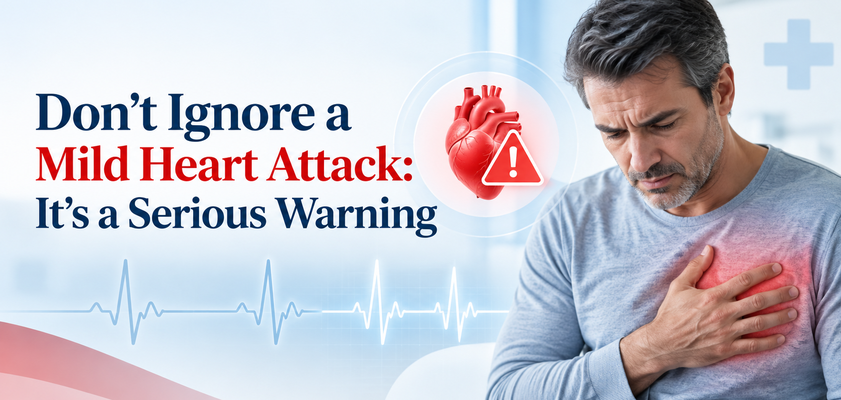
Most people picture a mild heart attack as sudden and dramatic: chest-clutching, collapsing, an ambulance racing through traffic. A mild heart attack often looks nothing like that. It can feel like indigestion, tiredness that won’t lift, or a vague ache that passes in twenty minutes and gets forgotten by dinner. That’s exactly what makes it dangerous. This piece looks at what a mild heart attack really is, why “mild” doesn’t mean “safe,” and what to do if you suspect you’ve had one.
What Is a Mild Heart Attack?
Doctors usually call this an NSTEMI, a non-ST-elevation myocardial infarction. In plain terms, it means blood flow to part of the heart was reduced or briefly cut off, damaging a smaller area of heart muscle than a major attack would.
The word “mild” refers only to the extent of damage at that moment. It says nothing about what caused the blockage in the first place, and it says nothing about what happens next if the underlying issue isn’t treated.
Why “Mild” Doesn’t Mean the Danger Has Passed
The artery that narrowed or blocked doesn’t fix itself just because symptoms faded. Without treatment, that same weak spot is often what triggers a second and usually worse attack down the line.
This is why cardiologists push for follow-up tests even when a patient feels fine within a day or two: an ECG, an echocardiogram, and sometimes an angiography. Skipping these because “it wasn’t that serious” leaves the actual problem sitting untouched.
Silent Heart Attack Symptoms People Miss

A lot of mild heart attacks go unnoticed until a routine checkup turns up scarring the patient never knew about. That’s the nature of silent heart attack symptoms; they’re easy to explain away.
Things worth paying attention to:
- Chest tightness or pressure that shows up during exertion and eases with rest
- Fatigue that feels heavier than usual and doesn’t improve with sleep
- Getting winded doing something that never used to be a problem
- Discomfort in the jaw, arm, back, or upper stomach
- Cold sweats with no clear trigger
- Nausea or lightheadedness, which women in particular may notice more than classic chest pain
One of these on its own doesn’t mean much. A few together, especially if they show up suddenly or during physical activity, is worth getting checked.
Heart Attack in the Gym: Why It’s Becoming More Common
A heart attack in the gym is something cardiologists are seeing more often, and it tends to catch people off guard precisely because they think of themselves as fit. Pushing hard during a workout puts real strain on the heart, and if there’s an undiagnosed blockage, that strain can be enough to trigger an event.
It often plays out the same way: someone in their thirties or forties, reasonably active, feels a strange tightness mid-set. It passes after a short break; they finish the workout, and they chalk it up to dehydration or bad form. No follow-up happens because nothing feels wrong anymore.
This pattern is part of why heart attacks in young adults have become a topic doctors bring up more directly now, particularly for people with a family history of heart disease, high-stress jobs, or a habit of alternating between a sedentary week and one intense workout.
What to Do If You Suspect a Mild Heart Attack
The response matters more than getting a perfect diagnosis in the moment. If chest discomfort, breathlessness, or similar symptoms show up and don’t go away quickly:
- Stop what you’re doing and sit or lie down.
- Get emergency medical help; don’t wait to see if it passes.
- Don’t talk yourself out of it because you’re young or fit.
- Follow up with a cardiologist even if the ER tests come back unclear.
A few hours’ delay can change how much damage is done, which is the main reason these symptoms shouldn’t be rationalized away.
Long-Term Cardiac Care Matters More Than the Event Itself
Getting through a mild heart attack isn’t the end of the process; it’s usually the start of a longer plan. That typically means medication, changes to daily habits, and regular monitoring of things like blood pressure, cholesterol, and blood sugar.
This is where seeing the right specialist makes a real difference. A heart specialist in Hyderabad can identify what actually caused the event and build a treatment plan around that person’s specific risk factors, rather than a generic one-size-fits-all approach.
Getting the Right Cardiac Care in Hyderabad
Speed matters after a cardiac event, but so does who you see. For patients looking into heart treatment in Hyderabad, Dr. C. Raghu is a cardiologist in Hyderabad with considerable experience treating both mild and severe cases, from initial diagnosis through long-term management.
If you’re searching for a heart doctor in Hyderabad or a top cardiologist in Hyderabad, especially after noticing any of the symptoms above, it’s worth booking a consultation with Dr. C. Raghu’s clinic for a full cardiac evaluation.
Also read: Cardiologist Hyderabad: Why Dr. C. Raghu Is a Name Patients Trust
Final Word
A mild heart attack is the body’s way of sending a warning before something worse happens. Brushing it off as minor because the pain wasn’t severe, or because you’re young and active, leaves the actual cause unresolved. If you’ve experienced symptoms like these, whether at your desk or mid-workout, the smart move is a proper evaluation, not an assumption that the danger has passed.
If this sounds familiar, book a consultation with Dr C Raghu and get a clear read on where your heart health actually stands.