Pulmonary embolism You’re sitting at work when suddenly you can’t catch your breath. Your chest feels tight. Your heart is racing. You feel like you’re going to pass out. You’re scared genuinely terrified.
Your coworker calls an ambulance. At the hospital, after tests, the doctor tells you, “You have a pulmonary embolism.” A blood clot has traveled to your lungs.
Your world stops. You’ve heard that phrase before “pulmonary embolism” and you know it’s serious. You need to understand what just happened, why it happened, and what comes next.
What Exactly Is a Pulmonary Embolism?
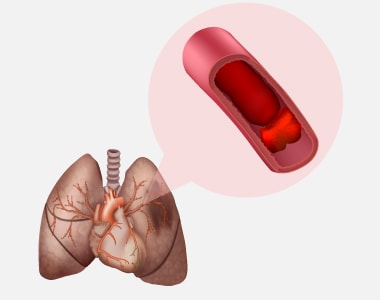
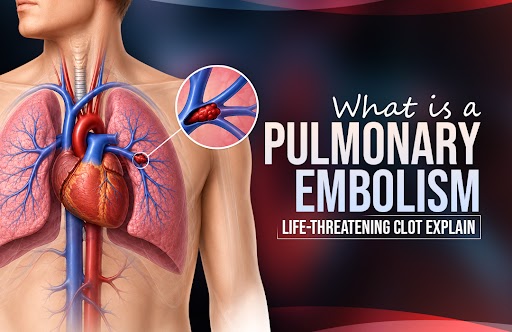
A pulmonary embolism—often called PE—occurs when a blood clot travels through your veins and lodges in the blood vessels of your lungs. This clot blocks blood flow, preventing oxygen from being transferred to your blood.
The clot usually starts in your legs or pelvis. It breaks loose and travels through your venous system, through your right heart, and into your lungs, where it gets stuck—too large to fit through the narrowing vessels.
Think of it like this: imagine a road with traffic flowing normally. Suddenly, a large object blocks the road. Traffic backs up. Things are chaos.That’s what happens in your lungs when a clot blocks blood flow.
Also read: DVT to Pulmonary Embolism: The Risks and Prevention
Why You Get Blood Clots: Risk Factors
Several situations increase your clot risk:
Immobility: Sitting for long periods—long flights, road trips, bed rest after surgery, and office work. When you don’t move, blood pools in your legs instead of circulating normally. Pooled blood clots.
Surgery: After surgery, blood clotting mechanisms activate. You’re immobile during recovery. You have trauma to your tissues. This combination creates perfect conditions for clots.
Cancer: Cancer cells activate clotting mechanisms. Cancer patients have high PE risk.
Birth control pills or hormone therapy: Estrogen increases clotting tendency.
Pregnancy and postpartum period: Pregnancy naturally increases clotting tendency. After delivery, you’re at even higher risk.
Previous blood clots: If you’ve had one clot, you’re at higher risk for another.
Genetic clotting disorders: Some people have genetic variations making their blood clot more easily.
Obesity: Extra weight increases clot risk.
Immobilized leg: Fractures, casts, or reduced mobility in one leg increase risk.
Recent hospitalization: Being bedridden increases risk.
Smoking: Smoking damages blood vessels and increases clotting.
Heart disease: Certain heart conditions increase PE risk.
Symptoms: The Warning Signs
Pulmonary embolism symptoms vary based on the clot’s size and location. Small clots might cause mild symptoms. Large clots can cause sudden collapse.
Common symptoms include:
- Sudden severe shortness of breath
- Chest pain, especially when breathing deeply
- Rapid heartbeat
- Dizziness or lightheadedness
- Fainting
- Anxiety or sense of impending doom
- Cough (sometimes with blood-tinged sputum)
- Leg pain or swelling (if clot originated there)
Important: These symptoms warrant emergency evaluation. Don’t wait. Call 911 or go to the emergency room immediately.
Why PE is So Serious
Your lungs’ job is to oxygenate blood. A clot blocking lung blood vessels prevents oxygenation.
Your oxygen levels drop. Your brain, heart, and other organs aren’t getting sufficient oxygen.
Your right heart overworks. The right ventricle has to pump harder against the blocked vessels. It can become exhausted.
Your blood pressure drops. If the clot is large, your cardiovascular system can collapse.
You go into shock. Organ systems fail without sufficient oxygen.
This is why pulmonary embolism is a medical emergency. It can be fatal. Sudden massive PE can cause sudden death.
Diagnosis: How Doctors Identify PE
If your doctor suspects PE, several tests confirm the diagnosis:
CT Pulmonary Angiography (CTPA): This is usually the first test. A CT scanner with special imaging shows blood clots in your lungs’ vessels. It’s quick, accurate, and readily available.
D-dimer blood test: This blood test measures a substance released when clots break down. If D-dimer is normal, PE is very unlikely. If elevated, further testing is needed.
Chest X-ray: Might show pneumonia or other lung problems, but usually looks normal in PE.
Echocardiogram: Ultrasound of your heart. Shows if your right heart is strained.
Arterial blood gas: Measures oxygen and carbon dioxide levels in your blood.
Ventilation-perfusion scan: Shows areas of your lungs receiving ventilation (air) but not perfusion (blood flow). Mismatches suggest PE.
Also Read: Atrial Fibrillation treatment in India: Complete Guide
Pulmonary Embolism Treatment: Your Options
Once PE is diagnosed, immediate treatment begins.
Anticoagulation Therapy: Blood thinners prevent clots from growing and new clots from forming. They don’t dissolve existing clots—your body does that naturally—but they prevent expansion while your body works to break down the clot.
Medications include:
- Heparin: Given intravenously in the hospital
- Low molecular weight heparin: Injected subcutaneously, can be outpatient
- Warfarin: Oral blood thinner for long-term management
- Direct oral anticoagulants: Newer medications like apixaban or rivaroxaban
Thrombolytic Therapy (Clot-Busting): For massive PEs or hemodynamically unstable patients, medications that dissolve clots might be used. These medications have risks but can be lifesaving in severe PE.
Mechanical Thrombectomy: For very large clots or patients who can’t tolerate blood thinners, a pulmonary embolism specialist might perform mechanical thrombectomy. A catheter-based device removes clot material directly.
IVC Filter: In rare cases where you can’t take blood thinners, an inferior vena cava (IVC) filter might be placed. This filter catches clots traveling from legs before they reach your lungs.
Recovery and Aftercare
After initial PE treatment:
You’ll stay in the hospital for a few days to ensure stability and adjust medications.
You’ll take blood thinners for months to years, depending on circumstances.
Regular blood tests monitor your blood’s clotting tendency.
Follow-up imaging might be done to ensure clots are resolving.
You’ll gradually resume activity as you recover.
Most people recover completely from their first PE if treated promptly.
Post-PE Complications
Some people develop complications after PE:
Post-thrombotic syndrome: Chronic leg swelling and pain from valve damage in leg veins.
Chronic thromboembolic pulmonary hypertension (CTEP): Some clots don’t fully dissolve, leading to permanent lung scarring and heart strain.
Recurrent PE: Some people have another PE despite treatment.
This is why finding the right pulmonary embolism doctor and following their guidance completely is critical.
Finding Your PE Specialist
You need a pulmonary embolism specialist in India or your local area who:
- Understands PE completely
- Can manage your acute care
- Monitors for complications
- Helps you navigate blood thinner therapy
- Works with you long-term
A pulmonary embolism specialist in Hyderabad can provide comprehensive care if you’re in that region.
For complicated cases or patients not responding well, the best doctor for pulmonary embolism at a major medical center might be appropriate.
Prevention: Reducing Your Risk
If you’re at risk for PE:
Move regularly. On flights or road trips, get up and walk every 2 hours.
Compression socks. These prevent blood pooling in your legs during immobility.
Leg exercises. Flex your calves while sitting to activate leg muscles and promote blood flow.
Hydration. Dehydration increases clot risk. Drink plenty of water.
Blood thinner prophylaxis. If you’re having surgery or hospitalization, your doctor might prescribe preventive blood thinners.
Stop smoking. Smoking damages blood vessels.
Manage your weight. Obesity increases PE risk.
Control medical conditions. Manage heart disease, cancer risk factors, and other conditions that increase clot risk.
Life After Pulmonary Embolism
Most people recover completely from PE. You’ll likely take blood thinners for several months to several years, depending on whether this was provoked (caused by a temporary situation) or unprovoked (no clear cause).
You’ll have restrictions initially bu gradually return to normal activities.
You’ll attend follow-up appointments and take medications as prescribed.
You’ll be aware of PE symptoms and seek immediate care if symptoms recur.
Many people go on to live normal, full lives after PE. The key is treating it promptly and following your doctor’s guidance carefully.
Moving Forward
Pulmonary embolism is serious. It demands immediate medical attention. It requires ongoing management. But it’s treatable, and most people recover well.
If you’ve experienced PE or are at high risk, understand your risk factors. Modify them where possible. Know the warning signs. Seek immediate care if symptoms develop.
Work with qualified specialists. Take your medications. Attend your follow-ups. Be an active participant in your care.
Your life after PE can be full and normal. It requires attention to your health, but it’s absolutely possible.
If you’ve experienced a pulmonary embolism or are concerned about your risk, expert medical guidance is essential. Consult with Dr. C. Raghu, a cardiologist in Hyderabad specializing in cardiovascular emergencies and blood clot management.