
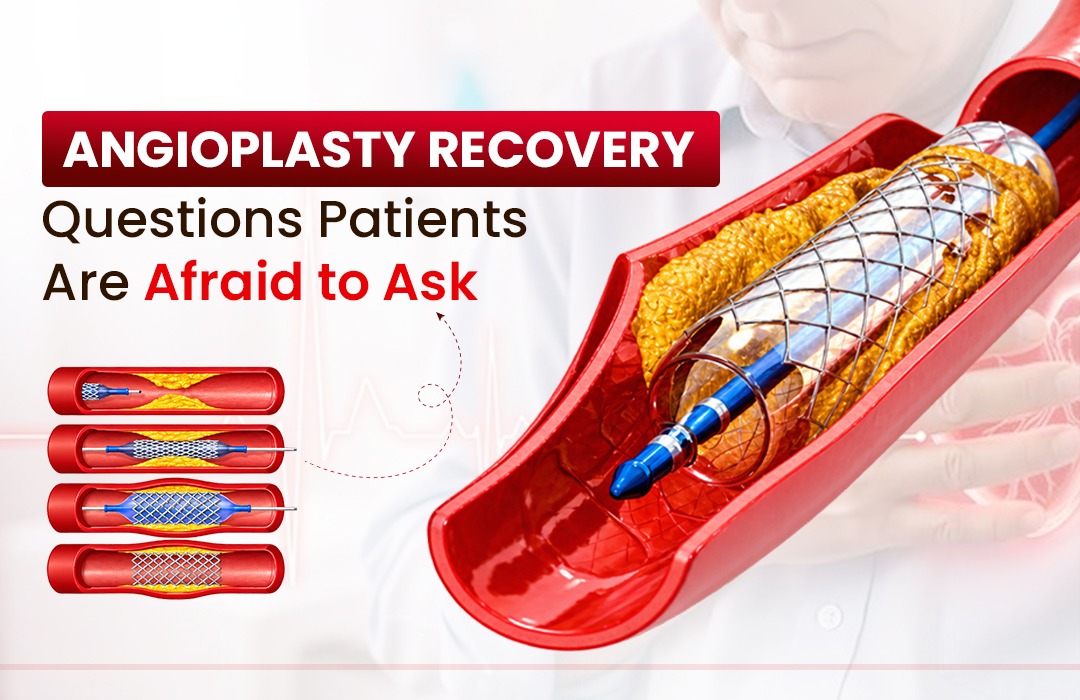
Angioplasty-in-heart.jpg

October 26, 2026 AbhijitHearty Life

The days after angioplasty can feel unfamiliar

After angioplasty in heart arteries, people often feel relieved that a blocked or narrowed artery has been treated. Yet going home can bring a new set of worries. Is this soreness normal? Can I climb stairs? Which tablets are essential? Coronary angioplasty uses a catheter, commonly with a stent, to improve blood flow through a narrowed artery. It can be performed in different circumstances, including during treatment of a heart attack. Recovery instructions therefore vary. Your discharge plan, not somebody else’s experience, should guide what you do next.

For service information, see angioplasty in heart.

Which symptoms need urgent help?

Some bruising or tenderness where the catheter entered the body can occur, but increasing swelling or persistent bleeding requires prompt medical advice. If bleeding from the access site is heavy or does not stop after following the discharge team’s immediate first-aid instructions, seek emergency care. New severe chest pain, fainting, marked breathlessness or symptoms suggesting a stroke also require emergency assessment. Do not assume that every symptom is a normal part of healing. Know the emergency contact pathway before you leave hospital, and keep your discharge papers within easy reach.

For further reading, see coronary angioplasty.

What about walking, work and driving?

Many patients want a fixed number of days until life returns to normal. There is no single timeline. Recovery depends on why the procedure was done, whether there was a heart attack, where the catheter was inserted, other illnesses and any complications. Ask when you can walk outside, climb stairs, drive, resume sexual activity or lift heavy objects. Follow the access-site care instructions you received. Gradually increasing activity may be appropriate, and cardiac rehabilitation can help eligible patients rebuild confidence and adopt heart-healthy habits under supervision.

If you need a planned consultation, you can book an appointment with a cardiologist in Hyderabad to discuss the next step with a qualified clinician. This is not an emergency service.

The medicine question you should never skip

If a stent was placed, antiplatelet medicines are commonly prescribed to lower the risk of a clot forming inside it. The medicines and duration depend on your clinical situation. Never stop or change them without advice from the treating clinician, even if you feel well. Tell your care team about bleeding, bruising, stomach symptoms, other prescribed medicines, and any dental or surgical procedure being planned. Ask for a written medicine list with timing and purpose. This often reduces confusion when several family members help manage tablets.

Also read: Recovery After Angioplasty: Essential Heart Care Tips 

Small routines that make follow-up easier

Set up one place for the discharge sheet, medicine list, and follow-up date. If different family members help at home, agree on who checks prescriptions and who arranges visits. Keep an eye on the catheter access area according to your discharge instructions, and ask what level of bruising or discomfort is expected. If tiredness lasts longer than anticipated or you feel anxious about exertion, describe those concerns during follow-up instead of simply stopping activity. You should also ask whether cardiac rehabilitation is available and appropriate. A rehabilitation program may include supervised exercise, education, and support with risk factors. It is normal to need an explanation more than once: ask the care team to write down the plan in language you can follow. Recovery is safer when the information is clear and consistent.

Follow-up is part of treatment

Angioplasty treats a particular narrowing, but it does not remove every factor that can cause coronary artery disease. Follow-up commonly covers blood pressure, cholesterol, diabetes, smoking, movement, food choices, and ongoing symptoms. If you are deciding where to receive ongoing advice, look for a team that explains discharge instructions and whom to call when a problem arises. Dr. C. Raghu provides information about coronary procedures and consultation options on his website. For new or worsening symptoms, do not wait for a routine visit. A good recovery plan leaves you knowing both what to do each day and when to ask for help.

You can also check :-  Chip Cto angioplasty | Deep vein thrombosis | Heart Valve Screening
Angioplasty expert in India | Atrial Fibrillation treatment in Hyderabad | Cardiologist in india

Arrange a planned cardiology consultation

For non-emergency advice, request an appointment with Dr. C. Raghu, the best heart specialist in Hyderabad. 
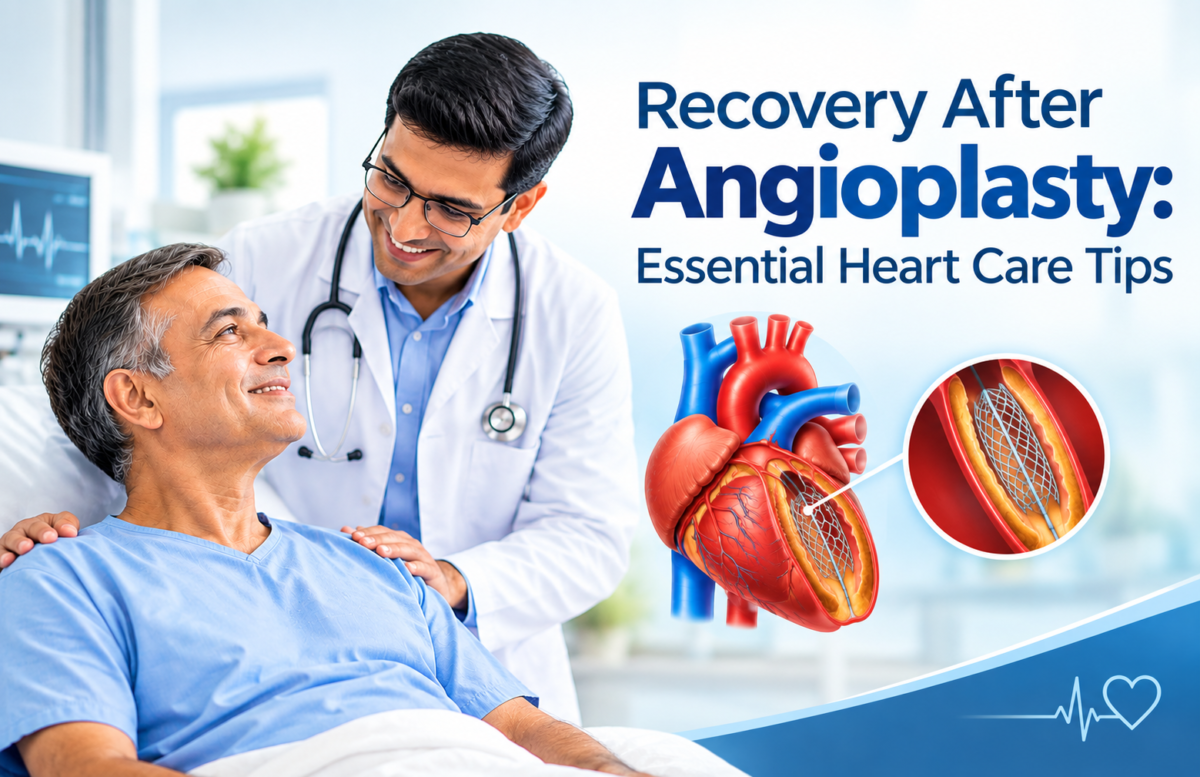

recovery-after-angioplasty-1200x777.png

September 21, 2026 AbhijitHealthcare

After a coronary angioplasty or PTCA stent procedure, the first concern for many patients is simple: What should be done now to protect the heart and avoid complications? Proper recovery after angioplasty involves more than allowing the catheter site to heal. Medicines, activity, diet, follow-up care, and management of coronary artery disease all influence long-term heart health.

This guide explains practical precautions after angioplasty, warning signs that need medical attention, and lifestyle measures patients and families can follow with guidance from the treating cardiologist.

Recovery After Angioplasty: What to Expect in the First Few Days

Coronary angioplasty, also called percutaneous coronary intervention or PCI, opens a narrowed or blocked coronary artery. A small balloon is used to widen the affected area, and a coronary stent is commonly placed to help keep the artery open.

Recovery varies depending on the reason for angioplasty, the patient’s overall health, the access site used, and whether the procedure was routine or complex. Some patients may return home the same day, while others require overnight observation.

Mild bruising or tenderness around the wrist or groin access site can occur. Patients should follow their discharge instructions closely instead of assuming that feeling better means the artery disease has been completely resolved.

PTCA Stent Medicines Must Be Taken as Prescribed

Medication adherence is one of the most important parts of recovery after a PTCA Stent procedure.

After stent placement, the cardiologist may prescribe antiplatelet medicines to reduce the likelihood of a clot forming inside the stent. The specific medicine and duration depend on the patient’s condition and treatment plan. Patients should never stop these medicines or change their dose without speaking with the treating cardiologist, even when they feel well.

Other prescribed medicines may help manage cholesterol, blood pressure, diabetes, angina, or other cardiovascular risk factors. Keeping an updated medication list can make follow-up appointments easier and reduce confusion for patients and family members.

Coronary Angioplasty Access-Site Care and Activity

The wrist or groin used for catheter insertion needs time to heal. Patients should keep the area clean and follow the hospital team’s instructions regarding dressing removal, bathing, and activity.

During early recovery:

  • Avoid heavy lifting and strenuous exercise until medically cleared.
  • Increase walking and routine activity gradually.
  • Watch the catheter site for increasing swelling, persistent bleeding, redness, or worsening pain.
  • Ask the cardiologist when driving, work, gym activity, and sexual activity can safely resume.
  • Attend cardiac rehabilitation if it is recommended.

A person’s timetable may differ after a heart attack, routine angioplasty, or more complex procedures such as CHIP. Angioplasty or treatment of chronic total occlusions. Complex coronary interventions can require individualized monitoring and recovery planning.

Coronary Artery Disease Treatment Continues After Angioplasty

Angioplasty treats an important narrowing or blockage, but it does not remove the underlying tendency toward coronary artery disease. Long-term coronary artery disease treatment therefore remains an essential part of care after the procedure.

Patients are generally encouraged to follow a heart-supportive eating pattern, avoid tobacco, maintain an appropriate body weight, stay physically active as advised, and keep conditions such as diabetes, high blood pressure, and high cholesterol under medical control.

For example, a patient who feels significantly better after stent placement may be tempted to return immediately to previous eating or smoking habits. However, improved symptoms should instead become an opportunity to build sustainable routines that support cardiovascular health.

Angioplasty and Angiogram: Understanding the Difference

Patients sometimes use “angioplasty” and “angiogram“ interchangeably, but they have different purposes.

A coronary angiogram is primarily a diagnostic procedure that allows the medical team to examine blood flow and identify narrowed coronary arteries. Angioplasty is a treatment used to improve blood flow through an affected artery, often followed by stent placement.

Patients looking for additional guidance about access-site care and precautions can read Recovery After Angioplasty for related post-procedure information.

When Should a Coronary Artery Disease Doctor Be Contacted?

Patients should not ignore symptoms that are new, severe, or becoming worse after discharge.

Medical advice should be sought promptly for persistent or worsening chest discomfort, unusual breathlessness, fainting or significant dizziness, fever, increasing pain or swelling around the catheter site, or bleeding that does not settle with the instructions provided by the hospital. Severe chest pain, serious breathing difficulty, or symptoms suggestive of another heart attack require emergency medical attention.

Families should also keep emergency contact information readily available during the early recovery period.

Follow-Up With an Angiography Doctor in Hyderabad

Follow-up allows the cardiologist to review symptoms, examine the access site when required, check medicines, assess cardiovascular risk factors, and plan the patient’s return to normal activity.

Patients searching for an angiography doctor in Hyderabad, an angioplasty expert in India, or a coronary artery disease specialist should consider clinical experience, communication, appropriate follow-up, and experience with the type of coronary condition being treated. Rather than relying solely on promotional descriptions such as “Best Angioplasty Expert in India,” patients can discuss their diagnosis, treatment options, expected recovery, medicine plan, and long-term monitoring directly with the specialist.

Supporting Heart Health Beyond Stent Coronary Treatment

Successful stent coronary treatment is the beginning of ongoing cardiovascular care rather than the end of it. Regular reviews, appropriate medication use, gradual physical activity, tobacco avoidance, balanced nutrition, and control of major risk factors can all form part of the patient’s long-term plan.

Patients who need guidance about coronary angioplasty, CHIP angioplasty, coronary artery disease treatment, or post-PTCA stent care can consult Dr. C. Raghu, cardiologist in Hyderabad, for an individualized assessment and follow-up plan.


Dr raghu logo


Dr raghu logo


Call us now if you are in a medical emergency need, we will reply swiftly and provide you with a medical aid.


For Appointment with Dr Raghu: +91 80085 36699
Dr Raghu’s Patient Coordinator: +91 72860 10203
Dr Raghu’s Office Experience: +91 90001 65962
Dr Raghu’s Social Media Communication Channel: +91 97046 51708

Dr. Raghu | Heart Specialist in Hyderabad
Yashoda Hospitals, Raj Bhavan Road, Somajiguda, 1st floor, Room No. 115, Hyderabad -500082, Telangana

Best Cardiologists in Hyderabad


© 2024, Dr. Raghu. All rights reserved. Design & Developed by AMSDigital.in

[gtranslate]
+91-9542475650