New-Project-7.jpg

Coronary angiography is a common diagnostic test used by doctors to identify conditions, such as coronary artery disease and aneurysms. In our previous blog, we discussed how the procedure is carried out and when it’s used. Click here to check it out.

coronary angiography

Angiography is a minimally invasive procedure, which makes it extremely safe. However, it can involve a few minor side effects. The benefits outweigh the risks for most patients. However, in some cases, coronary angiography can result in serious complications.

In this article, we’ll delve deeper into the risks and side effects associated with coronary angiography.

Common Side Effects of Coronary Angiography

If you’re planning to visit the doctor for an angiography, you can expect one or more of the following side effects:

  • Bruising
  • Swelling
  • A buildup of blood (resulting in a bump)

All these symptoms are localized to the area where the cut was made for inserting the catheter. Most patients experience a gradual improvement in these side effects without medical intervention. You can take painkillers to relieve discomfort after the procedure.

Complications of Coronary Angiography

If you’re lucky, you’ll come out of coronary angiography with minor bruising and swelling. However, some patients develop the following complications:

  • An infection near the cut :- It makes the area around the cut red, swollen, and tender.
  • An allergic reaction to the dye :- It usually results in an itchy rash.

In both cases, proper use of medications can help control the side effects. For instance, antibiotics can be used in the case of an infection. Similarly, your doctor might prescribe antihistamines if you experience an allergic reaction.

It’s worth mentioning that coronary angiography comes with a few potential serious complications. These include:

  • Kidney damage (from the dye)
  • Cardiac arrest or stroke
  • Internal bleeding (due to damaged blood vessels)
  • Anaphylaxis (due to severe allergic response to the dye)

The good news is that these complications are extremely rare (affecting less than one in every 1000 patients). Also, kidney damage due to angiography is usually temporary. Moreover, internal bleeding can be contained with the help of catheter based approaches.

Seeking Medical Help

Complications from coronary angiography are rare. Nevertheless, it’s a good idea to consult your doctor if you notice anything unusual after the procedure. For instance, if the leg or arm where the cut was made looks pale or feels numb, it’s a cause for concern. Similarly, if you notice bleeding, redness, or a firm lump near the cut, it could indicate a potential infection. It’s always a good idea to watch out for these signs and consult your doctor for timely treatment.

In Conclusion

Coronary angiography is a safe and minimally invasive procedure. It can cause minor side effects, such as pain and swelling. However, in extreme cases, it can also lead to a heart attack or kidney damage. It’s crucial to talk to your doctor about the potential risks before going in for the procedure.

Dr. C Raghu has more than two decades of experience in treating patients with different heart conditions. If you have queries or concerns about coronary angiography, feel free to reach out to Dr. Raghu today.
Book Online Consultaion


    What Are the Risks of Coronary Angiography? – Blog

    DOWNLOAD PDF

    Subscribe the Hearty Life Blogs

      dr. raghu

      DR. RAGHU | Best Cardiologist in Hyderabad

      MD, DM, FESC, FACC, FSCAI

      Cardiology Coronary, Vascular and

      Structural Interventions


      Conditions & Diseases

      Coronary angioplasty

      Angioplasty

      Coronary angioplasty

      Aortic Stenosis

      Coronary angioplasty

      Atrial Fibrillation

      Coronary angioplasty

      Atrial Septal Defect


      View More Services


      October 1, 2022 AbhijitHeart Failure

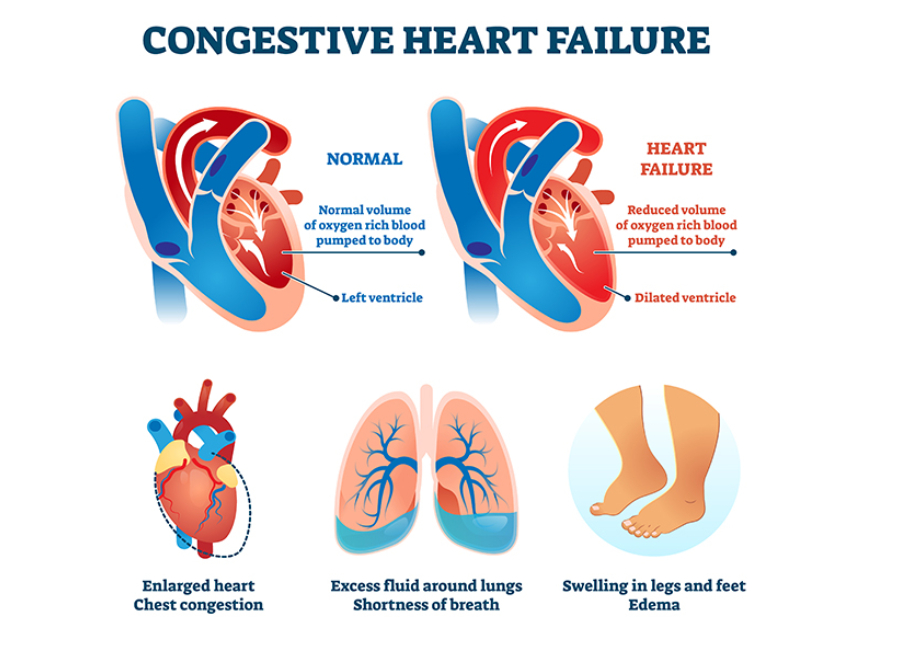
      Heart failure is an umbrella term for a set of physical symptoms arising due to the gradual deterioration in the heart’s pumping ability. The term “congestive heart failure” was traditionally used because the condition resulted in fluid buildup and congestion in the lungs.

      However, doctors and medical researchers have found that it causes a wide array of other symptoms. That’s why they now refer to the condition as heart failure.

      What Happens in Congestive Heart Failure?

      A healthy human heart relaxes and contracts nearly 100,000 times a day and pumps more than 2,000 gallons of blood throughout the body. The cardiovascular system also includes a network of arteries and veins to transport deoxygenated and oxygenated blood to and from the heart. If any part of the system falters, it can disrupt the flow of blood to vital organs.

      Heart failure is characterized by a progressive decline in the heart’s power to pump blood. When that happens, the heart goes through a series of structural changes (knowns as cardiac remodeling) and beats faster to pump more blood.

      Also, the blood vessels constrict to stabilize blood pressure and restrict blood supply to non-critical organs like the skin and kidneys. When blood flow to the kidneys reduces, it compels the body to retain more fluid and sodium.

      All these short-term fixes result in more damage and cause even more stress to the heart muscles. That, in turn, results in further deterioration of the heart’s pumping action.

      Congestive Heart Failure Symptoms: A Closer Look

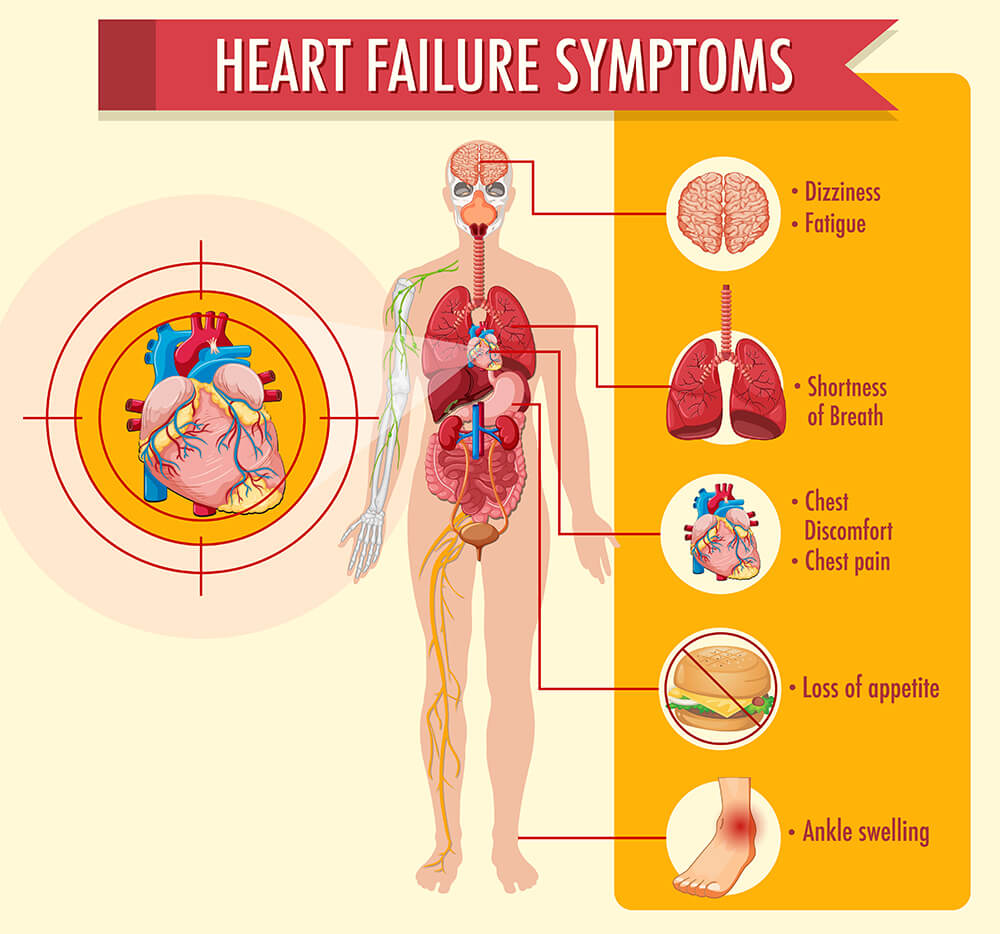
      heart failure system

      The heart failure symptoms vary depending on whether they’re caused due to a lack of oxygen or an increase in fluid build.

      Lack of oxygen supply results in the following heart failure symptoms :

      • Confusion
      • Weight gain
      • Fatigue
      • Discolored or bluish skin

      Excess sodium and fluid buildup in the body causes the following heart failure symptoms:

      • Lung congestion
      • Shortness of breath
      • Coughing and wheezing
      • Loss of appetite
      • Swelling of feet and abdomen

      Causes and Types of Congestive Heart Failure

      The most common causes of heart failure include:

      There are various ways to categorize congestive heart failure. Depending on the part of the heart’s pumping that’s affected due to heart failure, it can be of the following types:

      Systolic heart failure

      Also, depending on the side of the heart that’s affected, heart failure can be categorized as left-sided failure and right-sided failure. The treatment approach a doctor will use depends on the type of heart failure a patient has developed.

      Stages of Heart Failure

      The American College of Cardiology and the American Heart Association has outlined four stages to denote the progression of heart failure. While Stage A is characterized by risk factors like underlying medical conditions, stage B shows structural changes in a patient’s heart. The more advanced stages (C and D) present visible symptoms.

      In Conclusion

      Heart failure (also known as congestive heart failure) is a progressive condition caused by the heart’s inability to pump blood adequately. It results in symptoms like shortness of breath, fatigue, weight gain, and brain fog.

      Dr. C Raghu is an eminent cardiologist with more than two decades of experience. If you or someone you know has developed congestive heart failure symptoms, consult Dr. Raghu to explore your treatment options.

      Book Online Consultaion


        Understanding Congestive Heart Failure Symptoms Blog

        DOWNLOAD PDF

        Subscribe the Hearty Life Blogs

          dr. raghu

          DR. RAGHU

          MD, DM, FESC, FACC, FSCAI

          Cardiology Coronary, Vascular and

          Structural Interventions


          Conditions & Diseases

          Coronary angioplasty

          Angioplasty

          Coronary angioplasty

          Aortic Stenosis

          Coronary angioplasty

          Atrial Fibrillation

          Coronary angioplasty

          Atrial Septal Defect


          View More Services


          Diastolic-heart-failure-img.jpg

          October 1, 2022 AbhijitHeart Failure

          In our previous articles, we’ve discussed the symptoms of heart failure and the steps to diagnose the same. However, the course of treatment varies for every patient based on the type of heart failure they’ve developed.

          Depending on the part of the heart’s pumping cycle that’s been affected, there are two types of heart failure. In this blog, we’ll take a closer look at diastolic dysfunction and its symptoms.

          What Causes Diastolic Dysfunction?

          diastolic dysfunction

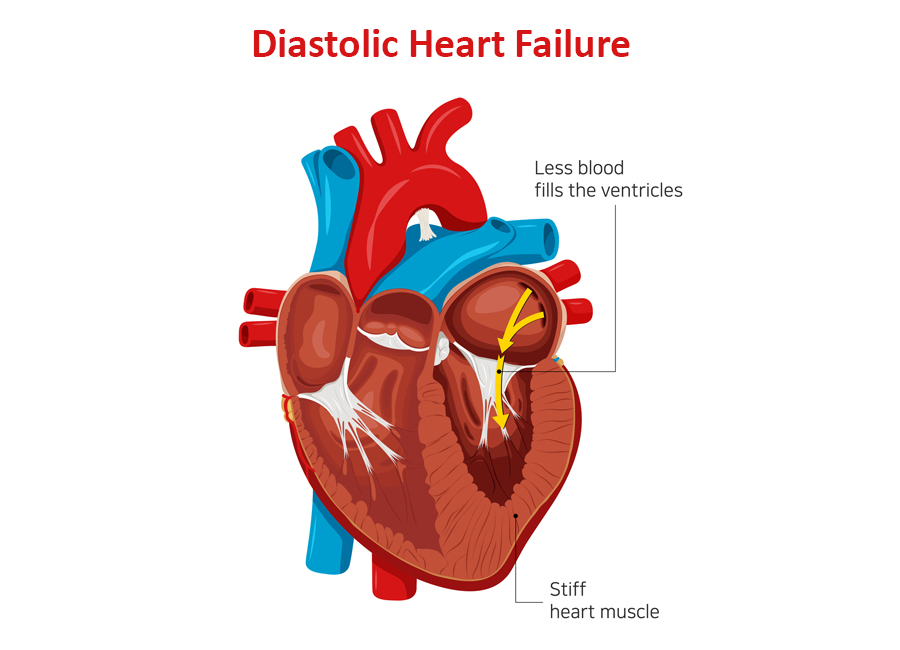
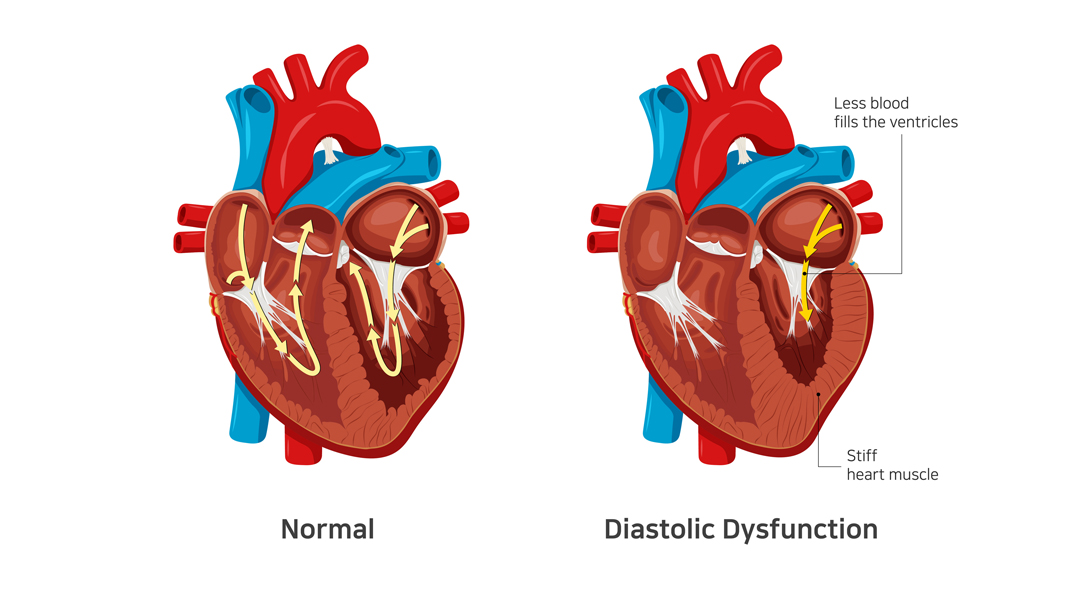
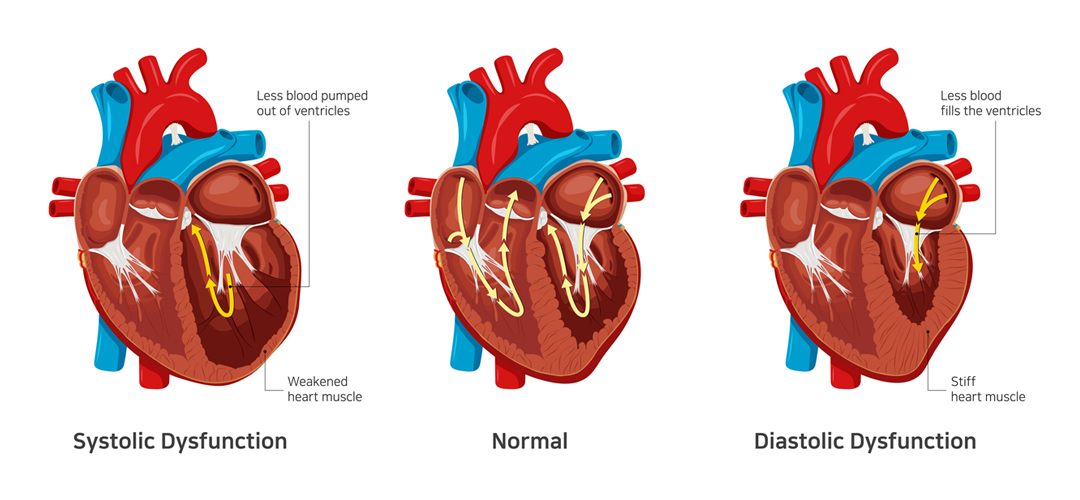
          The diastolic phase refers to the part of the heart’s pumping cycle when the ventricles (lower chambers) relax and let blood flow in from the atria (upper chambers). Diastolic dysfunction is a condition in which the ventricles don’t relax enough. That, in turn, prevents the normal amount of blood from entering the heart.

          Diastolic dysfunction is caused when the heart muscles become thicker and stiffer than usual. It’s more common in older women with hypertension and diabetes. If left untreated, it can lead to diastolic heart failure (also known as heart failure with preserved ejection fraction).

          Related : Understanding Congestive Heart Failure Symptoms

          What Does Preserved Ejection Fraction Mean?

          Ejection fraction refers to the volume of blood pumped out from the heart’s left ventricle with each contraction. For a healthy heart, the number falls in the range of 55% to 65%. A lower ejection fraction is one of the most common indicators of heart failure.

          However, it’s worth noting that many people with diastolic dysfunction have an ejection fraction of 50% or more (which is known as preserved ejection fraction). That means the left ventricle expels an adequate amount of oxygenated blood.

          However, the heart muscle doesn’t relax enough to let a sufficient quantity of blood in. That, in turn, causes the excess blood to back up in the lungs and results in fluid buildup in the feet and abdomen.

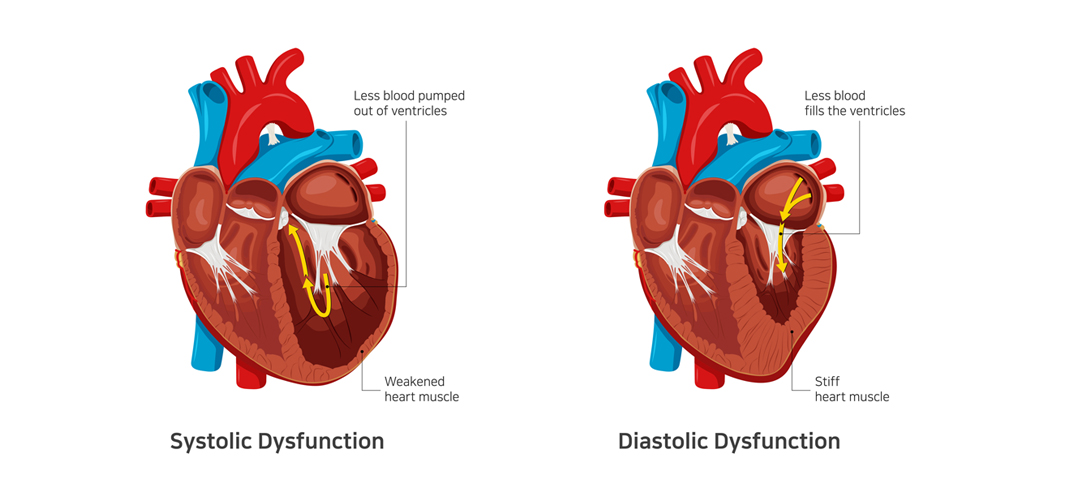
          How to differentiate systolic from diastolic dysfunction ?

          diastolic dysfunction

          In contrast to systolic dysfunction where the heart muscle is “weak”, in diastolic dysfunction the heart is “stiff”. This means that the heart is unable to pump blood out of the heart in systolic dysfunction whereas the heart is unable to accept further blood in diastolic dysfunction. Both conditions lead to congestion or fluid accumulation in various organs of the body. Differentiation of heart failure from systolic and diastolic dysfunction is not possible as both diseases present with similar symptoms. 

          Which conditions lead to Diastolic dysfunction?

          • Diastolic dysfunction appears consequent to uncontrolled or long-standing diabetes
          • Hypertension
          • Obesity as well as elderly people
          • Women and atrial fibrillation

          The best way to prevent and treat diastolic dysfunction is by effective control of the diseases mentioned above.

          Symptoms of Diastolic Dysfunction

          The most common symptom of diastolic dysfunction is congestion and shortness of breath due to the buildup of blood and fluid in the lungs. Breathing difficulties can get particularly worse during exertion or when lying.

          Other symptoms of diastolic dysfunction include:

          • Coughing and wheezing (due to lung congestion)
          • Loss of appetite and nausea (due to fluid buildup around the liver and in the stomach)
          • Swollen feet, legs, and abdomen (due to fluid accumulation)

          If you experience any of the given symptoms, it’s crucial to consult a doctor for a proper diagnosis.

          Treatment of Diastolic Dysfunction

          Treatment of diastolic dysfunction involves a combination of medications (diuretics or water pills) and lifestyle changes. In severe cases, a patient might need left ventricular assist devices or a heart transplant.

          Is Diastolic Dysfunction Serious?

          In the long run, diastolic dysfunction can lead to diastolic heart failure. That, in turn, increases your risk of hospitalization and death. Therefore, you should pay close attention to your symptoms and reach out to a doctor whenever you notice anything unusual.

          Dr. C Raghu is a renowned cardiologist who specializes in interventional cardiology. He has decades of experience in treating patients with different heart conditions. If you or anyone you know has developed symptoms like shortness of breath, swollen feet, loss of appetite, etc., contact Dr. Raghu to explore your treatment options.

          Book Online Consultaion


            What Are the Symptoms of Diastolic Dysfunction ? – Blog

            DOWNLOAD PDF

            Subscribe the Hearty Life Blogs

              dr. raghu

              DR. RAGHU | Best Cardiologist in Hyderabad

              MD, DM, FESC, FACC, FSCAI

              Cardiology Coronary, Vascular and

              Structural Interventions


              Conditions & Diseases

              Coronary angioplasty

              Angioplasty

              Coronary angioplasty

              Aortic Stenosis

              Coronary angioplasty

              Atrial Fibrillation

              Coronary angioplasty

              Atrial Septal Defect


              View More Services


              Dr raghu logo


              Dr raghu logo


              Call us now if you are in a medical emergency need, we will reply swiftly and provide you with a medical aid.


              For Appointment with Dr Raghu: +91 80085 36699
              Dr Raghu’s Patient Coordinator: +91 72860 10203
              Dr Raghu’s Office Experience: +91 90001 65962
              Dr Raghu’s Social Media Communication Channel: +91 97046 51708

              Dr. Raghu | Heart Specialist in Hyderabad
              Yashoda Hospitals, Raj Bhavan Road, Somajiguda, 1st floor, Room No. 115, Hyderabad -500082, Telangana

              Best Cardiologists in Hyderabad


              © 2024, Dr. Raghu. All rights reserved. Design & Developed by AMSDigital.in

              [gtranslate]
              +91-9542475650