menu trigger
menu trigger


Monday - Sunday 08:00 AM - 08:00 PM+91 95424 75650 | Emergency Service 24/7Book an AppointmentDigital Visiting Card
Pericarditis
What is Pericarditis?
- The inflammation of the thin, two-layered fluid-filled sac that surrounds the heart (pericardium) is known as Pericarditis.
- This condition leads to friction between two layers when the heartbeats.
- There are three different types of Pericarditis:
- Acute Pericarditis: Inflammation develops suddenly and lasts for three weeks.
- Chronic Pericarditis: Inflammation develops in a slow process and lasts more than 6 months.
- Constrictive Pericarditis: Pericardium layer thickens and forms the scar tissue and makes the heart work normally.
- In most cases, pericarditis will be acute.
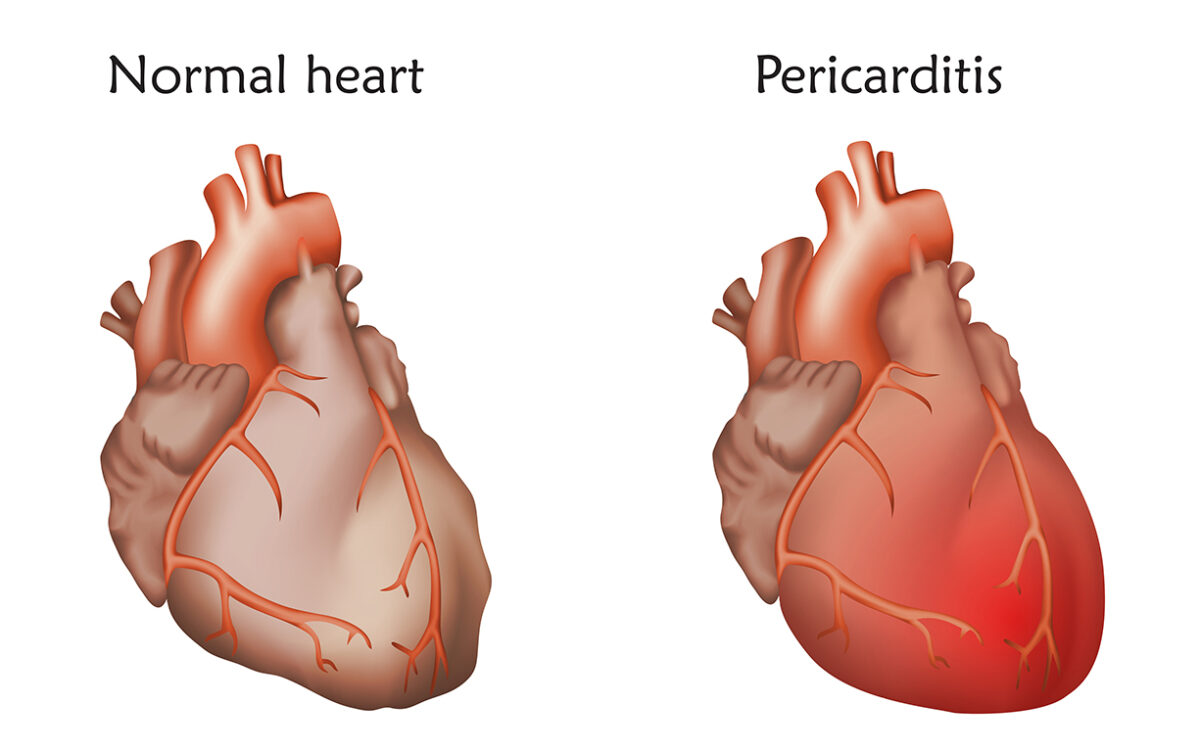
What are the causes of pericarditis?
- Viral infection: Most commonly due to gastrointestinal virus
- A bacterial infection like tuberculosis
- Fungal infection
- Infection from parasite
- Autoimmune disorders like lupus, scleroderma, or rheumatoid arthritis
- Chest injury
- Kidney failure
- Hypothyroidism
- Carcinoma
- Genetic diseases
- Certain medicines like phenytoin, Warfarin, heparin, or procainamide
What increases the risk of developing pericarditis?
- Infection
- Thyroid problems
- Following a heart attack or heart surgery
- Following radiation therapy
- Percutaneous treatment like cardiac catheterization or radiation ablation therapy
What are the symptoms of pericarditis?
- Chest pain is a common symptom of pericarditis and may get worse when patient cough, swallow, breathe or lie flat
- Sharp and stabbing due to friction between the two layers
- Pain in the back, neck or left shoulder
- Anxiety
- Fatigue
- Swelling in feet, legs or ankle and abdomen
- Irregular heartbeat
- Shortness of breath
What are the complications of pericarditis?
- Cardiac tamponade: This condition is due to fluid in the pericardium that leads to improper functioning of heart and dramatic drop in blood pressure.
- Chronic constrictive pericarditis: Permanent thickening and scarring of two-layered pericardium lead to severe swelling of abdomen and legs, shortness of breath.
How is pericarditis diagnosed?
- Electrocardiogram
- Echocardiogram:
To identify the presence of fluid around the heart
To determine emergency surgical treatment
To differentiate ate a type of pericarditis involvement - Cardiac catheterization:
To remove excess fluid(pericardial effusion) around the heart
To differentiate the type of pericarditis
To identify the blocks in blood vessels of the heart
- CT scan:
- Cardiac MRI:
How is pericarditis treated?
- To reduce inflammation and swelling of legs or abdomen
- Over the counter drugs like aspirin or ibuprofen
- Colchicine: To reduce inflammation during acute pericarditis. Contraindicated during liver or kidney damage
- Corticosteroids like prednisolone
- Antibiotics during pericarditis caused by a bacterial infection
- Pericardiocentesis: This procedure involves a needle or catheter to drain excess fluid in the in the pericardial cavity
Pericardiectomy:
This procedure involves the removal of entire pericardium by open-heart surgery for chronic constrictive pericarditis
Our Specialities
- Conditions
Conditions
- Acute limb ischemia
- Chronic limb ischemia
- Aortic stenosis
- Mitral valve stenosis
- Mitral valve regurgitation
- Atrial fibrillation
- Tachycardia
- Bradycardia
- Palpitations
- High blood pressure
- Atrial septal defect
- Ventricular septal defect
- Patent ductus arteriosus
- Cardiac amyloidosis
- Hypertrophic cardiomyopathy
- Varicose veins
- Deep vein thrombosis (DVT)
- Myocarditis
- Endocarditis
- Pericarditis
- Peripheral arterial disease
- Pulmonary artery hypertension
- Pulmonary embolism
- Cath lab procedures:
Cath lab procedures:
- Coronary Angiogram
- Primary Angioplasty
- Coronary Angioplasty
- CHIP Angioplasty
- Aortic valve replacement surgery
- Mitral valve replacement surgery
- Device closure for Atrial septal defect
- Device closure for Ventricular septal defect
- Device closure for Patent Ductus Arteriosus
- Transcatheter aortic valve replacement (TAVR)
- Inferior vena cava (IVC) filter
- LA appendage closure
- Fistuloplasty
- Balloon mitral valvotomy
- 24 hours emergency services
24 hours emergency services
- Clinics- weekly basis/monthly basis/ Yearly basis
Clinics- weekly basis/monthly basis/ Yearly basis
- Prevention of cardiovascular diseases
Prevention of cardiovascular diseases
- Diagnosis
Diagnosis
BOOK AN APPOINTMENT

Dr. RAGHU
MD, DM, FESC, FACC, FSCAI
Cardiology Coronary, Vascular and
Structural Interventions
Cardiology Coronary, Vascular and
Structural Interventions
Conditions & Diseases
Angioplasty
Aortic Stenosis
Atrial Fibrillation
Atrial Septal Defect

+91 95424 75650
For Appointment with Dr Raghu:
+91 80085 36699
Dr Raghu’s Patient Coordinator:
+91 72860 10203
Dr Raghu’s Office Experience:
+91 90001 65962
Dr Raghu’s Social Media Communication Channel:
+91 97046 51708

© 2024, Dr. Raghu. All rights reserved. Design & Developed by AMSDigital.in