Heart-Valve-Screening.png

June 23, 2026

The Silent Problem You Might Not Know You Have Heart Valve Screening

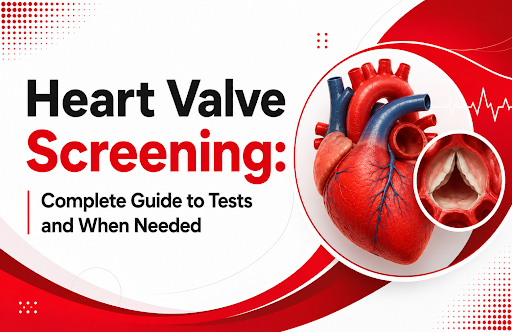
Heart Valve Screening. You’re sitting at your desk. You’re catching your breath after climbing those three flights of stairs. Your chest feels a bit tight. You think, “Maybe I’m just getting old.” You ignore it and move on. But what if it’s something more? What if your heart valves, those tiny doors inside your heart, are not working the way they should?

Here’s the thing. You can’t feel your heart valves failing. They don’t send you warning signals like your back pain or your migraine does. They just silently stop working. And by the time you notice something is wrong, the damage might already be serious. This is why heart valve screening matters. This is why you need to know about it. Because you’re not getting any younger. And neither are your heart valves.

Understanding Your Heart Valves and Why They Matter
What Are These Valves Anyway?

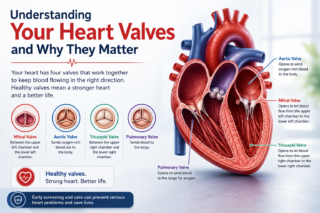
Think of your heart like a house with four rooms. Each room has doors. These doors are your heart valves. Their job? They keep blood flowing in one direction. They make sure blood doesn’t flow backward. They work 24/7. Day and night. Without rest.

Your heart has four valves:

  • The mitral valve – It’s between your upper left chamber and your lower left chamber
  • The aortic valve – It sends oxygen-rich blood out to your body
  • The tricuspid valve -It works between your upper right chamber and your lower right chamber
  • The pulmonary valve – it sends blood to your lungs

All of them are important. All of them work together. And when one of them starts to fail, your whole system gets confused.

What Happens When Valves Go Wrong?

Let’s be honest. Your lifestyle might have caught up with you. Years of stress. Years of fast food. Years of sitting at your desk. Years of not exercising. Your heart has been working hard for you.

When valve problems develop, two main things happen:

Valve Stenosis – The valve becomes too tight. Blood cannot flow through it easily. Your heart has to work harder. It gets exhausted. Think of a clogged pipe. Water can’t flow freely.

Valve Regurgitation – The valve doesn’t close properly. Blood leaks backward. It’s like a door that doesn’t shut completely. All that leaking weakens your heart over time.

What’s the real problem? You feel tired. You get short of breath, and your legs swell up. You might feel like your heart is racing. These symptoms seem normal when you’re middle-aged and busy. But they’re not normal. They’re your body sending you a message.

Also read: Top Heart Specialist in Hyderabad, Dr C. Raghu, Cardiologist 

Why You Need Heart Valve Screening

Your Risk Factors Are Real

Let me ask you something. Do you have high blood pressure? Are you overweight? Do you have diabetes? Did your parents have heart problems? Are you over 50? Have you had infections?

If you answered yes to any of these, you need to be screened. It’s that simple.

You’re not alone in this. Thousands of people like you—working professionals, busy parents, and successful people—are walking around with valve problems they don’t know about. Some of them will face serious complications. Some will have heart attack symptoms that they could have prevented.

Here’s what you need to understand: Early detection saves lives.

The Real Consequences of Ignoring It

Your heart gets weaker – It has to pump harder. It gets tired. Eventually, it can’t pump enough blood to your body.

You get heart failure – Your body doesn’t get enough oxygen. You feel exhausted all the time.

You might have a stroke – Blood clots can form in your heart and travel to your brain.

Your quality of life drops – You can’t climb stairs. You can’t play with your grandchildren. You can’t do the things you love.

You might need emergency surgery – Sudden valve problems are dangerous. Emergency surgery is riskier than planned surgery.

But here’s the good news. If you catch it early, your doctors can manage it. You can live a normal life. You can prevent the worst outcomes.

Also read: Meet Cardiologist in India, Dr C. Raghu Yashoda, Somajiguda 

Heart Valve Screening Tests: What You Need to Know

Test #1: The Echocardiogram – Your Best Friend

This is your main test. It’s painless. It’s non-invasive. No needles. No radiation.

How does it work? A technician puts a small device on your chest. It sends sound waves into your heart. These sound waves create a picture of your heart. The doctor can see how your valves are working. Can see how blood is flowing.

Why does it matter? It shows problems clearly. It’s accurate. It’s safe.

When do you need it? If you have symptoms. If you have risk factors. If your doctor hears something unusual with a stethoscope.

Test #2: The ECG – Quick and Easy

An electrocardiogram records your heart’s electrical activity. It takes about 10 minutes.

What happens? They put small pads on your chest. A machine reads your heart’s rhythm.

Why does it matter? It shows if your heart is under stress. It shows irregular rhythms.

Test #3: The Stress Test – For the Brave

This one makes you work. You walk on a treadmill. Your heart rate goes up. The machine monitors what happens.

Why does it matter? It shows how your heart performs under pressure. Real pressure. Like when you’re running to catch a bus.

Test #4: The Cardiac CT – For Detailed Images

Sometimes doctors need more details. A CT scan creates detailed pictures of your heart.

Why does it matter? It’s useful when your doctor suspects specific problems. Like aortic valve stenosis or other serious conditions.

Test #5: The Catheterization – When You Need Definite Answers

This is more invasive. A thin tube goes into your artery. It reaches your heart. Doctors can measure pressures inside your heart.

Why does it matter? It gives precise information. It helps doctors plan treatment.

When You Actually Need Screening, Let’s Get Practical

You should get screened if you have any of these:

  • You’re over 50 – Time is catching up
  • You have high blood pressure – It stresses your valves
  • You have diabetes – It damages your heart over time
  • You’re overweight – Extra weight means extra work for your heart
  • You smoke – You know this already. It damages everything
  • You’re tired all the time – Not normal tiredness
  • You get short of breath easily – When climbing stairs, you shouldn’t get this tired
  • Your ankles swell – Especially at the end of the day
  • You have chest pain – This is serious. Don’t ignore it
  • Your family has heart problems – Genetics matter
  • You had rheumatic fever as a child – It can affect your valves years later
  • You have an irregular heartbeat – You feel your heart skipping beats

What Happens After Screening?

Your doctor finds something. Now what?

If it’s mild, you get monitored. Regular check-ups. Healthy lifestyle changes. This is manageable.

If it’s moderate, you might need medication. You might need lifestyle changes. You avoid strenuous activities.

If it’s severe, you might need intervention. An interventional cardiologist in Hyderabad or anywhere else can discuss options. Surgery. Valve replacement. Modern procedures are less invasive than before.

Your Action Plan Starts Now

You don’t have to be scared. You just need to be smart.

Step 1: Schedule a check-up – Talk to your doctor. Tell them your concerns.

Step 2: Be honest about symptoms – Don’t downplay anything. Doctors need the truth.

Step 3: Get screened if advised – Don’t delay. Not for tomorrow. Not for next month.

Step 4: Follow the plan – If your doctor gives you recommendations, follow them. This is your life.

Step 5: Make lifestyle changes – Eat better. Move more. Reduce stress. Sleep properly. These things matter.

Also read: Best Heart Doctor in Hyderabad, Why Dr. C Raghu 

Take Control of Your Health Today

Your heart has been working for you your whole life. It’s time to work for your heart. Don’t wait for symptoms to become serious. Heart valve problems are manageable when caught early. They’re dangerous when ignored.

If you’re experiencing any symptoms or have risk factors, don’t brush them aside. Connect with an experienced Top cardiologist in Hyderabad or specialists near you who can properly evaluate your heart health through comprehensive heart valve screening.

Visit drraghu.com today to schedule your consultation with Dr. C. Raghu, an interventional cardiologist specializing in heart valve conditions. Your heart deserves the best care.

About the Expert

Dr. C. Raghu is an interventional cardiologist with expertise in treating valve disorders, including aortic stenosis specialist care. He practices at Yashoda Hospital, Somajiguda, Hyderabad, and is recognized as one of the best cardiologists in Hyderabad for his patient-focused approach to cardiac care. Dr. Raghu believes in early detection and preventive cardiology to help patients live longer, healthier lives.
Abhijit

cardiologist-in-hyderabad.png

June 9, 2026

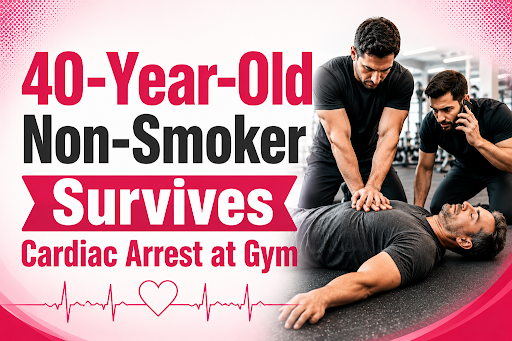
Cardiologist in Hyderabad are increasingly seeing cases like Rajesh’s. Rajesh, 40, a non-smoker and non-drinker, IT team lead in Hyderabad, and father of two, had been going to the gym for three years. He was proud of his consistency. On a Thursday evening in March, while finishing his chest press set, he felt a sudden, crushing pressure in the chest. His vision narrowed. He hit the floor. He was lucky. His gym had a defibrillator. One trainer knew CPR. The ambulance arrived in 8 minutes. Within an hour, he was receiving cardiac arrest treatment in Hyderabad; a stent was placed, the artery reopened, and the heart muscle was being saved. Rajesh survived. Many like him do not. 

Why Did This Happen to a Healthy, Non-Smoking Gym-Goer?

Non-smoker heart attack risk is a subject cardiologists are raising alarms about across India. The vast majority of Indian men in their 30s and 40s who suffer cardiac events are non-smokers. When Rajesh’s arteries were examined after his cardiac arrest, his right coronary artery was 90% blocked. He had no symptoms — none that he had noticed and acted on. What he did have was a combination of:

  • Coronary artery disease has been building silently for a decade
  • Undetected high LDL cholesterol is often genetic
  • Chronic work stress with years of poor sleep
  • High triglycerides from a diet heavy in refined carbs and fried food
  • Family history, which he was aware of, but never acted on

Warning Signs Before Cardiac Arrest That People Miss

  • Unusual fatigue in the weeks before the event, ‘I assumed it was work pressure.’
  • Shortness of breath doing things that previously felt effortless, ‘I thought I needed to train harder.’
  • Brief, passing chest discomfort — ‘It felt like gas. I took an antacid’
  • Jaw or neck tightness: I put it down to posture at my desk.’
  • Palpitations during exercise, ‘I thought it was just my heart rate going up.’

These warning signs before cardiac arrest are whispers. If you are experiencing any of these consistently, visiting the top heart specialist in Hyderabad is not an overreaction — it is what saves lives.

What Is Coronary Artery Disease?

Coronary artery disease (CAD) is the slow, progressive narrowing of the arteries that supply blood to the heart caused by the buildup of plaque on the inner walls. When a piece of plaque ruptures, a blood clot forms instantly. If that clot fully blocks the artery, the heart muscle begins to die within minutes. CAD is the single leading cause of death in India and affects non-smokers just as much as smokers.

What Is Angioplasty and How Did It Save Rajesh?

After Rajesh arrived at the emergency cardiac care facility, doctors performed a coronary angiogram, identified the blockage within minutes, and performed angioplasty treatment in Hyderabad, threading a catheter to the blocked artery, inflating a balloon to compress the plaque, and placing a stent to keep it open. The procedure took under 45 minutes. Blood flow to Rajesh’s heart was restored. This is why the best cardiologist in Hyderabad for emergencies matters so much in cardiac arrest; every minute counts.

CPR Treatment: Why Every Person at That Gym Matters

When Rajesh collapsed, it was not the doctor who saved him first — it was the gym trainer. CPR (Cardiopulmonary Resuscitation) kept blood flowing to Rajesh’s brain and heart during the critical minutes before the ambulance arrived. Without CPR, he would almost certainly have suffered irreversible brain damage or death. CPR involves pressing hard and fast on the center of the chest, 100 to 120 compressions per minute, to manually pump blood when the heart has stopped.

What You Should Do If You Are in a Similar Situation

  • Get a cardiac screening, especially if you are male, over 35, with a family history
  • Do not skip symptoms. Brief chest tightness or unusual fatigue during exercise should be evaluated immediately
  • Learn CPR; it takes 30 minutes and can save a life in your home, office, or gym
  • If you witness a cardiac arrest, call emergency services, begin chest compressions, and do not stop until help arrives

Conclusion

Cardiac arrest can happen to anyone — not just the smoker, the obese, or the sedentary. Rajesh’s survival was the presence of someone trained to act, access to excellent cardiac arrest treatment in Hyderabad, and the skill of the interventional cardiology team that treated him.

Dr C. Raghu—Interventional Cardiologist, Yashoda Hospital, Somajiguda, Hyderabad
Known for his expertise in emergency heart attack treatment in Hyderabad and complex angioplasty procedures. His team provides round-the-clock emergency cardiac care to patients across Hyderabad and beyond.

Abhijit

top-heart-doctor-in-hyderabad-1200x778.jpg

May 26, 2026

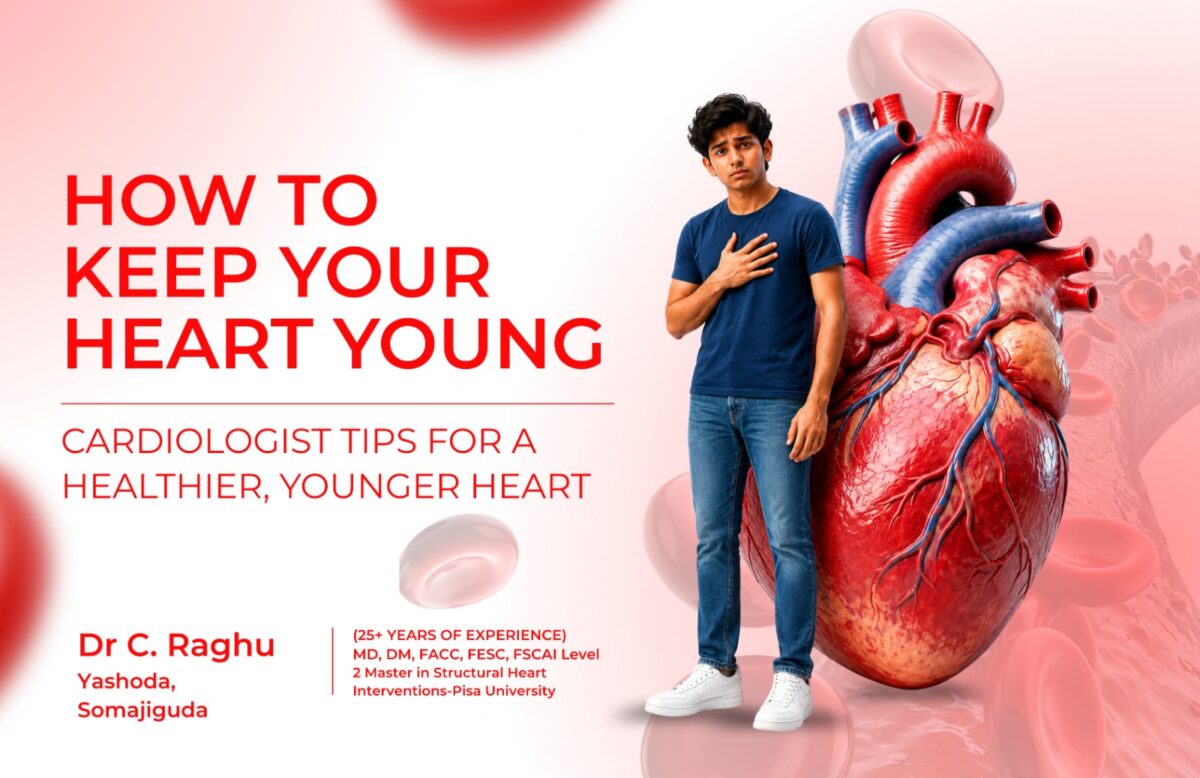
Cardiologist tips check your phone, skip breakfast, and rush through traffic to reach the office. After sitting for long hours, stress, unhealthy food, and lack of exercise become part of daily life. According to a leading cardiologist in Hyderabad, this modern corporate lifestyle is silently increasing the risk of heart disease among working professionals in cities like Mumbai, Bangalore, Pune, and Hyderabad. Millions are living this routine every day — and their hearts are paying the price silently. 

The problem is not that you don’t care about your heart. The problem is that you think you still have time.

Why Your Heart Ages Faster Than You Think

Your heart is a muscle. Like every other muscle, it thrives on movement. It needs good nutrition and rest. But when you spend 9 to 10 hours sitting every day, eat high-salt, high-fat takeout food, and carry the weight of professional deadlines, your heart goes through a kind of invisible wear and tear. Which the cardiologists call cardiovascular ageing, and it begins much earlier than most people expect.

By the time you are in your late 30s or early 40s, years of sedentary habits, stress, and poor diet have already left marks on your arteries. The good news is you can slow this process. A skilled heart doctor in Hyderabad will tell you the same thing: the heart responds well to the right care, at any age.

The Biggest Threats to Your Heart Right Now

  • Chronic sitting: Sitting for more than 6 hours a day increases cardiovascular disease risk by up to 64%, even if you work out on weekends.
  • High-stress environment: Prolonged work stress raises cortisol, which raises blood pressure and inflammation, both major risk factors for heart disease.
  • Poor food choices: Office cafeteria meals and food delivery apps have made it easy to eat processed, calorie-dense, nutrient-poor food every single day.
  • Disrupted sleep: Late nights on OTT platforms mean your heart never gets the deep recovery time it needs.
  • Ignoring early signs: Occasional chest tightness, breathlessness when climbing stairs, or unexplained fatigue are signals many people explain away.
     

Also read:  Dr. C. Raghu is one of the best doctors for TAVI/TAVR in Hyderabad 

What Cardiologist tips Recommend

1. Move More — Even at Your Desk

You do not need to become an athlete. A heart specialist in Hyderabad will tell you that even 30 minutes of brisk walking, five days a week, has measurable benefits on cholesterol, blood pressure, and heart function. If you work from home, set a timer to stand up and walk for 5 minutes every hour.

2. Watch What You Eat on Weekdays

Most of us eat reasonably well on weekends but switch to chaos during our weekdays. Our heart does not get a holiday. Just swap one meal a day to something heart-friendly — maybe a dal and sabzi thali, fresh fruit, or a handful of mixed nuts. We need to reduce sodium by cutting packaged snacks.

3. Know Your Numbers

When did you last check your blood pressure, blood sugar, and cholesterol? These three numbers tell a Heart Specialist in Hyderabad more about your cardiac risk than how you feel right now. You should have a routine lipid profile and ECG checks. It can spot trouble before it becomes a crisis.

4. Manage Stress Like a Skill

Many times, our stress becomes unavoidable due to our work culture. But how you manage it well determines how much damage it does. Even 10 minutes of deep breathing, a short walk after lunch, or a weekend away from screens significantly lowers cortisol. Sleep is not a luxury; it is cardiac medicine.

5. Do Not Wait for Symptoms

Heart disease is notoriously sneaky. Many people who suffer a heart attack have no classic warning signs. If you are over 35, overweight, or have a family history of heart disease, see a heart expert in Hyderabad proactively. A preventive consultation is far less expensive than an emergency.

Also read: Daily Habit That May Double Heart Attack Risk, Warns Cardiologist 

Red Flags You Should Never Ignore

You need to see the best cardiologist in Hyderabad immediately if you experience:

  • Chest pain or tightness, even brief or mild
  • Shortness of breath while doing simple tasks
  • Palpitations or a racing heart without an obvious reason
  • Dizziness or sudden fatigue
  • Swollen ankles or feet

Conclusion

Your heart has been working for you every second of your life. It is time to work for it. Whether you are in Hyderabad, Bangalore, Mumbai, or Chennai, schedule that overdue check-up with a cardiologist. Do not wait for a warning. Make an appointment with Dr Raghu

Dr C. Raghu — Interventional Cardiologist, Yashoda Hospital, Somajiguda, Hyderabad
One of India’s most respected interventional cardiologists with decades of experience in complex cardiac interventions and preventive cardiology. Dr C Raghu has helped thousands of patients across India take control of their heart health — before and after a cardiac event.
Call Us :+91 95424 75650 | Email :secretary@drraghu.com

Abhijit


Dr raghu logo


Dr raghu logo


Call us now if you are in a medical emergency need, we will reply swiftly and provide you with a medical aid.


For Appointment with Dr Raghu: +91 80085 36699
Dr Raghu’s Patient Coordinator: +91 72860 10203
Dr Raghu’s Office Experience: +91 90001 65962
Dr Raghu’s Social Media Communication Channel: +91 97046 51708

Dr. Raghu | Heart Specialist in Hyderabad
Yashoda Hospitals, Raj Bhavan Road, Somajiguda, 1st floor, Room No. 115, Hyderabad -500082, Telangana

Best Cardiologists in Hyderabad


© 2024, Dr. Raghu. All rights reserved. Design & Developed by AMSDigital.in

[gtranslate]
+91-9542475650