
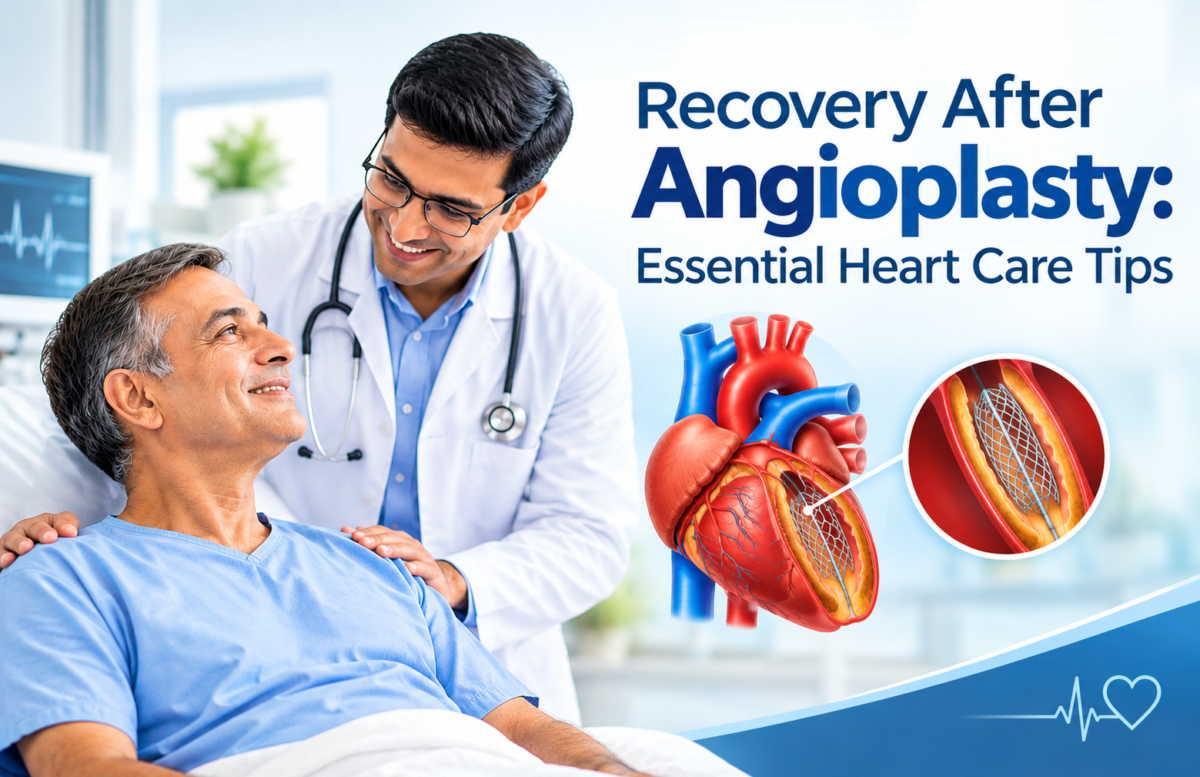
recovery-after-angioplasty-1200x777.png

September 21, 2026 AbhijitHealthcare

After a coronary angioplasty or PTCA stent procedure, the first concern for many patients is simple: What should be done now to protect the heart and avoid complications? Proper recovery after angioplasty involves more than allowing the catheter site to heal. Medicines, activity, diet, follow-up care, and management of coronary artery disease all influence long-term heart health.

This guide explains practical precautions after angioplasty, warning signs that need medical attention, and lifestyle measures patients and families can follow with guidance from the treating cardiologist.

Recovery After Angioplasty: What to Expect in the First Few Days
recovery after Angioplasty

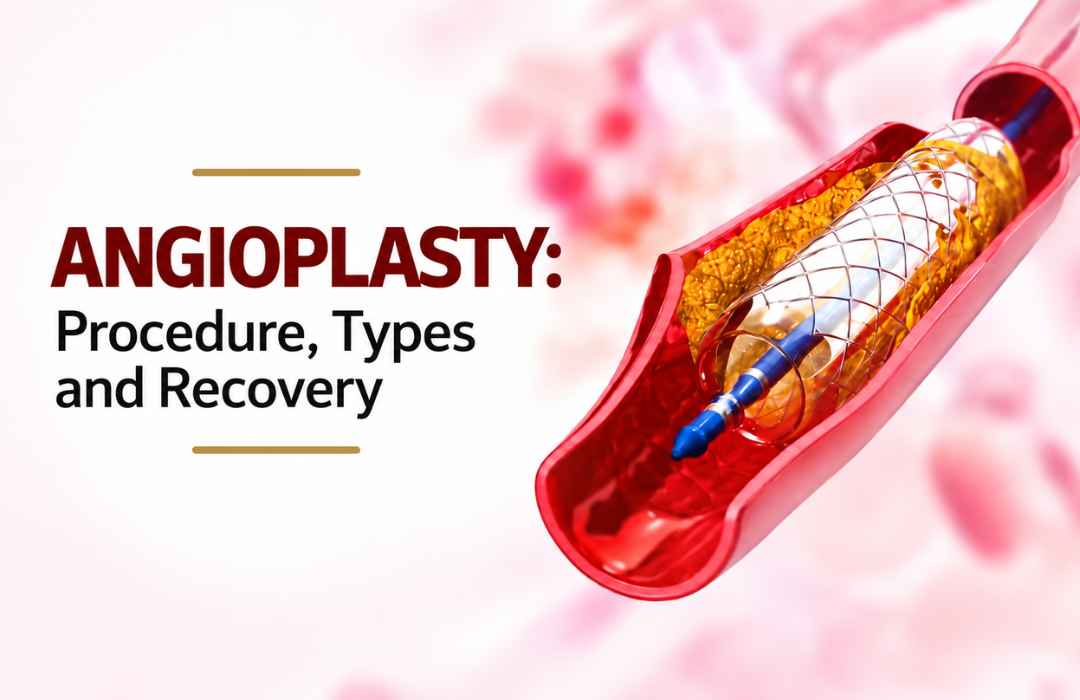
Coronary angioplasty, also called percutaneous coronary intervention or PCI, opens a narrowed or blocked coronary artery. A small balloon is used to widen the affected area, and a coronary stent is commonly placed to help keep the artery open.

Recovery varies depending on the reason for angioplasty, the patient’s overall health, the access site used, and whether the procedure was routine or complex. Some patients may return home the same day, while others require overnight observation.

Mild bruising or tenderness around the wrist or groin access site can occur. Patients should follow their discharge instructions closely instead of assuming that feeling better means the artery disease has been completely resolved.

PTCA Stent Medicines Must Be Taken as Prescribed

Medication adherence is one of the most important parts of recovery after a PTCA Stent procedure.

After stent placement, the cardiologist may prescribe antiplatelet medicines to reduce the likelihood of a clot forming inside the stent. The specific medicine and duration depend on the patient’s condition and treatment plan. Patients should never stop these medicines or change their dose without speaking with the treating cardiologist, even when they feel well.

Other prescribed medicines may help manage cholesterol, blood pressure, diabetes, angina, or other cardiovascular risk factors. Keeping an updated medication list can make follow-up appointments easier and reduce confusion for patients and family members.

Coronary Angioplasty Access-Site Care and Activity

The wrist or groin used for catheter insertion needs time to heal. Patients should keep the area clean and follow the hospital team’s instructions regarding dressing removal, bathing, and activity.

During early recovery:

  • Avoid heavy lifting and strenuous exercise until medically cleared.
  • Increase walking and routine activity gradually.
  • Watch the catheter site for increasing swelling, persistent bleeding, redness, or worsening pain.
  • Ask the cardiologist when driving, work, gym activity, and sexual activity can safely resume.
  • Attend cardiac rehabilitation if it is recommended.

A person’s timetable may differ after a heart attack, routine angioplasty, or more complex procedures such as CHIP. Angioplasty or treatment of chronic total occlusions. Complex coronary interventions can require individualized monitoring and recovery planning.

Coronary Artery Disease Treatment Continues After Angioplasty

Angioplasty treats an important narrowing or blockage, but it does not remove the underlying tendency toward coronary artery disease. Long-term coronary artery disease treatment therefore remains an essential part of care after the procedure.

Patients are generally encouraged to follow a heart-supportive eating pattern, avoid tobacco, maintain an appropriate body weight, stay physically active as advised, and keep conditions such as diabetes, high blood pressure, and high cholesterol under medical control.

For example, a patient who feels significantly better after stent placement may be tempted to return immediately to previous eating or smoking habits. However, improved symptoms should instead become an opportunity to build sustainable routines that support cardiovascular health.

Angioplasty and Angiogram: Understanding the Difference

Patients sometimes use angioplasty” and “angiogram interchangeably, but they have different purposes.

A coronary angiogram is primarily a diagnostic procedure that allows the medical team to examine blood flow and identify narrowed coronary arteries. Angioplasty is a treatment used to improve blood flow through an affected artery, often followed by stent placement.

Patients looking for additional guidance about access-site care and precautions can read Recovery After Angioplasty for related post-procedure information.

When Should a Coronary Artery Disease Doctor Be Contacted?

Patients should not ignore symptoms that are new, severe, or becoming worse after discharge.

Medical advice should be sought promptly for persistent or worsening chest discomfort, unusual breathlessness, fainting or significant dizziness, fever, increasing pain or swelling around the catheter site, or bleeding that does not settle with the instructions provided by the hospital. Severe chest pain, serious breathing difficulty, or symptoms suggestive of another heart attack require emergency medical attention.

Families should also keep emergency contact information readily available during the early recovery period.

Follow-Up With an Angiography Doctor in Hyderabad

Follow-up allows the cardiologist to review symptoms, examine the access site when required, check medicines, assess cardiovascular risk factors, and plan the patient’s return to normal activity.

Patients searching for an angiography doctor in Hyderabad, an angioplasty expert in India, or a coronary artery disease specialist should consider clinical experience, communication, appropriate follow-up, and experience with the type of coronary condition being treated. Rather than relying solely on promotional descriptions such as “Best Angioplasty Expert in India,” patients can discuss their diagnosis, treatment options, expected recovery, medicine plan, and long-term monitoring directly with the specialist.

Supporting Heart Health Beyond Stent Coronary Treatment

Successful stent coronary treatment is the beginning of ongoing cardiovascular care rather than the end of it. Regular reviews, appropriate medication use, gradual physical activity, tobacco avoidance, balanced nutrition, and control of major risk factors can all form part of the patient’s long-term plan.

Patients who need guidance about coronary angioplasty, CHIP angioplasty, coronary artery disease treatment, or post-PTCA stent care can consult Dr. C. Raghu, cardiologist in Hyderabad, for an individualized assessment and follow-up plan.
Angioplasty-Procedure-Types-and-Recovery.jpg

When a coronary artery is completely blocked, patients often want to know whether it can be reopened, what the procedure involves, and how long recovery may take. CTO Angioplasty in Heart treatment is a specialized form of coronary intervention used in selected patients with a chronic total occlusion. This guide explains what a CTO is, the main procedure approaches, who may be considered for treatment, recovery after CTO angioplasty, and why assessment by a Coronary Artery Disease Specialist matters.

What Is CTO Angioplasty?

CTO stands for chronic total occlusion. It refers to a coronary artery that has been completely blocked for a prolonged period. Over time, the body may develop smaller alternative blood vessels called collateral vessels that can supply some blood to the heart muscle beyond the blockage.

A CTO is different from a partially narrowed coronary artery. The blockage can contain hardened plaque and fibrous tissue, making it more technically challenging for a catheter and guidewire to cross.

CTO angioplasty, also called CTO PCI, is a catheter-based procedure that attempts to restore blood flow through the chronically blocked coronary artery. Whether it is appropriate depends on the patient’s symptoms, coronary anatomy, heart function, evidence of ischaemia or viable heart muscle, other coronary blockages, and overall health.

Current chronic coronary syndrome guidance emphasizes individualized assessment and shared decision-making when selecting a revascularization strategy.

Who May Be Considered for CTO Angioplasty?

Having a CTO does not automatically mean that angioplasty is required. Some patients may have adequate blood supply through collateral vessels and few or no symptoms, while others may have persistent symptoms or evidence that the blocked artery is affecting the heart muscle.

A Coronary Artery Disease Specialist may consider CTO PCI when factors such as the following are present:

  • Persistent or recurrent angina despite appropriate medical treatment
    Reduced exercise tolerance or symptoms affecting daily activities
    Evidence of significant ischaemia related to the territory supplied by the blocked artery
    Viable heart muscle that may benefit from improved blood flow
    Coronary anatomy that is suitable for PCI
    A clinical situation in which the expected benefits of revascularization outweigh its risks

For some patients, medication and lifestyle management may remain appropriate. In others, PCI or coronary artery bypass surgery may be considered. The decision is based on the individual rather than the blockage alone.

Types of CTO Angioplasty Procedures

The approach used during CTO PCI depends heavily on the location, length and characteristics of the blockage and the surrounding coronary anatomy.

Antegrade Approach

In an antegrade approach, the guidewire is directed toward the CTO from the usual starting point of the coronary artery.

This may be considered when the anatomy provides a suitable path through the occluded segment. The operator uses coronary imaging and procedural techniques to navigate the wire toward the distal part of the artery.

Retrograde Approach

A retrograde approach reaches the blockage from the opposite side of the occlusion. In selected cases, the guidewire can be directed through suitable collateral vessels to approach the distal portion of the CTO.

This can be useful when an antegrade strategy is difficult or does not provide a suitable route. It requires careful assessment of the coronary anatomy and specialized procedural expertise.

Hybrid CTO PCI

A hybrid approach uses more than one CTO PCI strategy depending on what happens during the procedure.

For example, the operator may begin with an antegrade strategy and change to another technique if the initial pathway proves unsuitable. This flexibility allows the procedure to be adapted to the patient’s anatomy rather than forcing every CTO into the same treatment method.

How Is CTO Angioplasty Performed?

Although CTO PCI is more complex than many routine angioplasty procedures, the overall process follows familiar catheter-based principles.

The procedure may involve:

  • Detailed assessment: Previous angiograms and other cardiac imaging are reviewed to understand the blockage and surrounding vessels.
    Arterial access: A catheter is introduced through an appropriate artery, commonly through the wrist or groin.
    Guidewire navigation: Specialized guidewires are carefully directed toward and, when possible, across the chronic blockage.
    Balloon treatment: Once an appropriate pathway has been established, balloon angioplasty can be used to widen the treated segment.
    Stent placement: A coronary stent may be placed when appropriate to help maintain the opened vessel.
    Final assessment: The result is checked before the catheters are removed and the patient moves to post-procedure monitoring.


The American Heart Association describes PCI as a catheter-based treatment that can open narrowed or blocked coronary artery segments, with patients monitored after catheterization for bleeding, blood pressure, heart rhythm and other concerns.

CTO Angioplasty vs Bypass Surgery

CTO angioplasty and coronary artery bypass grafting (CABG) are different ways of restoring blood flow to the heart.

CTO PCI is performed through catheters and generally does not require an open surgical incision. CABG uses blood vessels from another part of the body to create a new route around blocked coronary arteries.

Neither option is automatically appropriate for every patient. The choice may depend on:

  • Number and location of blocked arteries
    Complexity of coronary disease
    Heart function
    Diabetes and other medical conditions
    Surgical risk
    Coronary anatomy
    Previous procedures
    Patient preferences and expected outcomes

For complex coronary disease, a cardiology team may compare PCI, surgery and medical treatment before recommending a strategy. The 2024 ESC guidance specifically emphasizes selecting the revascularization approach according to the patient’s clinical profile, coronary anatomy, procedural factors and preferences.

CTO Angioplasty Recovery: What to Expect

Recovery after CTO angioplasty varies. A straightforward catheter-based procedure may allow relatively rapid return to normal activities, but CTO PCI can require more extensive procedural planning and monitoring than routine PCI.

First 24 Hours

Immediately after the procedure, the medical team monitors the patient’s heart rhythm, blood pressure and catheter access site. The access area is checked for bleeding, swelling or other complications.

First Few Days

The patient is generally advised to rest and gradually resume normal activities according to the treating team’s instructions. Care of the wrist or groin access site is particularly important.

Following Weeks

Activity can usually increase progressively when medically appropriate. Some patients may also be advised to participate in cardiac rehabilitation, depending on their overall cardiac condition and treatment plan.

Follow-up appointments are important for reviewing symptoms, medications, risk factors and overall cardiovascular health.

Medicines After CTO Angioplasty

Medication is an important part of care after coronary intervention, particularly when a stent has been implanted.

Depending on the patient’s circumstances, prescribed treatment may include:

  • Antiplatelet medication
    Cholesterol-lowering medication
    Blood-pressure medication
    Anti-anginal treatment
    Other medicines related to diabetes or cardiovascular risk


Patients should not stop or change prescribed heart medication without speaking with their treating clinician. Current ESC guidance includes antiplatelet therapy as an important component of treatment after PCI, with the regimen and duration individualized according to clinical and bleeding risk.

What Are the Risks of CTO Angioplasty?

CTO PCI is technically demanding and carries risks that need to be discussed before treatment. Potential complications can include:

  • Bleeding or bruising at the catheter access site
    Blood-vessel injury
    Coronary artery perforation
    Abnormal heart rhythms
    Heart attack
    Contrast-related complications
    Need for additional intervention or, rarely, emergency surgery
    Re-narrowing or repeat blockage


The exact risk depends on the patient’s health, coronary anatomy and procedural complexity. This is why careful pre-procedure planning and appropriate specialist assessment are important.

When Should a Patient Contact a Doctor After CTO PCI?

After cardiac catheterization or angioplasty, new or worsening symptoms should not be ignored.

Patients should seek medical advice for concerns such as:

  • New or worsening chest pain
    Shortness of breath
    Persistent or increasing bleeding from the access site
    Significant swelling or pain around the access site
    Dizziness or fainting
    Fever
    A very fast, very slow or irregular heartbeat


The American Heart Association advises patients to report chest pain, shortness of breath, significant access-site swelling or bleeding and other concerning symptoms after cardiac catheterization.

If severe chest discomfort, breathing difficulty or other possible heart-attack symptoms occur, emergency medical care should be sought immediately rather than waiting for a routine appointment.

Choosing a Specialist for CTO Care

Because CTO PCI can be more technically complex than routine angioplasty, patients may want to ask about the specialist’s experience with chronic total occlusions and the range of treatment options available.

Useful questions include:

  • Is the blockage suitable for CTO PCI?
    What approach is being considered?
    Are there alternative treatment options?
    Would bypass surgery or medical management be more appropriate?
    What complications are relevant to the patient’s anatomy?
    What follow-up will be required after treatment?


Patients seeking a Top Cardiologist in Hyderabad can review the available cardiac services and arrange a specialist consultation through Dr. C. Raghu’s website.

Related Cardiac Conditions and Specialist Care

Some patients undergoing coronary evaluation may also have other cardiovascular conditions. For example, older adults may have coronary artery disease alongside aortic valve disease, while unexplained breathlessness may require assessment for several possible causes.

For patients with significant aortic stenosis, a TAVI Expert in Hyderabad may evaluate whether transcatheter aortic valve replacement is appropriate. Similarly, patients with suspected pulmonary embolism require a separate diagnostic pathway and, when confirmed, appropriate Pulmonary Embolism Treatment in Hyderabad.

These conditions should not be assumed to be related to a CTO. Each requires appropriate clinical evaluation.

Also read this : What is coronary angioplasty? Everything you need to know

Moving Forward After a CTO Diagnosis

A chronic total occlusion can sound alarming, but the diagnosis does not by itself determine the treatment. Some patients may be managed with medication and risk-factor control, while selected patients may benefit from CTO PCI or another revascularization strategy.

For someone experiencing persistent chest discomfort, reduced exercise tolerance or other concerning cardiac symptoms, the practical next step is a detailed evaluation rather than delaying care or assuming that every complete blockage requires the same procedure.

Patients in Hyderabad, Telangana, Chennai and elsewhere in India can learn more about CTO Angioplasty in Heart and coronary artery disease care by visiting Dr. C. Raghu’s website and arranging an appropriate specialist consultation. The goal is to understand the anatomy, available options and expected recovery clearly so that treatment decisions can be made with the treating cardiac team.

Find how an CTO Angioplasty in Heart in Hyderabad can help improve your heart health and quality of life. Consult Dr. C. Raghu, an experienced interventional cardiologist and TAVI Expert in Hyderabad, specializing in structural heart disease at Yashoda Hospital. Schedule your consultation for personalized cardiac care.


Coronary-Artery-Disease-in-India.jpg

May 15, 2026 AbhijitHearty Life

Coronary artery disease (CAD) kills more Indians than any other single condition. It strikes earlier in the Indian population than in Western countries, often a decade sooner,  driven by a combination of genetic susceptibility to dyslipidemia and insulin resistance, high rates of diabetes, rising rates of obesity and physical inactivity, tobacco use, and a diet increasingly influenced by processed food.

Yet the treatment available today — when coronary artery disease is detected early enough and managed by a skilled coronary artery disease specialist — is remarkably effective. Coronary angioplasty in heart arteries, supported by modern drug-eluting stents and evidence-based medication, gives patients with even severe coronary disease a very real path back to normal life.

The barrier is not treatment availability. It is awareness: patients who do not know the symptoms, who dismiss warning signs, or who do not understand what a coronary angioplasty and angiogram involve delay seeking help in ways that cost them heart muscle, cardiac function, and, sometimes, their lives.

This guide walks every reader through the complete pathway from recognizing symptoms through the diagnostic angiogram to PTCA stent placement and recovery—because understanding this pathway is genuinely life-saving.

Also read: Understanding PTCA Stent & Coronary Angioplasty expert

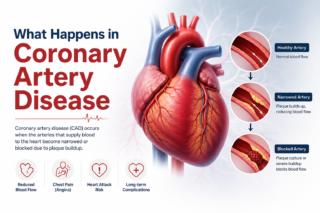
What Happens in Coronary Artery Disease

coronary artery disease

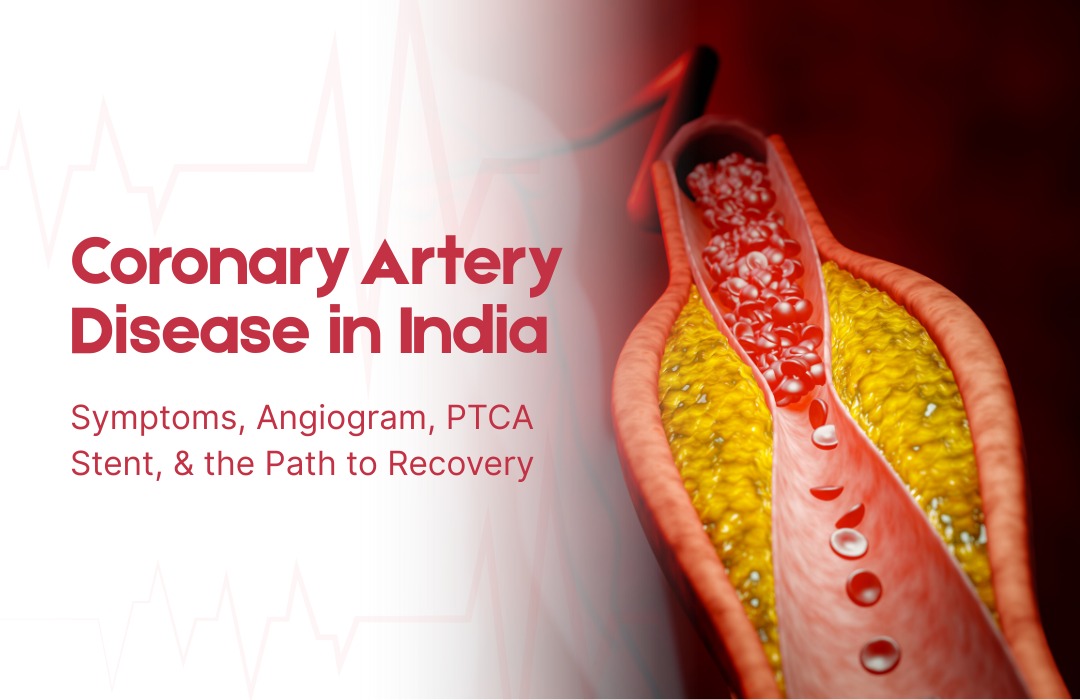
Coronary arteries are the three main blood vessels that supply oxygenated blood to the heart muscle itself. Coronary artery disease is the progressive accumulation of atherosclerotic plaque deposits of cholesterol, inflammatory cells, calcium, and connective tissue within the walls of these arteries. As plaques grow, they narrow the artery’s lumen, reducing the volume of blood the heart muscle receives.

In early disease, there are no symptoms. As narrowings become significant, the heart muscle receives adequate blood at rest but insufficient blood during exertion, producing the symptom of stable angina. When a plaque ruptures suddenly, as can happen without warning at any level of physical exertion, it triggers the formation of an acute blood clot that can completely block the artery, causing a heart attack 

Heart attacks cause permanent heart muscle damage in proportion to the time the artery remains blocked. Opening the blocked artery within 90 minutes of symptom onset with emergency coronary angioplasty (primary PCI) salvages the most muscle and produces the best survival outcomes. Every minute matters.

Recognising the Symptoms: What to Know, and What to Take Seriously

Stable angina is exertional chest discomfort—a tightness, pressure, heaviness, or aching in the center of the chest that appears predictably during physical activity (walking uphill, climbing stairs, carrying loads) and relieves with rest within a few minutes. It may radiate to the left arm, jaw, or back.

In the Indian population, and particularly in patients with diabetes, coronary artery disease sometimes presents atypically without classic chest pain,but with unexplained breathlessness on exertion, unusual fatigue, or a feeling of heaviness or indigestion. These symptoms in any patient with cardiovascular risk factors deserve a prompt cardiac evaluation, not reassurance.

Acute coronary syndromes,  unstable angina and heart attack, present with chest discomfort that is more severe and longer-lasting (more than 20 minutes) and may occur at rest. Associated symptoms, including sweating, nausea, breathlessness, or syncope, increase the likelihood of an acute event. These symptoms require immediate emergency care calling an ambulance and going directly to the nearest hospital capable of emergency coronary angioplasty in heart arteries.

The Diagnostic Pathway: From Symptom to Angiogram

The investigation of stable chest pain begins with clinical history, examination, a resting ECG, and blood tests. An echocardiogram assesses left ventricular function and wall motion. Stress testing exercises, ECG, stress echocardiogram, or nuclear perfusion imaging demonstrates whether coronary disease is causing ischemia during physical stress.

When an investigation suggests significant coronary artery disease, or when a patient presents with an acute coronary syndrome, coronary angiography is performed. This angioplasty and angiogram procedure takes 20 to 40 minutes under local anesthesia and sedation, with a catheter inserted through the radial artery in the wrist to deliver contrast dye into the coronary arteries while X-ray images map the distribution and severity of narrowings.

CT coronary angiography, a noninvasive alternative using CT scanning, is increasingly used as an initial anatomical investigation in stable patients with intermediate pretest probability of significant coronary disease, providing detailed arterial mapping without catheter insertion.

Also read: 5 Signs You or Your Elderly Parent May Need a Heart Valve Replacement  

PTCA Stent: What the Procedure Involves Step by Step

When the angiogram reveals a narrowing that warrants treatment, angioplasty with PTCA stent deployment proceeds as follows:

A guidewire, a very thin, flexible wire, is advanced through the catheter and across the coronary narrowing. The wire serves as a rail for all subsequent equipment. A balloon catheter is advanced over the wire to the lesion site and inflated to compress the plaque, widening the arterial lumen. A drug-eluting stent coronary device, a metal mesh cylinder mounted on a second balloon, is then advanced to the same position and expanded, embedding itself in the artery wall and remaining in place permanently as a scaffold.

After stent deployment, the operator assesses the result using post-deployment balloon inflation to optimize expansion and intravascular imaging (IVUS or OCT) in many cases to confirm optimal stent apposition. Haemodynamic measurements confirm normal blood flow before all equipment is removed.

For heavily calcified lesions that require special preparation before stenting, chip angioplasty techniques, including intravascular lithotripsy or rotational atherectomy, are deployed to modify the calcium and allow adequate stent expansion.
The entire procedure for a straightforward single-vessel case typically takes 45 to 90 minutes.

Recovery: Life After a Coronary Stent

Recovery from coronary angioplasty is rapid compared to surgical alternatives. Most patients return to light daily activities within one to two weeks and to full activity within two to four weeks.

The most critical post-stent requirement is medication adherence. Dual antiplatelet therapy, aspirin combined with a second agent (clopidogrel, prasugrel, or ticagrelor), is prescribed for a defined period to prevent stent thrombosis. The duration depends on stent type and clinical risk profile. Stopping this medication early without medical guidance carries a risk of acute stent occlusion and must be avoided.

Long-term coronary artery disease management, statins, blood pressure treatment, diabetes optimization, and lifestyle modification continue indefinitely regardless of whether a stent has been placed. A stent treats the obstruction; it does not cure the underlying disease. Regular follow-up with the treating coronary artery disease doctor is essential for monitoring disease progression and adjusting treatment as needed.

Dr. C Raghu: Comprehensive Coronary Artery Disease Care in Hyderabad

Dr. C. Raghu coronary artery disease program in Hyderabad encompasses the full clinical pathway from initial risk assessment and non-invasive investigation through coronary angiography and complex coronary angioplasty to long-term secondary prevention management. His practice uses intravascular imaging and physiological assessment tools routinely, reflects current evidence-based guidelines in every decision, and provides clear, patient-centered communication throughout every stage of the diagnostic and treatment process.

For advanced coronary artery disease treatment, coronary angioplasty, and PTCA stent care in Hyderabad, consult Dr. C. Raghu at Yashoda Hospitals, Secunderabad — Call +91 95424 75650 today for expert cardiac care.


Dr raghu logo


Dr raghu logo


Call us now if you are in a medical emergency need, we will reply swiftly and provide you with a medical aid.


For Appointment with Dr Raghu: +91 80085 36699
Dr Raghu’s Patient Coordinator: +91 72860 10203
Dr Raghu’s Office Experience: +91 90001 65962
Dr Raghu’s Social Media Communication Channel: +91 97046 51708

Dr. Raghu | Heart Specialist in Hyderabad
Yashoda Hospitals, Raj Bhavan Road, Somajiguda, 1st floor, Room No. 115, Hyderabad -500082, Telangana

Best Cardiologists in Hyderabad


© 2024, Dr. Raghu. All rights reserved. Design & Developed by AMSDigital.in

[gtranslate]
+91-9542475650