
What Is Atrial Fibrillation? Understanding AFib Simply
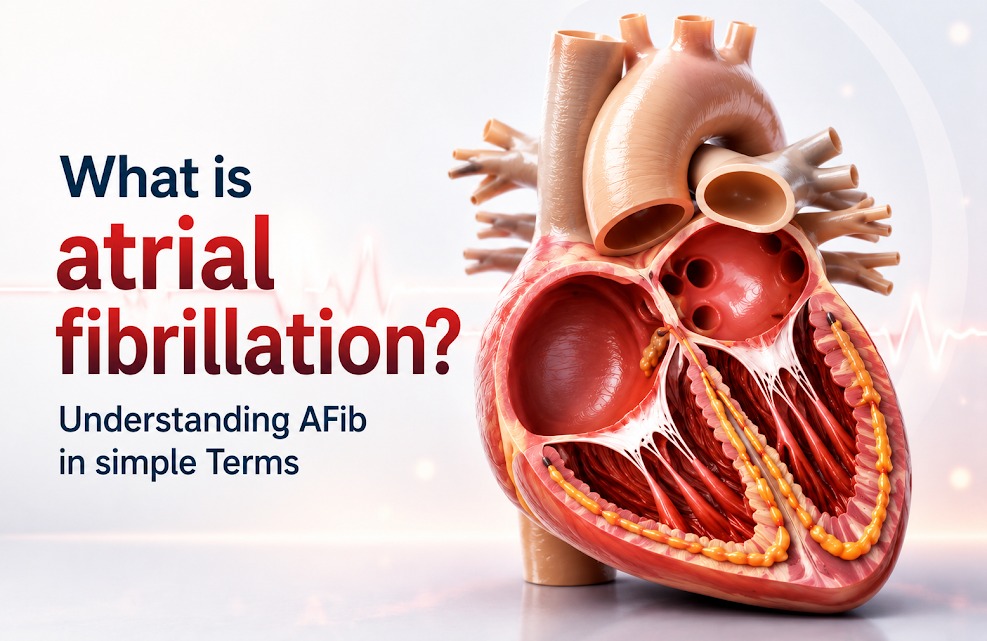
Atrial fibrillation, commonly called AFib, is becoming increasingly common among middle-aged individuals. But here’s the thing—most people don’t understand what’s actually happening inside their hearts when this occurs. You might hear the term “AFib” from your doctor, but you’re left wondering what it really means for your life, your health, and your future.
What Exactly Happens During Atrial Fibrillation?
Let me explain this simply. Your heart works like a coordinated team. It has four chambers, and they’re supposed to contract in a specific rhythm, pumping blood efficiently throughout your body. When everything works correctly, your heart beats between 60 and 100 times per minute, and each beat is regular like a drum in an orchestra.
But with atrial fibrillation, something goes wrong. The two upper chambers of your heart, called the atria, start beating chaotically. Instead of contracting in a coordinated way, they’re essentially quivering. This irregular electrical activity causes your heart to beat irregularly and often rapidly. You might feel your heart skipping beats or racing without reason.
The problem is this: when your heart isn’t pumping efficiently, it doesn’t move blood through your body the way it should. This is serious.
Also read: What is coronary angioplasty? Everything you need to know
Why Should You Care About This?
You might think, “Okay, so my heart beats irregularly. What’s the worst that can happen?” Here’s where you need to pay attention:
Blood clots form. When blood sits in your heart chambers instead of being pumped out efficiently, it can pool and clot. These clots can travel to your brain and cause a stroke—a brain stroke that could leave you paralyzed, unable to speak, or worse.
Your heart weakens. Over time, the constant irregular beating strains your heart muscle. It’s like running a machine non-stop without proper maintenance. Eventually, it breaks down, leading to heart failure.
You feel terrible. Shortness of breath, fatigue, dizziness—these aren’t just inconveniences. They affect your quality of life, your work, and your ability to enjoy time with your family.
Other complications arise. Your risk of heart disease increases. Your blood pressure becomes difficult to control. Your overall health deteriorates.
Who Gets Atrial Fibrillation?
You might be at higher risk if you:
- Have high blood pressure
- Are over 65 years old (though it can happen when younger)
- Have heart disease or a previous heart attack
- Have thyroid problems
- Are obese or overweight
- Drink excessive alcohol
- Have sleep apnea
- Experience chronic stress
- Have family history of AFib
If any of these apply to you, you should be paying attention to any unusual heart sensations.
Atrial Fibrillation Treatment: What Are Your Options?
The good news? Atrial fibrillation is treatable. You’re not helpless here. You have options, and finding the right approach matters tremendously.
First, there’s medication. Your doctor might prescribe medications that help regulate your heart rate or convert your heart back to a normal rhythm. Some people do very well with medication alone.
Second, there are lifestyle changes. You need to reduce stress, exercise regularly (as approved by your doctor), limit alcohol, maintain a healthy weight, and manage any underlying conditions like high blood pressure.
Third, there are medical procedures. If medication doesn’t work, procedures like ablation can be performed. An interventional cardiologist specialist trained in heart procedures can access your heart and remove the tissue causing the irregular signals. It’s minimally invasive, meaning small incisions, less pain, and faster recovery.
Finding the Right Atrial Fibrillation Doctor in Hyderabad
If you’re in Hyderabad, you’re fortunate. The city has some of India’s finest cardiac specialists. When looking for an atrial fibrillation doctor in Hyderabad, you want someone experienced, compassionate, and thorough. You want a doctor who explains things clearly, who listens to your concerns, and who works with you to create a treatment plan that fits your life.
The best atrial fibrillation doctors in India understand that AFib isn’t just a medical condition—it’s something that affects how you live. They know that you want to return to your normal activities, spend time with your loved ones, and not feel like your health is controlling your life.
Taking Action Today
Don’t wait until you have a major event to address AFib. If you experience irregular heartbeats, shortness of breath, or persistent fatigue, schedule an appointment with a cardiologist. Get evaluated. Get answers.
Your heart is the most important muscle in your body. It’s literally keeping you alive. Treating atrial fibrillation early, with the guidance of a skilled cardiologist for atrial fibrillation, can prevent serious complications like brain stroke and significantly improve your quality of life.
Also read: TAVR/TAVI Procedure in Hyderabad Minimally Invasive Care
Moving Forward
You don’t have to live with the fear and uncertainty of AFib. Modern medicine has given us excellent tools to manage this condition. The first step is getting a proper diagnosis and treatment from qualified specialists. The second step is taking responsibility for your health—making lifestyle changes, taking medications as prescribed, and maintaining regular follow-ups with your doctor.
Ready to take control of your heart health? Dr. C. Raghu, an experienced interventional cardiologist at Yashoda Hospital, Somajiguda, Hyderabad. Your heart deserves expert care.